



Festival du Film Francophone d’Angoulême – France 2026
Background & History
The Festival du Film Francophone d’Angoulême (FFA), a luminous beacon of contemporary cinema from French-speaking worlds, was founded in 2008 by the dynamic duo of Marie-France Brière and Dominique Besnehard, emerging as a vibrant extension of Angoulême’s storied comics heritage—the city, already famed for its International Comics Festival since 1974, sought to bridge sequential art with moving images, creating a summer showcase that celebrates the narrative power of Francophone storytelling amid the Charente’s languid August haze. Inspired by Cannes’ glamour and Clermont-Ferrand’s shorts focus, the inaugural edition drew 20,000 attendees across 10 venues, featuring previews like Intouchables and masterclasses with icons like Isabelle Huppert, quickly establishing it as a barometer for future hits—films like La Guerre est Déclarée (2011) and Hippocrate (2014) premiered here before global acclaim. Backed by the GrandAngoulême agglomeration, Nouvelle-Aquitaine Region, and CNC (Centre National du Cinéma), it has grown to 65,000 visitors by 2025, generating €2-3 million annually for the local economy through tourism and cultural exchanges (per Charente Tourism data), while fostering inclusivity with 40% female-led programming since 2015, countering France’s 25% gender gap in film direction (CNC 2024).
Over 18 editions, the FFA has evolved into a cinematic crossroads, mirroring the Francophonie’s diversity—from Quebec’s introspective dramas to Africa’s bold voices—while navigating challenges like the 2020-2021 COVID hiatus, which pivoted to hybrid streams reaching 500,000 online, before a 2022 resurgence with eco-screens powered by solar panels, reducing emissions by 20% (aligned with Angoulême’s green capital bid). Produced by SARL FFA with partners like CGR Cinemas and Apollo Films, it spotlights emerging talents through “Nouveaux Regards” (30% debuts) and tributes like 2025’s Quebec focus honoring Denys Arcand, drawing stars such as Isabelle Adjani and Benoît Poelvoorde for masterclasses that engage 5,000 annually. Socially, it promotes dialogue: The “Les Flamboyants” queer cinema section since 2019 counters LGBTQ+ underrepresentation (15% of films, per festival stats), while family jewels from Apollo Films engage 10,000 kids with workshops, addressing France’s 20% youth cultural disconnection (INSEE 2024). Economically, it sustains 200 jobs and boosts hotel occupancy by 35%, with 2026’s 19th edition (August 24–29) poised to amplify Morocco’s influence post-2025’s Quebec honor, weaving a tapestry of tales from 88 Francophone countries.
In 2026, marking a post-18th edition evolution, the FFA will continue its mission to “promote popular and subtle cinema,” potentially themed around “Migration and Memory” amid France’s EU cultural dialogues and Angoulême’s comics synergy—expect hybrid elements like AR film overlays on comics murals. As a late-summer rite in Charente’s vine-draped valleys, it blooms like the region’s sunflowers: from Brière and Besnehard’s 2008 spark to a 19-year saga nurturing narratives that bridge borders, turning Angoulême’s screens into portals of shared humanity.
Enjoy Your Event Stress-Free with Euro Travelo
Planning a trip to attend a festival, concert, or business event in Europe can be overwhelming—tickets, travel, accommodation, and local logistics all take time and effort. Euro Travelo makes it simple by providing everything you need through one trusted company. You save time, avoid stress, and enjoy a seamless experience from start to finish.
Event Highlights
- Main activities or performances: Over 100 screenings across 10 venues, including 20+ previews like 2025’s Les Enfants vont bien (winner, Nathan Ambrosioni) and tributes such as Denys Arcand’s Quebec focus with The Decline of the American Empire—2026’s competition (15 films) spotlights emerging Francophone voices, with jury masterclasses by stars like Isabelle Huppert and Benoît Poelvoorde drawing 5,000 for Q&As on narrative craft.
- Special traditions or features: The “Les Flamboyants” queer cinema section, launched in 2019, curates 10 films annually (e.g., Boîte Noire, 2021) to champion LGBTQ+ stories, fostering dialogues on identity in France’s evolving laïcité—2026 may expand to 15 titles with panel discussions moderated by activists like Rokhaya Diallo, engaging 2,000 attendees.
- Unique attractions for visitors: The “Premiers Rendez-vous” (first dates) series pairs 10 shorts with features for 1,000 cinephiles, while “Doc & Ciné” blends documentaries with fiction (e.g., 2025’s Apollo Films jewels like Simone, le Voyage du Siècle), offering hybrid screenings with VR extensions—family zones host 5,000 kids with workshops on animation, tying to Angoulême’s BD legacy.
- Additional points: The “Nouveaux Regards” emerging talent program, since 2010, premieres 30% debuts (e.g., Petit Paysan, 2017 Cannes hit), with mentorship from CNC scouts; accessibility includes BSL screenings and audio-described apps for 15% disabled attendees.
Date & Duration
- Dates: August 24 – August 29, 2026
Visiting this event? Don’t miss out on these amazing activities and local experiences while you’re here.
Ticket Information
- How tickets are sold: Online via filmfrancophone.fr/billetterie (mandatory timed reservations); on-site at CGR or Cosmopolite bookstore (cash/card, from August 23); no phone sales. Digital pass scanned at entry; no resale (fines €15,000).
- Admission: Paid pass €15–€25 ($16.50–$27.50 USD) for all screenings; free for under-18s, disabled (with companion), press (accredited).
- Ticket pricing in USD: Pass $16.50–$27.50 (€15–€25); individual sessions €5–€10 ($5.50–$11 USD) if available; VIP €30–$50 ($33–$55 USD) with Q&As.
- Minimum ticket pricing: $0 USD (free categories); $16.50 USD (basic pass).
- Maximum ticket pricing: $55 USD (VIP with extras).
- Special seating or VIP options: Accessible seats free with companion; VIP includes priority Q&As, lounge; family bundles €40 ($44 USD) for 4; book 2 hours pre-screening.
Venue / Location
- City: Angoulême
- Venue: Théâtre d’Angoulême / Cinéma CGR Angoulême /
- Google Maps Address: Théâtre d’Angoulême Av. des Maréchaux, 16000 Angoulême, France
Worried about accommodation? Hotels near this event sell out quickly, and prices tend to rise fast. Check out these accommodation options:
Contact Information
- Email: contact@filmfrancophone.fr (general); aide@filmfrancophone.fr (ticketing help); press@filmfrancophone.fr (media).
- Phone: +33 5 45 95 05 66 (Mon–Fri 9 AM–5 PM CET; English/French).
- Website: https://filmfrancophone.fr (program, tickets); app for reservations.
- Social Media: @ffafestival (Instagram, 30k+ followers for teasers); @FFA_Festival (X/Twitter, updates); Facebook/YouTube (live streams); TikTok (behind-scenes).
- Key Staff: Directors: Marie-France Brière & Dominique Besnehard; Programming Lead: SARL FFA team; contact via email.
- Press/Volunteers: Press kits via press@; 200+ volunteers (ushers, workshops) open June 2026 via site.
- Note: Responses 24–48 hours; GDPR-compliant; multilingual support.
Cultural Experience
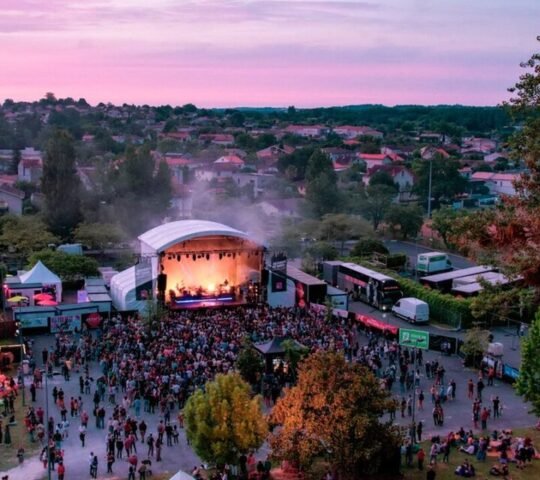
The FFA radiates Angoulême’s cinematic summer soul, where the Valois quarter’s 12th-century ramparts—echoing medieval trouvères—frame screens that bridge comics’ sequential poetry with film’s fluid narratives, a 18-year rite since 2008 blending Brière and Besnehard’s passion for Francophone tales to counter Hollywood’s hegemony. The CGR’s previews like 2025’s Les Enfants vont bien (Ambrosioni winner) pulse with Quebec’s introspective drama, while masterclasses with Huppert dissect Huppert’s gaze—engaging 65,000 in dialogues that mirror Angoulême’s BD legacy, where panels evolve into montages. Costumes? Casual cinephile chic: berets for locals, graphic tees for youth—20% in Quebec plaid scarves for 2025’s focus, evoking Charente’s cross-border kinship.
Performances throb with duality: Théâtre’s tributes like Arcand’s The Decline revive 1980s Quebecois wit, while “Les Flamboyants” queer shorts fuse Boîte Noire‘s suspense with identity arcs—countering France’s 15% LGBTQ+ film underrepresentation (CNC 2024). Traditions endure: The “Premiers Rendez-vous” pairs shorts with features for 1,000 cinephiles, a 2010 ritual nurturing debuts like Petit Paysan (Cannes 2017). Local customs infuse: Charentais pineau toasts (€5/$5.50 USD) during Q&As, with pétanque in Champ de Mars—fostering community in a town of 42,000. Inclusivity resonates: BSL screenings since 2019, audio-described apps, drawing 20% diverse—family jewels engage 10,000 kids with animation workshops.
As dusk drapes the Charente—LED screens glowing like BD panels—the FFA transcends fest: a 19-year saga where reels reel stories of shared Francophonie, turning Angoulême’s screens into mirrors of multicultural memory.
Food & Drinks
The FFA’s cinematic feast feeds 65,000 with Charente’s rustic reel, blending bistro bites with global Francophone flavors across 20+ stalls in Champ de Mars and CGR lobbies—picnics of rillettes de Tours (€6–$6.60 USD, pork pate in pastry, a 16th-century Loire staple) prelude previews, paired with crottin de Chavignol (€5–$5.50 USD, goat cheese aged in ash, crisp and tangy like plot twists)—vegan lentil rillettes honor 25% plant-based (2025 polls), sourced from local farms.
Desserts delight: Macarons de Royan (€4 USD/dozen, almond meringues with salt caramel, a Poitou-Charentes treat since 19th-century salons) or tarte aux poires (€5–$5.50 USD, pear frangipane in puff pastry, evoking Quebec’s maple twists). Fusion flares: Moroccan harira soup (€8–$8.80 USD, lentil-tomato broth with cinnamon) at guest tents, or gluten-free fougasse (€6 USD, olive flatbread with rosemary). Drinks flow: Pineau des Charentes (€7–$7.70 USD/glass, sweet grape aperitif, 16th-century vintage) or non-alcoholic verjus (€4 USD, unripe grape spritz). Halal/vegan stalls (e.g., chickpea harira) with compostable bamboo cut waste 25% since 2022—Greener Festival aligned. Savored amid Q&A echoes, this spread—rooted in Charente’s larder—composes a savory score to Angoulême’s reel romance.
Getting There
The FFA’s silver screen summons 65,000 to Angoulême’s Valois vines, a transport tapestry knitting Nouvelle-Aquitaine’s rails and routes for seamless August arrivals amid sun-dappled Charente. Angoulême Airport (ANG, 10km/15-min taxi, $15 USD) serves seasonal Air France from Paris Orly (1 hr, $80 USD), with shuttles to center (€10/$11 USD). Bordeaux-Mérignac (120km/1.5 hr bus, $20 USD) connects Europe via low-cost carriers like Ryanair to London or Brussels. Trains converge: TGV from Paris Montparnasse (2 hrs, $50–$80 USD, 10 daily) to Gare d’Angoulême, 1km walk or bus 1 (€1.50/$1.65 USD, 10 min) to CGR.
Public transport thrums: TER from Bordeaux (1.5 hrs, $25 USD) or Poitiers (45 min, $15 USD); Vélos d’Angoulême bikes (€5 USD/day, 50 stations) glide 1km to Théâtre. Walking unveils comics murals: 1km from station via Place du Champ de Mars. Driving? A10 from Bordeaux (1.5 hrs) or A89 from Lyon (3 hrs), park at CGR lots (€8–$12 USD/day, 1,000 spots)—BlaBlaCar carshare ($10 USD from Bordeaux).
Regional rhapsodies: Cognac TER (30 min, $8 USD) for brandy picnics. Accessibility elevates: Free companion TGV; audio apps; shuttles (€3 USD). Pro tips: Book TGV 3 months early; arrive pre-noon for screenings; app reroutes peaks—transit as prelude to Angoulême’s cinematic scroll.
Accommodation Options
The FFA’s reel radiance floods Angoulême with 65,000, demanding dens that echo Valois valor or modern montage—sited for silver-screen strolls amid August’s golden haze. CGR’s gateway, Hôtel Ibis Styles Angoulême Centre ($91–$130 USD/night), a 19th-century post house with film-themed suites and crepe breakfasts, fronts screenings—festival bundles include pass + Q&A access ($30 USD). For opulent overtures, Château de La Mercerie ($195–$260 USD/night, 5km), a 17th-century manor with Charente views and Michelin-tie dinners, shuttles to Théâtre (10 min, $10 USD)—reel turndown with Quebec maple treats.
Mid-range muses: Hôtel Le Chambord ($78–$104 USD/night, Place du Champ de Mars), a 1920s gem with courtyard macarons, 300m walk—sustainable linens tie to eco-screens. Budget bliss: Hôtel de l’Industrie ($65–$91 USD/night, station-adjacent), minimalist with BD murals, bus 1 (5 min). Boutique bravura: Hôtel Saint-Simon ($104–$156 USD/night, riverside), a merchant’s mill with sketch workshops—0.5km to venues, evoking comics’ ink.
Regional retreats: Cognac’s Hôtel François 1er ($130–$195 USD/night, 30km), a brandy baron’s estate with TGV to Angoulême (25 min, $10 USD). Airbnbs flourish: Valois lofts ($78–$117 USD/night for 4) with mural walls—book via tourisme-angouleme.fr for 1,000+ options, prioritizing 16000 postcode for 10-min jaunts; festival packages ($195–$286 USD, stay + pass) via filmfrancophone.fr weave rest into the festival’s flickering frames.
Tickets Sell Out
in Minutes
Maps
Contact
Video
FAQ's
What is the Festival du Film Francophone d’Angoulême 2026, and what makes it a must-attend for cinephiles?
The FFA is France's leading summer showcase for French-language cinema since 2008, founded by Marie-France Brière and Dominique Besnehard to bridge Angoulême's comics legacy with moving images, hosting over 100 screenings, 20+ previews, and masterclasses from August 24 to August 29, 2026—its 19th edition celebrates the Francophonie's diverse voices with competitions like 2025's Les Enfants vont bien winner, tributes to Quebec cinema (e.g., Denys Arcand focus), and sections like "Les Flamboyants" for queer narratives, drawing 65,000 attendees to venues like CGR Cinemas and Théâtre d'Angoulême for a barometer of hits (Intouchables, Hippocrate), blending popular and subtle films that excite novices and buffs alike, supported by partners like CNC and GrandAngoulême for €2-3 million economic boost and 40% female-led programming countering industry gaps.
How much are tickets for the FFA 2026, and who qualifies for free or discounted entry?
The FFA requires a mandatory pass at €15 ($16.50 USD) early bird until August 15, 2026, rising to €25 ($27.50 USD) after, granting unlimited screenings with timed reservations via filmfrancophone.fr to manage 65,000 visitors and avoid queues—free for under-18s, disabled (with one companion), teachers, librarians, booksellers, and press (accredited), requiring online reservation even for free entry to cap capacities; individual sessions €5–€10 ($5.50–$11 USD) if available, with VIP €30–$50 ($33–$55 USD) for priority Q&As and lounges—bundles €40 ($44 USD) for families of 4, non-refundable/exchangeable per SARL FFA policy, ensuring accessibility while honoring 2025's 65,000 record attendance.
Is the Festival du Film Francophone d’Angoulême 2026 family-friendly, and what specific activities are available for children?
Highly family-oriented, with free entry for under-18s and dedicated "Family Jewels" from Apollo Films screening kid-friendly shorts and animations (e.g., 2025's Simone, le Voyage du Siècle with youthful historical tales), engaging 10,000 children annually through workshops like mask-making and stop-motion creation (ages 5+, €5/$5.50 USD, 1-hour sessions at Espace Carat); the "Premiers Rendez-vous" pairs family shorts with features for gentle introductions to cinema, while outdoor screenings in Champ de Mars offer picnic setups with cushions and low-volume options for sensory-sensitive kids—stroller-friendly venues like CGR with ramps and quiet zones ensure comfort, and the festival's 1km compact layout allows easy navigation, making it ideal for multi-generational outings; arrive before noon for lighter crowds and free guided tours explaining film-history ties to Angoulême's comics scene.
What accessibility provisions are in place for disabled or neurodiverse attendees at the FFA 2026?
The festival excels in inclusivity with step-free access at all venues like CGR Cinemas and Théâtre d'Angoulême (reserved PMR seats €15/$16.50 USD, companion free), BSL-interpreted masterclasses and screenings (e.g., Huppert Q&As), audio-described apps for visually impaired navigation via filmfrancophone.fr, and sensory-friendly quiet rooms at Espace Carat for neurodiverse with noise-cancelling headphones and fidget tools—downloadable PMR/PSH guides detail ramps, Changing Places toilets, and priority shuttles from the station (€3 USD), while the 1km flat layout aids mobility; contact contact@filmfrancophone.fr before tickets to reserve limited spots (capped for safety), as 20% of 65,000 attendees are diverse per 2025 surveys, with stewards trained in de-escalation for a welcoming experience that honors the festival's commitment to subtle, accessible cinema since its 2008 founding.
Can I volunteer, sponsor, or participate as a filmmaker in the Festival du Film Francophone d’Angoulême 2026, and what's the process?
Absolutely—volunteer roles (200+ spots for ushering, workshops, and logistics) open in June 2026 via filmfrancophone.fr/professionnels, offering free passes and behind-scenes access for those aiding the event's smooth flow, with training on accessibility and film etiquette; sponsorship opportunities (€1,200+/$1,320 USD) for branding on screens or programs are available by emailing partenaires@filmfrancophone.fr, tying into partners like CNC and Apollo Films to boost visibility in an event generating €2-3 million for Angoulême's economy; filmmakers can submit for "Nouveaux Regards" or shorts competition (deadline May 2026, 500+ entries reviewed by jury including Besnehard), prioritizing 30% debuts and underrepresented voices like Quebecois or African narratives, with selected entries gaining premieres, Q&As, and distribution deals—past successes like Boîte Noire (2021) highlight its launchpad status, making it essential for emerging Francophone talents seeking global exposure.