
Sigmund Freud Museum Ticket
Hightlight
-
 English-Speaking
-
 Local guide
-
 Reservations
-
 Transport Access
History
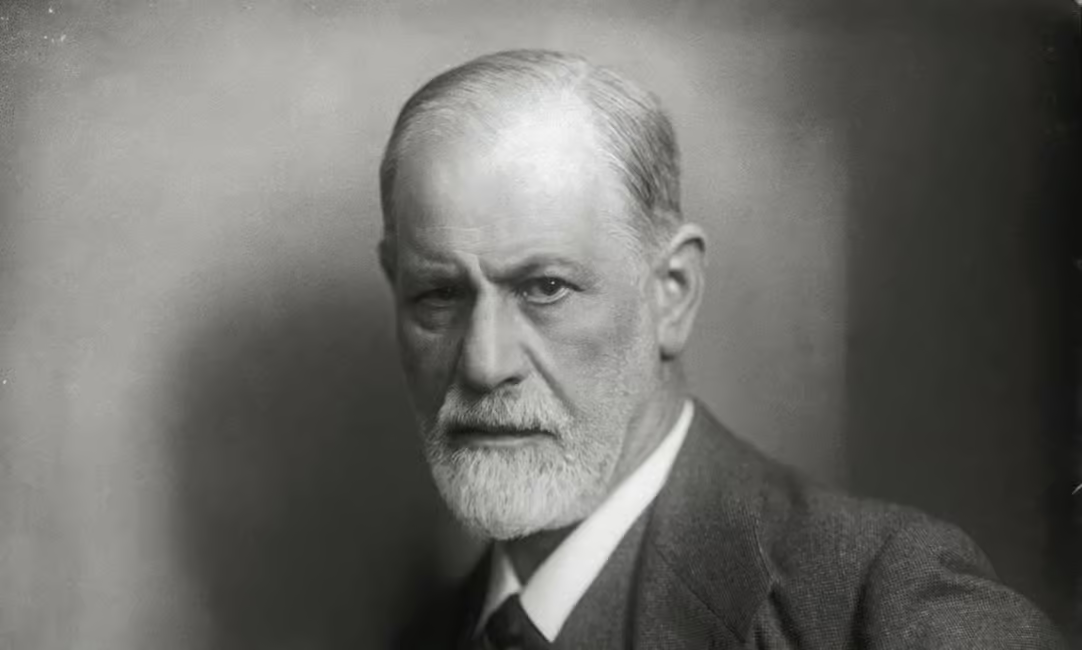
Berggasse 19 became the epicenter of psychoanalysis in 1891 when Sigmund Freud moved his young family and practice into this elegant 1870s apartment building. Here, over 47 years, he developed the talking cure, interpreted dreams, and authored seminal works like The Interpretation of Dreams (1900). Anna Freud, his youngest daughter, trained as a psychoanalyst in the adjacent rooms and pioneered child psychology.
In 1938, Nazi annexation forced the Freuds’ escape to London; four of Freud’s sisters perished in concentration camps. The apartment stood empty until 1971, when it reopened as a museum. A 2020 renovation restored original layouts, added a research library, and expanded exhibits on Freud’s exile, making it Vienna’s most intimate window into 20th-century intellectual history.
Highlights
- Pre-book your ticket and skip the line to the Sigmund Freud Museum
- See Freud’s famous practice and learn about his creation of psychoanalysis
- Step inside the private rooms and see original family movies and belongings
- Hear the recorded voices of Sigmund and Anna Freud
- Admire a collection of conceptual art from Baldessari, Kabakov, West, and others
- Walk the exact staircase Freud and his patients used daily
- Explore Anna Freud’s child-analysis rooms and pedagogy exhibits
Full Description
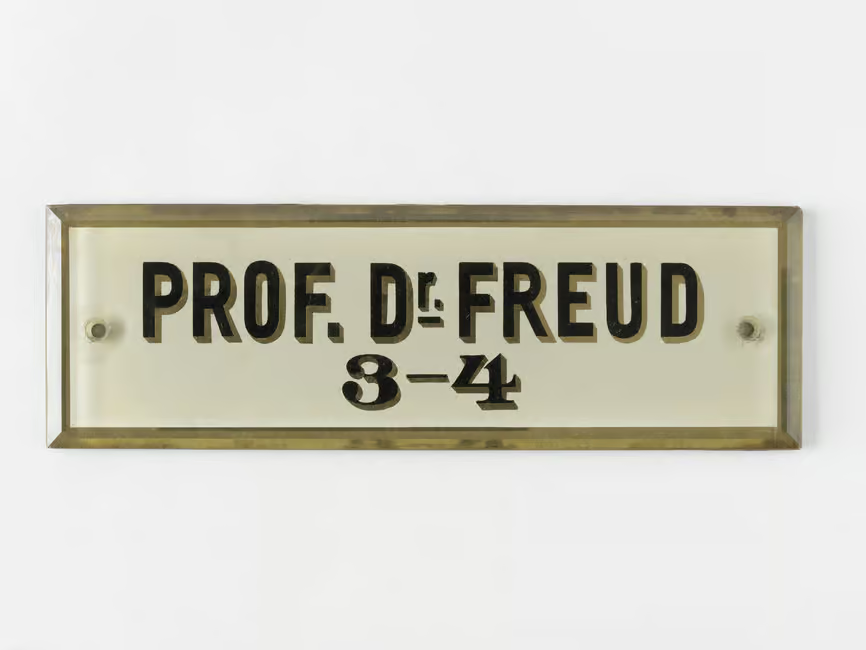
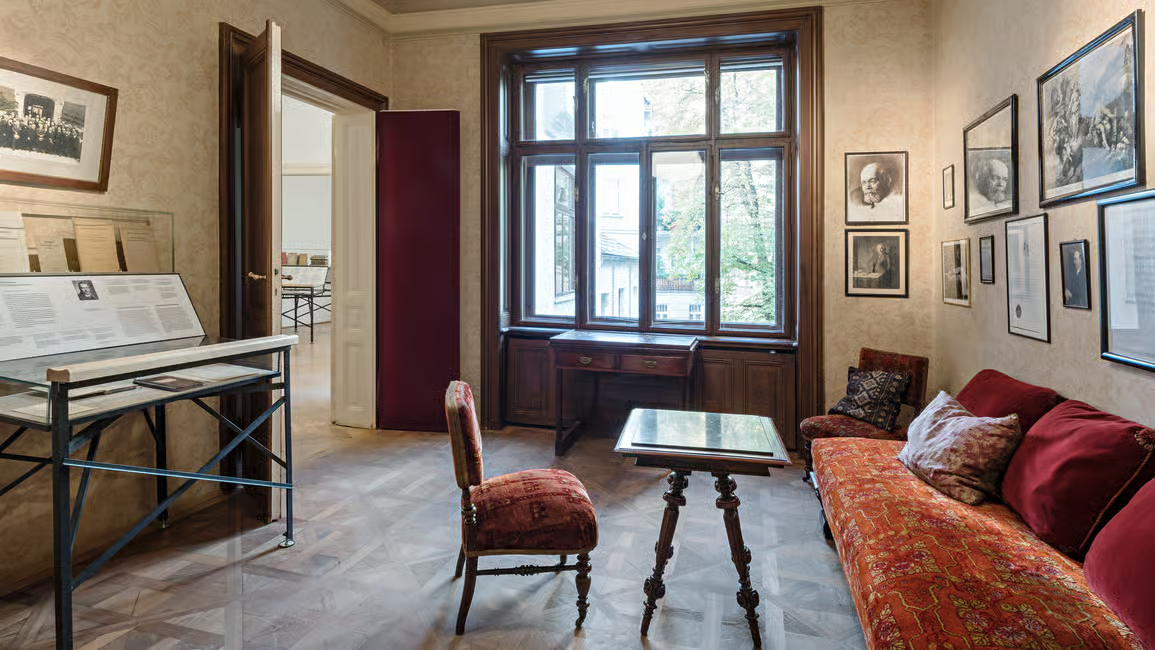
Enter through the same doorway Freud greeted patients for nearly five decades and ascend the historic staircase to the mezzanine where psychoanalysis was born. The preserved waiting room—complete with original rug and furniture—leads to Freud’s consulting room and study, where the famous couch once stood (now in London). Multimedia stations play rare 1930s home movies and audio of Freud’s voice reflecting on his life.
Enjoy Your Event Stress-Free with Euro Travelo
Planning a trip to attend a festival, concert, or business event in Europe can be overwhelming—tickets, travel, accommodation, and local logistics all take time and effort. Euro Travelo makes it simple by providing everything you need through one trusted company. You save time, avoid stress, and enjoy a seamless experience from start to finish.
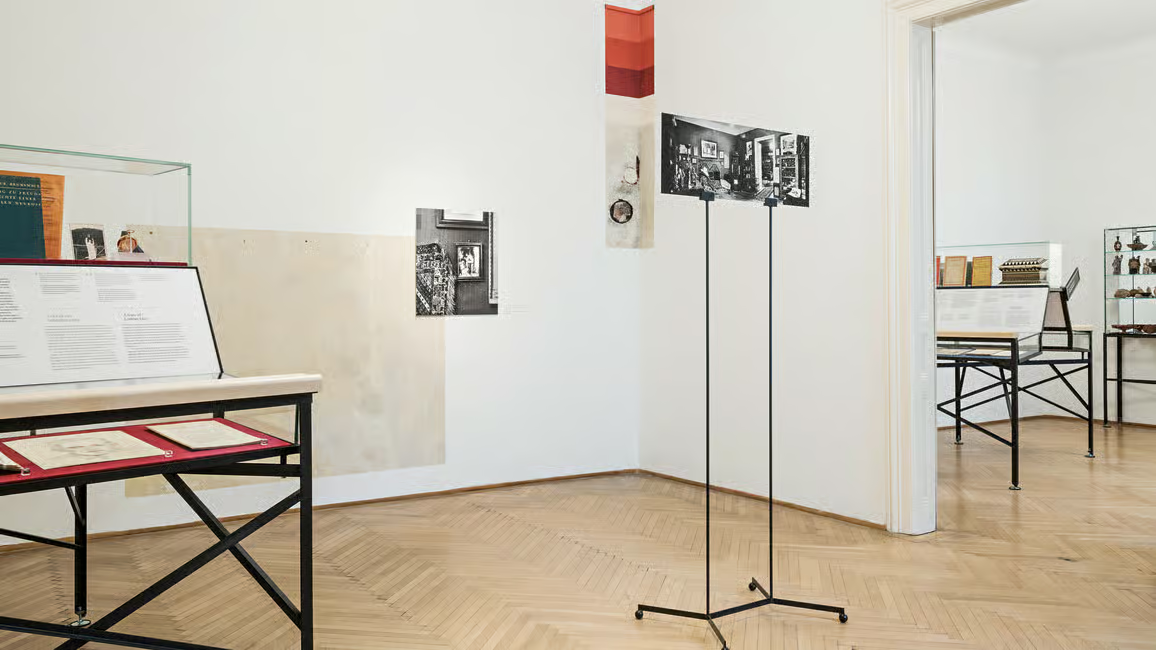
Anna Freud’s adjacent apartment reveals her groundbreaking work with children, displayed through letters, toys, and case notes. A new glass staircase connects all floors, guiding you through the family’s private quarters, Freud’s early neurological tools, and a harrowing exhibit on the 1938 Nazi takeover of Berggasse 19 as a “Jewish collection point.” The top-floor gallery showcases contemporary art responding to Freudian themes—works by Franz West and Pier Paolo Calzolari provoke fresh interpretations.
End in the light-filled café with Viennese coffee or the limited-edition Sigmund Freud beer, brewed locally with herbs from Freud’s favorite Carinthian walks.
Why Choose This Attraction?
This isn’t a dusty relic—it’s the living origin of modern psychology, where you walk the floors Freud paced while decoding the unconscious. Unlike larger museums, its intimate scale and original spaces create a haunting, personal encounter with genius and tragedy. Wheelchair-accessible, multilingual, and skip-the-line, it suits thinkers, history buffs, and anyone curious about the mind.
Pair it with a stroll through the 9th district’s cafés or the nearby Votivkirche for a half-day of intellectual immersion in Freud’s Vienna.
What’s Included
- Skip-the-line admission to Sigmund Freud Museum
- Access to all historic rooms (Freud’s practice, family apartments, Anna’s rooms)
- Multimedia guides in 12 languages (smartphone or device)
- Entry to “Hidden Thoughts” contemporary art gallery
- Access to research library and exile exhibit
- Free Wi-Fi and digital archive access
- Museum shop and café with exclusive Freud-themed items
- Wheelchair lift and accessible restrooms
- Seasonal temporary exhibitions
Pricing
From $17 per person
Meeting Point
Sigmund Freud Museum main entrance, Berggasse 19, 1090 Vienna (present voucher at door—no separate ticket desk needed)
How to Get There
- By Metro: U2 to Schottentor (5-min walk via Liechtensteinstraße)
- By Tram: Line D or 1 to Schlickgasse (2-min walk)
- By Bus: 40A to Berggasse stop (direct)
- By Bike: 15-min cycle from Stephansplatz; racks on Berggasse
Good to Know
What to Bring:
- Comfortable shoes (some stairs, though lift available)
- Headphones (for audio guide via smartphone)
- Notebook (for reflections in the quiet library)
- Light sweater (historic rooms cool)
Know Before You Go:
- Open Tue–Sun 10:00 AM–6:00 PM (closed Mon)
- No flash photography; tripods by prior arrangement
- Original couch is in London—replica and photos on site
- Allow 60–90 minutes for full visit
Reviews
- “Everyone was so kind and it was real fun being where Anna Freud grew up. The home movies are priceless.”
- “The new facts I learned about Freud’s life, medical practice and world travels. A great insight into a historical figure who has left the world with many further questions.”
- “The museum was fantastic and I couldn’t leave there—thanks to human natural physiology and muscle fatigue I finally left there.”
Tickets Sell Out
in Minutes
Maps
Contact
Video
FAQ's
Is the original Freud couch still in the museum?
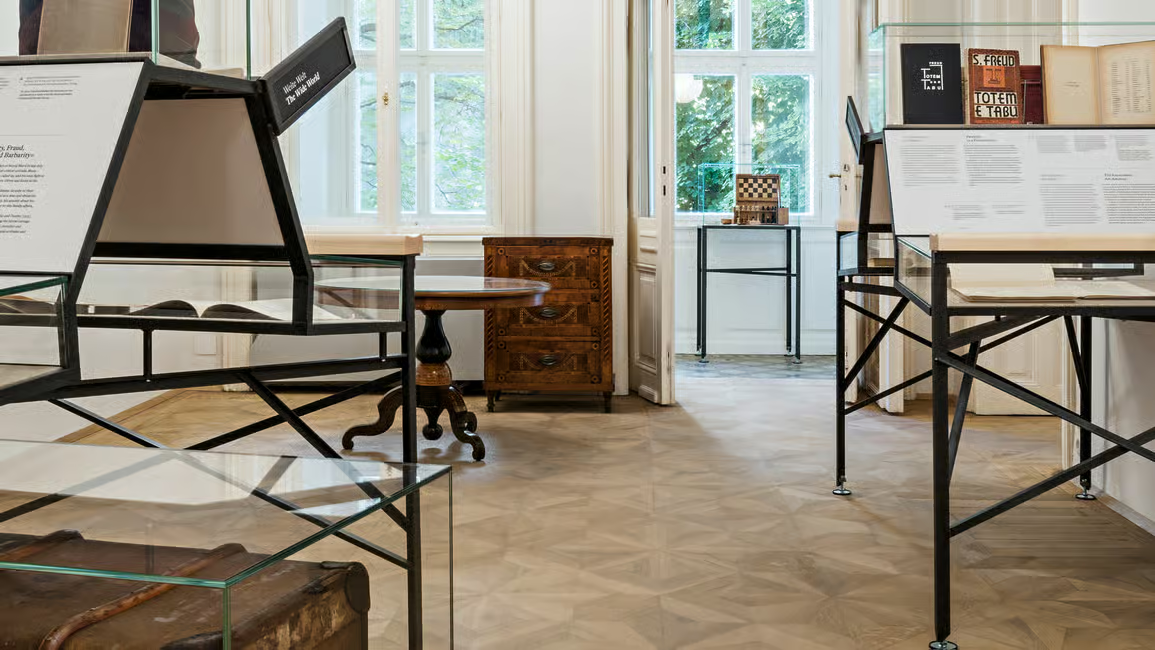
No—the iconic analytic couch traveled with Freud to London in 1938 and remains at the Freud Museum London. However, Berggasse 19 displays a faithful replica in the exact spot it occupied, surrounded by original furniture, Persian rugs, and antiquities from Freud’s collection. Photos and 3D scans let you compare the Vienna and London settings, while a short film shows patients reclining on the original during sessions.
How accessible is the museum for visitors with limited mobility?
The museum is fully wheelchair-accessible via a modern lift installed in 2020, serving all exhibition levels—including the mezzanine practice and top-floor gallery. The historic staircase can be bypassed entirely, and wide doorways accommodate mobility aids. Tactile models and audio descriptions support visually impaired guests; staff provide seating on request. Advance email ensures seamless assistance.
What will I see in Anna Freud’s rooms, and why are they significant?
Anna Freud’s preserved apartment—adjacent to her father’s—houses her consulting room, child-sized furniture, and original case notes from treating traumatized children during WWII air raids. Displays trace her fusion of psychoanalysis and pedagogy, including her work with evacuated British children and the Hampstead War Nurseries. Rare letters between Anna and Melanie Klein highlight the “Controversial Discussions” that shaped child analysis.
Are there guided tours, or is it self-guided only?
The museum is primarily self-guided with excellent multilingual tablets (included), but English-language guided tours run daily at 11:00 AM and 3:00 PM (45 minutes, €5 extra—book on arrival). Private tours for groups explore deeper themes like Freud’s cocaine research or the 1938 exile. The audio guide features Anna Freud’s voice describing her childhood home, adding an intimate layer.
What is the “Hidden Thoughts” art exhibition about?
Located in the foyer gallery, this permanent collection features contemporary artists responding to Freudian concepts—John Baldessari’s wordplay on repression, Franz West’s couch sculptures, Susan Hiller’s dream archives. Rotating loans keep it fresh; the current cycle includes Pier Paolo Calzolari’s neon “Id” installation. It’s a provocative bridge between 1900 psychoanalysis and 21st-century art, free with admission.