Brussels Flower Carpet 2028, Belgium
Grand-Place Installation & Setup Process
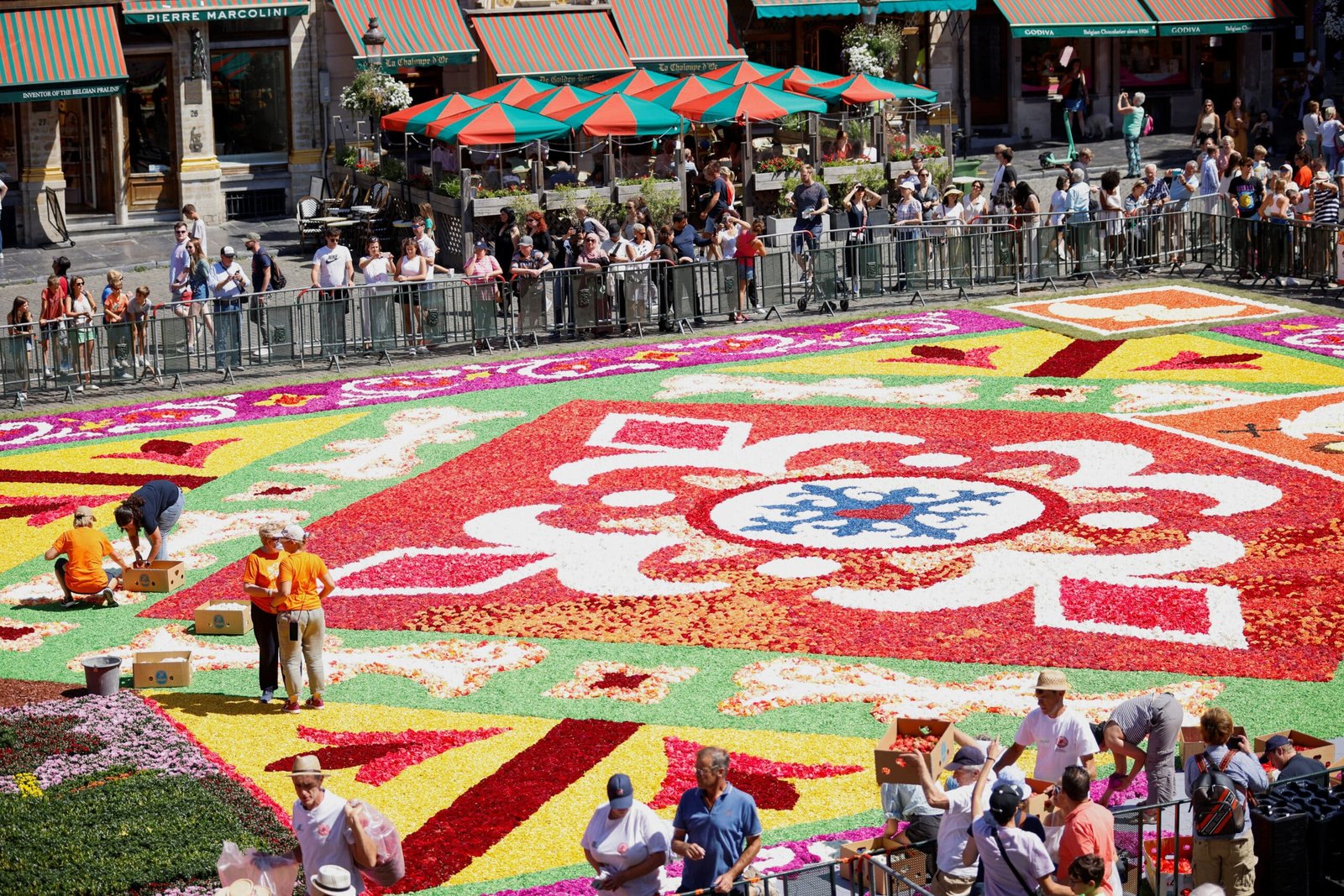
The physical assembly of the massive floral masterpiece is a masterclass in precision logistics, executed entirely by hand within a remarkably brief timeframe. On the morning of the opening day, hundreds of expert horticulturists and enthusiastic volunteers converge on the historic square to begin laying out the plants. The entire surface area, spanning over seventeen hundred square meters, is systematically filled without the use of any synthetic adhesives or structural frames. Workers kneel directly on the pavement, placing thousands of individual stems side-by-side with intense physical coordination and speed.
Before the first flower touches the ground, specialized waterproof plastic templates marked with precise grid coordinates are rolled out across the sanitized cobblestones. These perforated blueprints guide the placement teams, ensuring that color boundaries and intricate geometric curves match the approved architectural scale drawings. Experienced supervisors monitor the layout constantly, directing planting crews to adjust density levels so the carpet maintains a uniform, plush appearance throughout. The collaborative synergy among the assembly team allows this colossal undertaking to transform an open plaza into a vibrant tapestry in just a few hours.
Once the primary floral layout is completed, support crews fill the interstitial gaps with rolled turf grass, pine bark, and treated earth to lock the stems securely. This organic framework provides natural moisture retention, keeping the blossoms fresh and vibrant despite direct exposure to summer sunlight and changing weather conditions. Continuous misting systems and hidden irrigation channels are calibrated carefully to maintain optimal hydration levels across the entire installation without damaging delicate petals. Post-installation maintenance crews monitor the site continuously around the clock, replacing any wilting stems immediately to preserve absolute visual perfection.
Enjoy Your Event Stress-Free with Euro Travelo
Planning a trip to attend a festival, concert, or business event in Europe can be overwhelming—tickets, travel, accommodation, and local logistics all take time and effort. Euro Travelo makes it simple by providing everything you need through one trusted company. You save time, avoid stress, and enjoy a seamless experience from start to finish.
- Template Grid Alignment: Rolling out precise plastic scaling maps over sanitized cobblestones.
- Morning Assembly Dispatch: Coordinated arrival of hundreds of volunteers at dawn.
- Kneeling Placement Technique: Manual hand-packing of individual stems directly onto the pavement.
- Interstices Bark Filling: Distributing natural wood mulch between sections to secure plant stability.
- Edge Boundary Anchoring: Securing perimeter lines to prevent shifting under pedestrian traffic pressure.
- Moisture Hydration Misting: Automated and manual water spraying maintaining optimal petal freshness.
- Continuous Quality Inspection: Roving horticultural experts replacing damaged or stressed stems instantly.
- Turf Border Integration: Laying natural grass strips to frame the main floral artwork clearly.
- Supervisor Radio Coordination: Instant communication channels managing pace across different grid zones.
- Final Cleanup Operations: Clearing packaging materials and tools before public gates open.
Event Schedule
- Event Date: August 2028 (Dates TBD)
- Event Duration: Several days of continuous public exhibition across a festive weekend
Visiting this event? Don’t miss out on these amazing activities and local experiences while you’re here.
City Hall Balcony & Panoramic Viewpoints
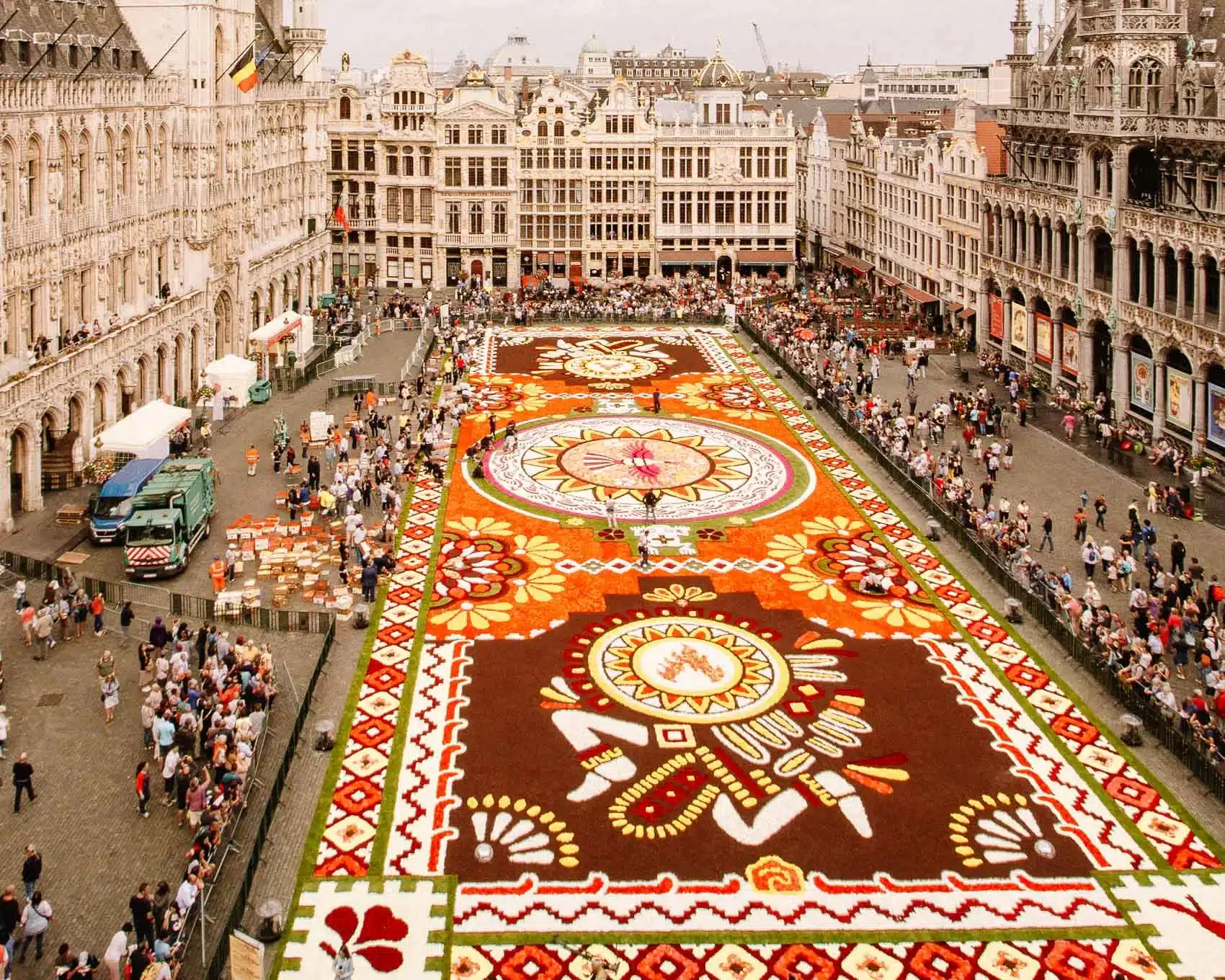
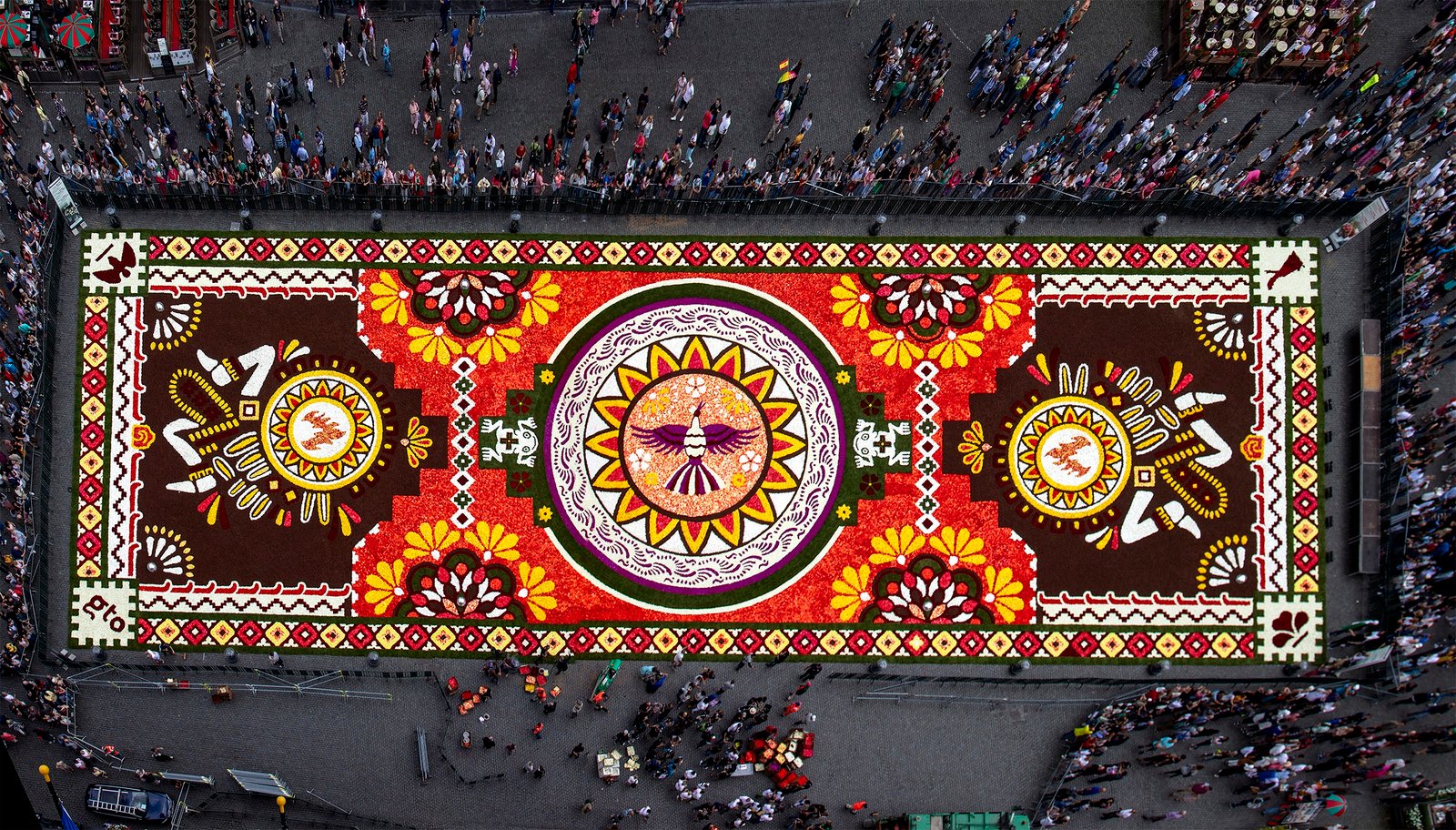
The most coveted vantage point for appreciating the full geometric scale of the installation is located on the elevated balcony of the historic municipal town hall. Rising high above the cobblestone square, this classical viewing deck provides an unobstructed bird’s-eye perspective of the entire sprawling design. Visitors stepping out onto the stone balustrade can absorb the complex symmetry, intricate color transitions, and grand proportions of the multi-colored floral canvas. Timed-entry passes manage visitor flow efficiently, ensuring everyone enjoys a serene, uncrowded viewing experience from above.
Access to the Gothic tower interior is managed through dedicated reception queues where multilingual guides offer historical context regarding the surrounding guild houses. The panoramic view from the upper level also reveals the striking architectural harmony between the temporary ground-level artwork and the permanent medieval facades. Photographers and television broadcast crews utilize these elevated platforms to secure iconic aerial shots that are syndicated globally across media networks. Safety protocols and railing inspections are enforced rigorously throughout the exhibition to ensure absolute security for all guests on the balcony.
- Gothic Town Hall Access: Entry through historic interior halls leading directly to the upper deck.
- Timed-Entry Ticketing Windows: Staggered group slots preventing overcrowding on the viewing platform.
- Unobstructed Aerial Perspectives: Direct overhead angles revealing the full geometric symmetry of the layout.
- Multilingual Docent Guides: Informative staff sharing architectural history of the surrounding guild houses.
- Professional Media Perches: Dedicated zones accommodating broadcast cameras and press photographers.
- Structural Balustrade Checks: Routine safety audits ensuring railing security for heavy public traffic.
- Sunset Viewing Slots: Special evening sessions capturing golden hour lighting across the petals.
- Controlled Exit Flow Paths: Dedicated stairwells directing visitors smoothly back to ground level.
Getting to the Venue
- City and Country: Brussels, Belgium
- Venue Name: Grand-Place
- Google Maps Address: Grand-Place, 1000 Brussels, Belgium
Worried about accommodation? Hotels near this event sell out quickly, and prices tend to rise fast. Check out these accommodation options:
Auxiliary Displays & Satellite Sites
Beyond the primary installation at the central square, secondary cultural exhibitions and satellite floral displays expand the festival footprint across adjacent urban zones. Smaller artistic flower carpets are constructed in nearby historic courtyards, municipal building lobbies, and pedestrian shopping promenades to engage wider neighborhoods. These satellite installations often feature experimental designs by emerging student florists or international guest artists exploring unconventional botanical mediums. Informative walking routes connect these various points of interest, encouraging visitors to explore hidden corners of the historic city center.
Interactive workshops and botanical exhibitions hosted in nearby cultural centers provide deeper insights into regional floriculture and sustainable urban gardening practices. Local merchant associations participate by decorating storefronts with coordinating floral arrangements, creating a unified festive atmosphere throughout the commercial district. Digital mapping applications guide tourists seamlessly between the main square and these rewarding secondary points of interest. This decentralized approach distributes foot traffic evenly, reducing congestion while enhancing the overall cultural programming of the biennial event.
- Secondary Courtyard Carpets: Miniature floral installations hidden within historic municipal cloisters.
- Student Designer Showcases: Experimental botanical works created by emerging regional artists.
- Connected Walking Routes: Signposted pedestrian trails linking satellite sites across the center.
- Storefront Decor Contests: Local merchant window competitions featuring coordinated floral designs.
- Botanical Workshop Hubs: Educational seminars exploring sustainable gardening and flower care.
- Digital Navigation Guides: Interactive mobile maps highlighting secondary installation spots.
Event Information
- Email: info@flowercarpet.brussels
- Phone Number: +32 2 513 89 40
- Website: https://flowercarpet.brussels
Design Theme & Concept History
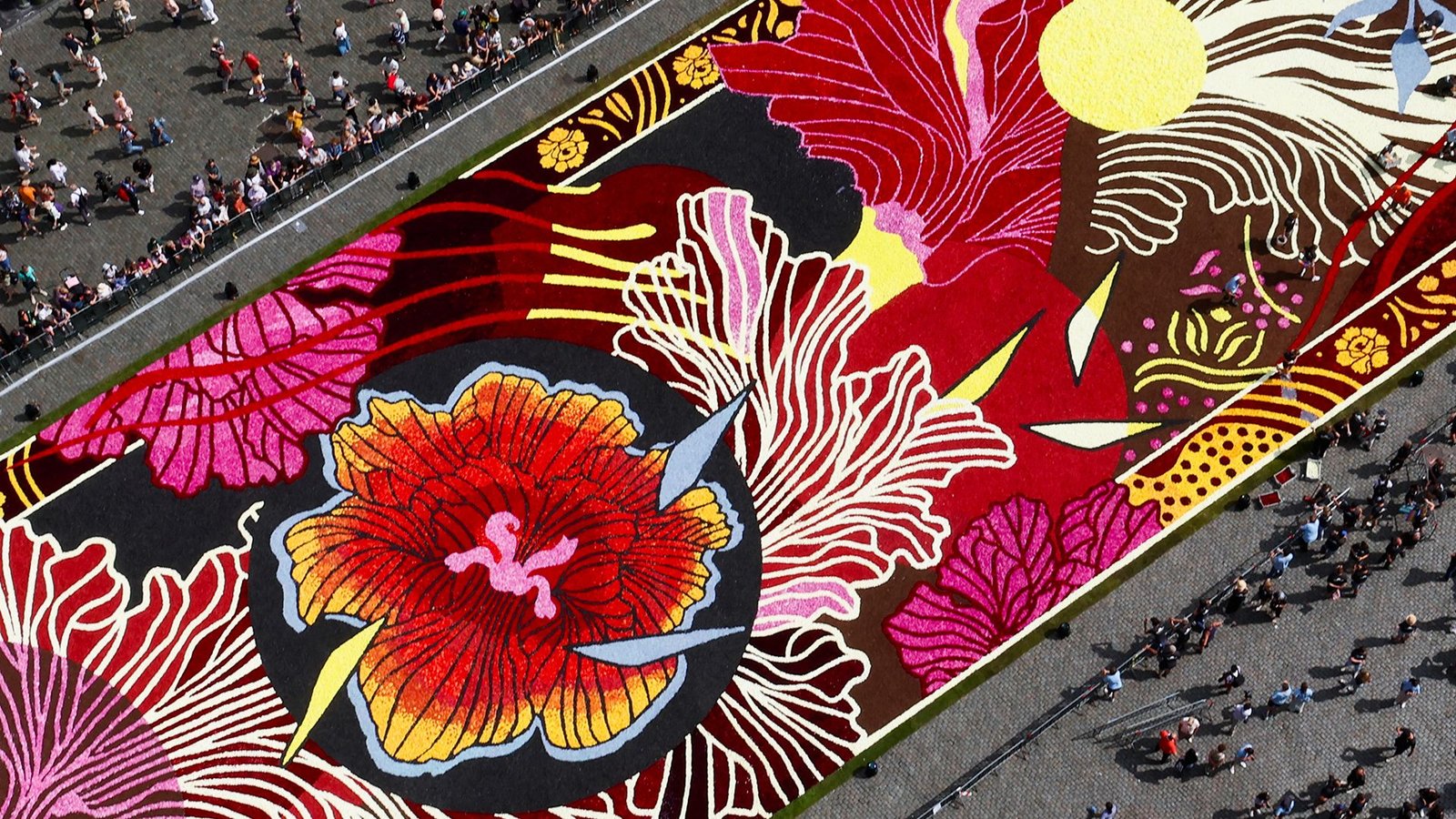
The creation of the monumental floral tapestry stems from a rich tradition established in the early 1970s by visionary landscape architects aiming to showcase horticultural excellence. Each biennial edition revolves around a distinct artistic motif, drawing inspiration from historical eras, global cultures, architectural styles, or international literary masterpieces. Designers spend months meticulously crafting color palettes, geometric configurations, and symbolic motifs to ensure every square meter conveys a compelling visual narrative. This dedication transforms the cobblestone square into an expansive canvas where temporary street art merges seamlessly with permanent Gothic architecture.
Historical themes have previously paid homage to diverse global traditions, celebrating cultural ties with regions ranging from Latin America and Asia to classical European heritage. The thematic development process involves close collaboration between graphic designers, historians, and master gardeners who evaluate how natural lighting alters color perceptions throughout the day. Scale models are meticulously constructed and reviewed to test proportions before any actual plant material is ever ordered or harvested. Consequently, each iteration remains entirely unique, ensuring returning visitors encounter a completely fresh artistic expression during every subsequent staging.
The conceptual framework also emphasizes ecological harmony and regional identity, highlighting Belgium’s prominent status as a global hub for specialized ornamental plant production. Complex interlacing patterns often replicate the intricate details of vintage tapestries, stained glass windows, or traditional woven rugs from various international origins. By merging historical motifs with modern graphic design techniques, the exhibition bridges past epochs with contemporary aesthetic sensibilities in a striking public display. Academic institutions and cultural councils frequently contribute to the thematic narrative, adding layers of historical depth and educational value to the visual spectacle.
Ultimately, the overarching concept serves to unite diverse communities through the universal language of art, nature, and shared public celebration. The unveiling of the annual design motif generates widespread international anticipation, drawing art critics, nature lovers, and global travelers to the historic center. Educational panels erected around the perimeter explain the historical context and symbolism embedded within the complex floral layout. This thoughtful integration of history and horticulture ensures that the masterpiece resonates deeply on both an emotional and intellectual level with everyone who walks the perimeter.
- Original 1971 Arabesque Motif: The inaugural design pattern that launched the iconic biennial municipal tradition.
- European Heritage Commemorations: Special editions honoring continental unity and historical municipal charters.
- Global Cultural Tributes: Thematic designs celebrating international partner nations and traditional textiles.
- Art Nouveau Celebrations: Architectural style explorations recognizing local architectural pioneers.
- Scale Model Prototyping: Miniature physical mock-ups used to refine color transitions and alignment.
- Botanical Color Matching: Precise selection processes ensuring exact chromatic harmony among blossoms.
- Historical Motif Research: Academic collaborations validating the cultural accuracy of ancient patterns.
- Environmental Narrative Integration: Concept elements highlighting sustainable agriculture and local ecology.
- Graphic Grid Planning: Digital mapping systems translating abstract drawings onto cobblestone surfaces.
- Symphonic Theme Alignment: Musical scoring coordination that mirrors the emotional tone of the visual design.
- Public Symbolism Studies: Incorporating local heraldry and civic emblems into the core layout.
- Legacy Documentation Projects: Archival preservation of design blueprints for future historical reference.
Begonia Horticulture & Flower Sourcing
The choice of specific flowering species is critical to the longevity and vivid aesthetic impact of the massive public exhibition. Tubers of the traditional Belgian begonia form the overwhelming majority of the arrangement, chosen specifically for their exceptional weather resistance and brilliant coloration. Cultivated primarily in the fertile fields surrounding Ghent, these robust plants thrive under intensive sunlight while retaining rich, saturated hues. The dense structure of begonia petals creates a thick, carpet-like cushion that absorbs sound and cushions the layout against environmental wear.
Harvesting takes place at the exact peak of maturity, coordinated closely with local growers to ensure optimal freshness upon delivery to the municipal square. Millions of blossoms are picked by hand across regional nurseries, sorted meticulously by color shade, and packed into specialized ventilated crates for transport. Varieties include both rich primary tones and delicate pastel gradients, allowing artists to achieve subtle shading effects comparable to oil paintings. This direct pipeline supporting local agriculture underscores the deep symbiotic relationship between the event and the national horticultural industry.
In addition to begonias, supplementary organic materials such as freshly cut dahlias, ornamental grasses, and dyed tree bark are incorporated to add textural depth. Horticultural scientists advise on soil chemistry and moisture retention properties to ensure the cut flowers remain turgid and vibrant throughout the exhibition window. The remarkable resilience of these plants allows the masterpiece to withstand wind and fluctuating summer temperatures without losing its structural integrity. Following the conclusion of the event, organic components are collected responsibly and repurposed into high-grade municipal compost.
- Flanders Begonia Cultivation: Sourcing premium tubers from specialized nurseries near Ghent.
- Peak Maturity Harvesting: Picking blossoms by hand at the precise stage of color saturation.
- Chromatic Sorting Protocols: Organizing harvested flowers into strict color-code categories prior to transit.
- Ventilated Transport Crates: Specialized packaging protecting delicate petals from bruising during delivery.
- Weather Resistance Testing: Utilizing resilient strains capable of withstanding heat and wind.
- Dahlia Accent Integration: Incorporating complementary flower varieties for enhanced textual contrast.
- Post-Event Composting: Recycling organic floral waste into nutrient-rich soil enrichment material.
- Horticultural Expert Oversight: Professional agronomists monitoring plant health and moisture levels continuously.
Evening Sound & Light Shows
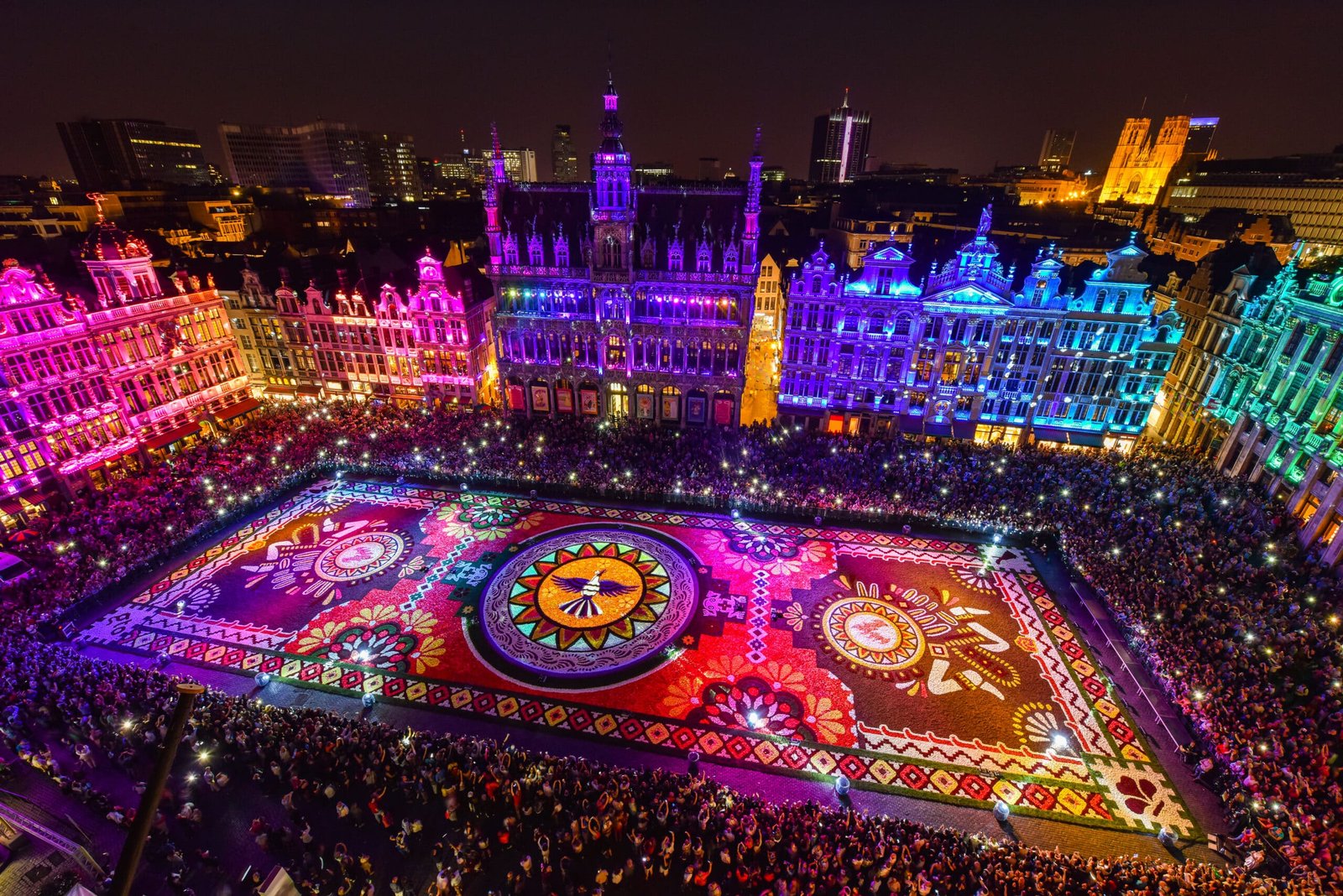
As twilight descends over the historic square, the exhibition transitions into an immersive nocturnal spectacle featuring advanced sound and light technology. High-powered theatrical projectors mounted on surrounding medieval facades bathe the floral carpet in dynamic chromatic washes and moving pattern projections. A carefully curated musical score ranging from classical orchestral suites to ambient electronic compositions echoes across the open plaza, perfectly synchronized with the lighting shifts. This multisensory presentation highlights hidden details within the design, making the colors appear vividly illuminated against the dark night sky.
Multiple show cycles run sequentially each evening, drawing massive crowds of spectators who gather along the perimeter to witness the dramatic transformation. Lighting designers program custom color palettes that shift fluidly to reflect different emotional movements within the accompanying musical arrangements. State-of-the-art LED fixtures and laser arrays ensure energy efficiency while delivering crisp, high-contrast illumination across the delicate organic surface. Security and crowd control teams manage the dense evening gatherings smoothly, ensuring a safe and enchanting environment for all attendees.
- Theatrical Projection Mapping: Advanced lighting rigs casting dynamic patterns onto medieval facades.
- Synchronized Musical Scores: Audio compositions matching the rhythm of the visual lighting shifts.
- Multiple Nightly Show Cycles: Repeated performances running throughout the evening hours.
- Energy-Efficient LED Fixtures: High-output lighting minimizing power usage while maximizing visual punch.
- Perimeter Crowd Management: Security personnel guiding spectator flow during peak evening viewings.
- Acoustic Speaker Placement: Strategic sound distribution ensuring balanced audio clarity across the square.
- Chromatic Gradation Testing: Precise color tuning making floral tones pop under artificial light.
- Late-Night Viewing Windows: Extended access hours allowing night photography enthusiasts optimal conditions.
Volunteer Coordination & Artisans
The successful execution of the massive biennial project relies heavily on the dedication and passion of an international network of skilled volunteers and artisans. Hundreds of individuals apply months in advance for the opportunity to participate directly in the intensive morning setup and ongoing maintenance shifts. Experienced supervisors provide hands-on training during orientation sessions, ensuring every participant understands proper stem handling and alignment techniques. This shared communal effort fosters deep bonds of friendship among participants traveling from dozens of different countries worldwide.
Behind the scenes, master artisans and landscape architects manage the complex structural blueprints, color grading calculations, and logistical supply chains. Their decades of specialized experience ensure that potential horticultural challenges are addressed proactively before impacting the quality of the exhibition. Hospitality teams coordinate catering, resting stations, and equipment distribution to keep the hardworking setup crews energized throughout their physical shifts. This seamless collaboration between amateur enthusiasts and seasoned professionals exemplifies the strong community spirit underlying the entire global celebration.
- Global Volunteer Recruitment: International application process drawing participants from worldwide.
- On-Site Horticultural Training: Pre-setup instructional workshops teaching proper stem placement.
- Master Architect Oversight: Professional landscape designers managing structural blueprints and scales.
- Crew Hospitality Stations: Dedicated rest tents providing hydration and meals for workers.
- Equipment Distribution Hubs: Organized supply points handing out rulers, shears, and kneeling pads.
- Multilingual Team Leaders: Fluent supervisors coordinating diverse international working groups.
- Shift Rotation Management: Structured scheduling preventing physical fatigue during intense setup hours.
- Certificate of Appreciation: Commemorative documents awarded to participants following event completion.
- Post-Event Gathering Dinners: Celebratory social events thanking volunteers for their hard work.
- Alumni Network Integration: Maintaining continuous communication channels for future biennial editions.
Photography Guidelines & Best Angles
Capturing the breathtaking beauty of the floral masterpiece requires understanding optimal lighting conditions, perspective angles, and designated vantage points around the square. While ground-level walking paths offer intimate close-up shots of individual begonia textures, elevated perspectives remain essential for revealing the grand geometric design. Morning sunlight illuminates the eastern sections with soft, warm tones, whereas late afternoon provides dramatic shadows across the medieval guild house facades. Professional photographers are encouraged to secure town hall balcony passes early to capture pristine overhead compositions without obstruction.
Tripods and bulky professional stabilization gear are regulated during peak daytime hours to maintain smooth pedestrian flow along the crowded perimeter pathways. Media accreditation passes provide specialized access zones for documentary crews, news agencies, and approved commercial photographers requiring stable camera setups. Drone photography directly above the square is strictly prohibited due to municipal airspace regulations and public safety protection laws. Visitors utilizing smartphones are advised to enable HDR settings to balance the bright floral colors against the contrasting stone architecture.
- Ground-Level Close-Ups: Intimate macro photography capturing rich begonia petal textures.
- Elevated Balcony Panoramas: Overhead shots revealing the complete geometric symmetry of the layout.
- Golden Hour Lighting Windows: Optimal shooting times during early morning and late afternoon sun.
- Tripod Flow Regulations: Restricted use of bulky supports during peak pedestrian hours.
- Media Accreditation Access: Specialized shooting zones reserved for verified professional press.
- Strict Airspace Drone Bans: Municipal regulations prohibiting unmanned aerial vehicles overhead.
- Smartphone HDR Optimization: Camera settings balancing bright floral colors with dark stone.
- Night Show Exposure Tips: Long-exposure techniques capturing dynamic illumination effects cleanly.
Pedestrian Access & City Navigation
Navigating the historic city center during the high-profile biennial event requires careful planning due to massive crowds and temporary pedestrianization zones. Municipal transit authorities enforce strict vehicle restrictions across the core district, transforming surrounding streets into exclusive walking corridors. Clear directional signage, multilingual maps, and digital information kiosks guide arriving visitors efficiently from central railway stations to the main square. Visitors with mobility impairments benefit from designated accessible ramps, smooth paving tracks, and priority assistance staff stationed at key entry checkpoints.
Public subway lines and regional tram networks operate on increased frequencies throughout the exhibition weekend to handle the surge in commuter traffic seamlessly. Peripheral parking garages are linked to the center via express shuttle buses, encouraging motorists to leave private vehicles outside the congested medieval zone. Bicycle parking racks are established near major peripheral entry plazas for eco-friendly commuters. Real-time mobile navigation applications track crowd density levels in real time, suggesting alternative walking routes to avoid bottlenecks during peak evening hours.
- Core Pedestrianization Zones: Total vehicle bans across historic streets ensuring safe walking.
- Enhanced Transit Frequencies: Increased subway and tram operations handling large crowds.
- Multilingual Directional Signage: Clear navigational maps guiding visitors from railway stations.
- Accessible Ramps and Paving: Infrastructure modifications ensuring smooth wheel chair mobility.
- Peripheral Park-and-Ride Lots: Outskirt vehicle parking linked by express shuttle buses.
- Bicycle Parking Compound Racks: Secure, monitored stations for visitors arriving on two wheels.
- Crowd Density Tracking Apps: Real-time mobile alerts suggesting alternative walking routes.
- Priority Staff Assistance: Personnel stationed at checkpoints to aid elderly and disabled guests.
Ticket Prices
- How Tickets Are Sold: General viewing tickets are not required, while balcony access passes are sold online via the official portal.
- Admission Type: Free Admission for ground-level walking paths around the historic square.
- Ticket Pricing: Free Admission ($0.00 minimum to $0.00 maximum price range for ground viewing); City Hall balcony access ranges from $11.00 to $22.00.
- Special Seating Options: Elevated viewing platform slots available exclusively via timed-entry balcony reservations.
- VIP Options: Special VIP opening night reception packages featuring private balcony access and guided horticultural tours.
Tickets Sell Out
in Minutes
Maps
Contact
Video
FAQ's
Are pets allowed to accompany visitors inside the viewing perimeter of the square?
Animals are strictly prohibited from entering the immediate viewing zones around the installation to ensure plant preservation and crowd safety. Certified service dogs assisting disabled individuals are fully exempt from this municipal restriction.
What happens to the flowers and organic materials once the exhibition concludes?
Following the final evening show, the organic materials are carefully dismantled and transported to municipal processing facilities. The massive volume of botanical waste is completely recycled into high-grade compost for public parks.
Is professional audio-visual recording permitted during the evening light shows?
Spectators may freely record videos and take photos for personal memories using handheld consumer devices. Commercial filming crews require prior authorization and official media accreditation from municipal organizers.
Are there guided tours available for visitors seeking historical context?
Multilingual walking tours and audio guides can be booked online or at the central tourist desk located near the town hall. These tours provide fascinating insights into the horticulture, history, and design themes of the exhibition.
What measures are taken to protect the delicate floral carpet from bad weather?
The selected begonia species are naturally resilient and bred specifically to withstand strong sunlight and moderate wind. Horticultural maintenance crews remain on standby to mist or replace stems dynamically if weather stress occurs.
Can visitors walk directly onto the floral carpet during the exhibition period?
Walking on the actual floral artwork is strictly forbidden to preserve the intricate design and fragile plant structures. Visitors can enjoy close-up ground views from the designated perimeter walkways or panoramic views from the balcony.