
Festival de Cornouaille – France 2026
Background & History
- Origins and Founding: The Festival de Cornouaille, founded in 1923 by Louis Le Bourhis in Quimper, Brittany, began as the “Fête des Reines” (Festival of Queens) after a 1922 charity event during a cinema inauguration in Quimper drew regional queens and enthusiastic crowds. The event’s success led to its establishment as an annual celebration centered on electing the Queen of Cornouaille, a symbol of Breton cultural pride.
- Cultural Significance: A cornerstone of Breton identity, the festival is a vibrant celebration of the region’s language, music, dance, costumes, and traditions. It unites locals and international visitors across generations, fostering community spirit and preserving Brittany’s heritage. Since joining the Collectif des festivals in 2010, it has embraced sustainability, accessibility, and inclusivity, earning recognition as a model for cultural festivals worldwide.
- Historical Evolution: From its humble beginnings, the festival has grown into one of Brittany’s largest cultural events, attracting over 250,000 visitors annually. Key figures include Louis Le Bourhis (founder), Fañch Bégot (president for 27 years), Per-Jakez Hélias (co-founder and author of Le Cheval d’Orgueil), Bernard de Parades (post-war revivalist), Jean Coroller (president 1974–1993), and Jean-Michel Le Viol (president 1993–2023). It rebranded to “Festival de Cornouaille” in the 1980s and “Le Cornouaille” in the 2010s, reflecting modernization while staying rooted in tradition. The festival has hosted global stars like Joan Baez, Césaria Évora, Simple Minds, and Alan Stivell, alongside Breton artists.
- Modern Impact: Recognized by UNESCO for preserving intangible cultural heritage, the festival supports emerging talent, promotes the Breton language, and implements eco-friendly practices like waste sorting, energy-efficient staging, and accessible programming for disabled attendees. Partnerships with local organizations, schools, and the Gradlon Circle encourage cultural innovation, youth involvement, and sustainable economic contributions to Quimper.
Event Highlights
- Main Activities or Performances:
- Concerts: Headline acts include Cécile Corbel’s Quintet (July 2026, Cornouaille Theatre) performing Arthurian-inspired music with harp and vocals, Bagad Kemper’s 75th-anniversary show “Korventenn” featuring 50 musicians blending traditional and modern Breton sounds, and Christophe Miossec’s intimate Simplifier concert rooted in Brest’s cultural landscape. Emerging acts like DISKAR offer acoustic performances with chant, guimbarde (jaw harp), and stomp.
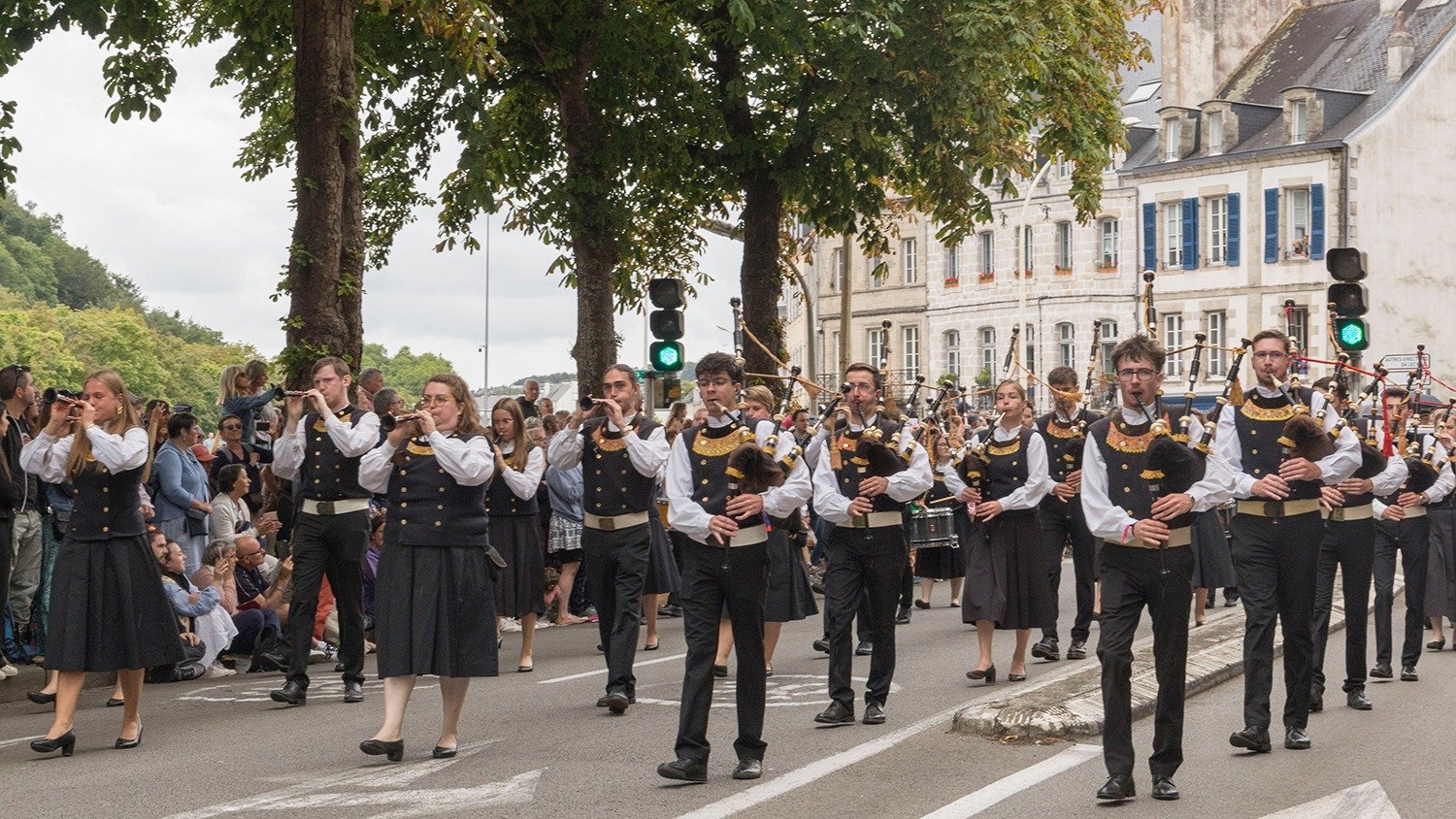
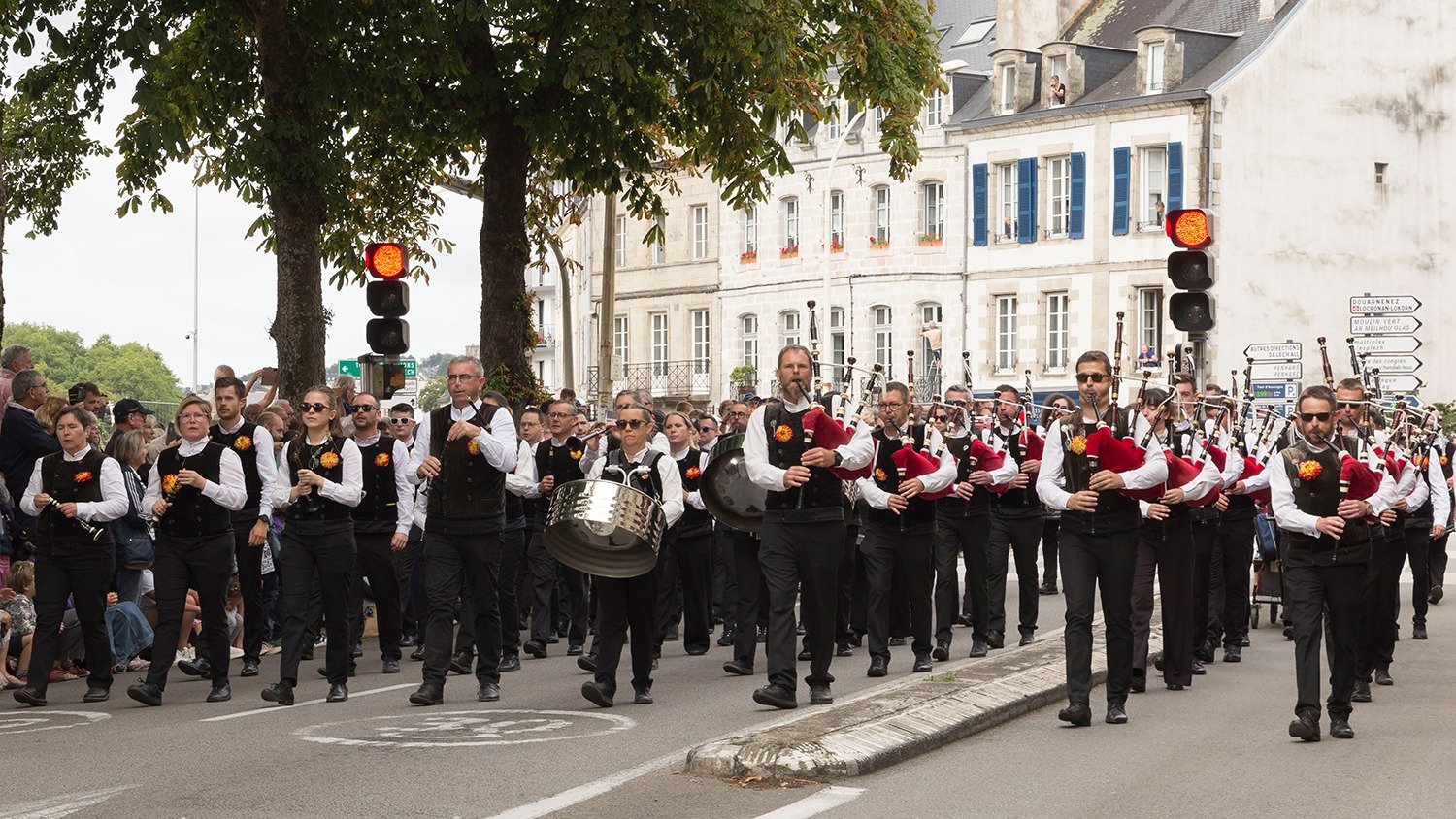
- Competitions: Annual championships for bagadoù (Breton pipe bands), bell-ringers, and traditional dancers, with categories for bagpipes, bombards, and dances like gavotte and hanter dro, drawing top talent from Brittany and beyond.
- Group Performances: A vibrant afternoon showcase (July 2026, 2:30 p.m.–5:00 p.m., Cornouaille Theatre) featuring groups like Bagad de Cap Caval, Cercle de Moulin Vert, Cercle d’Elliant, and other regional ensembles in elaborate costumes, blending music and dance.
- Special Traditions or Features:
- Queen of Cornouaille Election: A century-old ritual where candidates present their advocacy for Breton culture, followed by a ceremonial crowning attended by thousands, accompanied by music and pageantry.
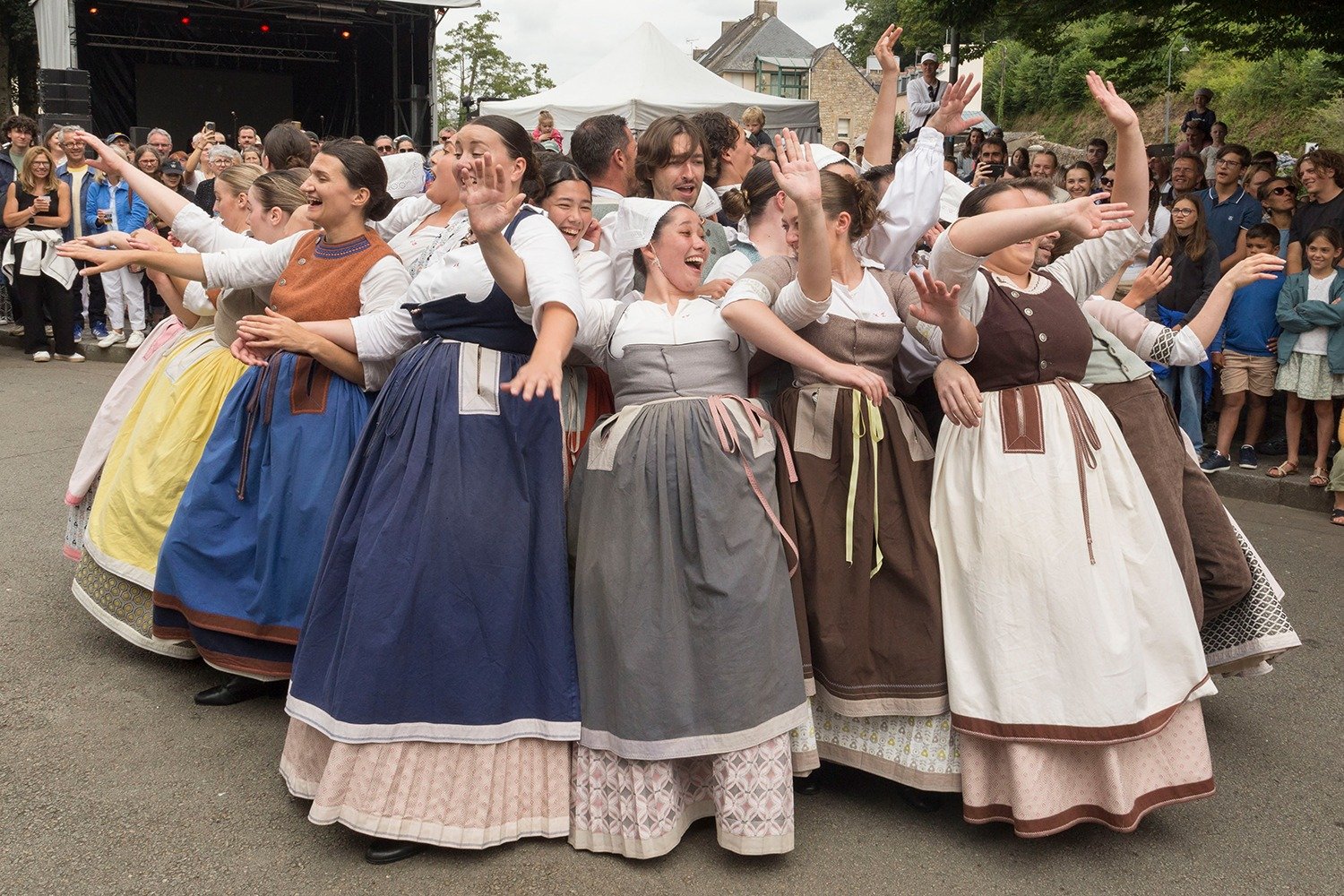
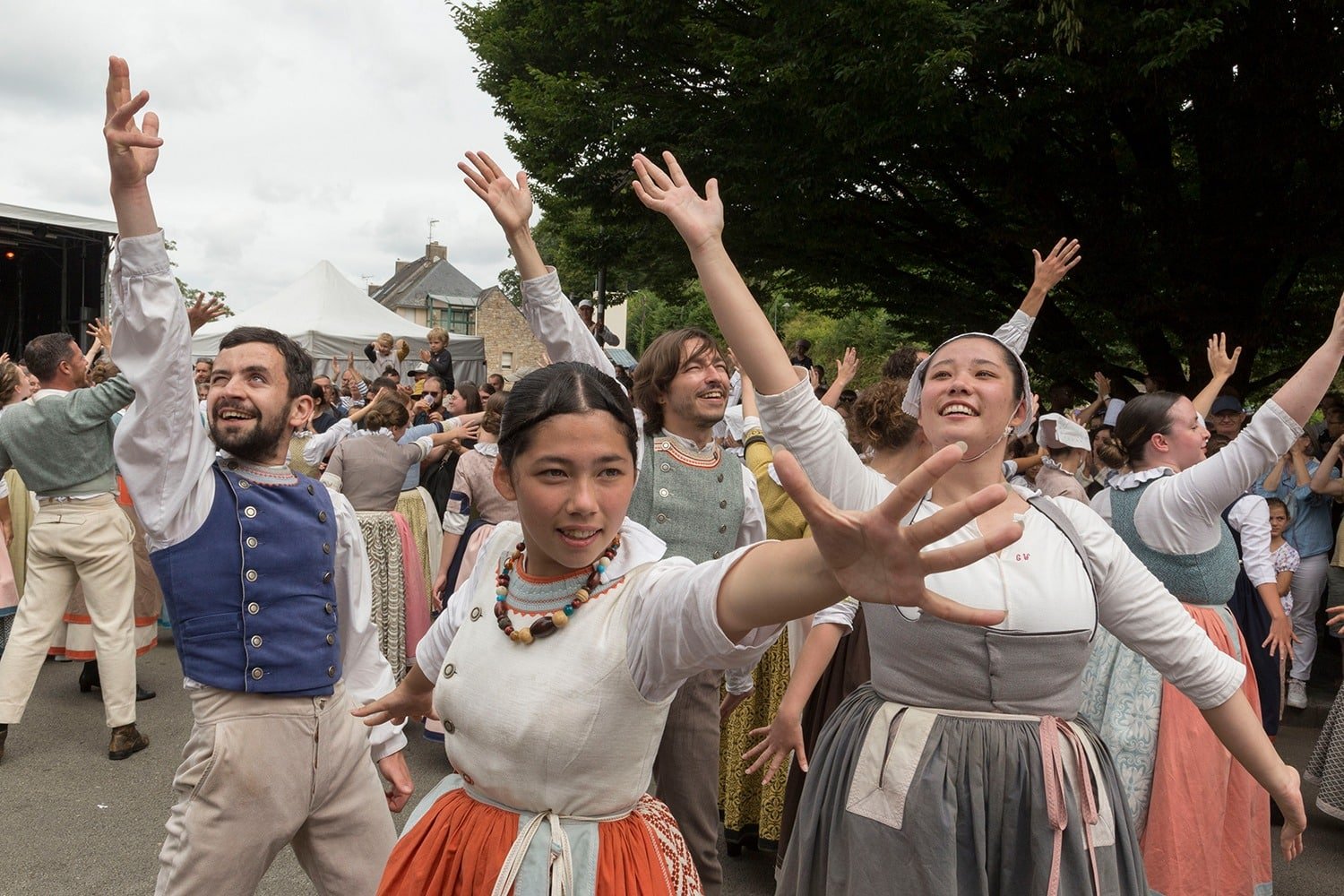
- Fest-Noz: Nightly Breton balls open to all, featuring communal dances like gavotte, an dro, and hanter dro, with live music from bagpipes, bombards, fiddles, and accordions, creating a festive, inclusive atmosphere.
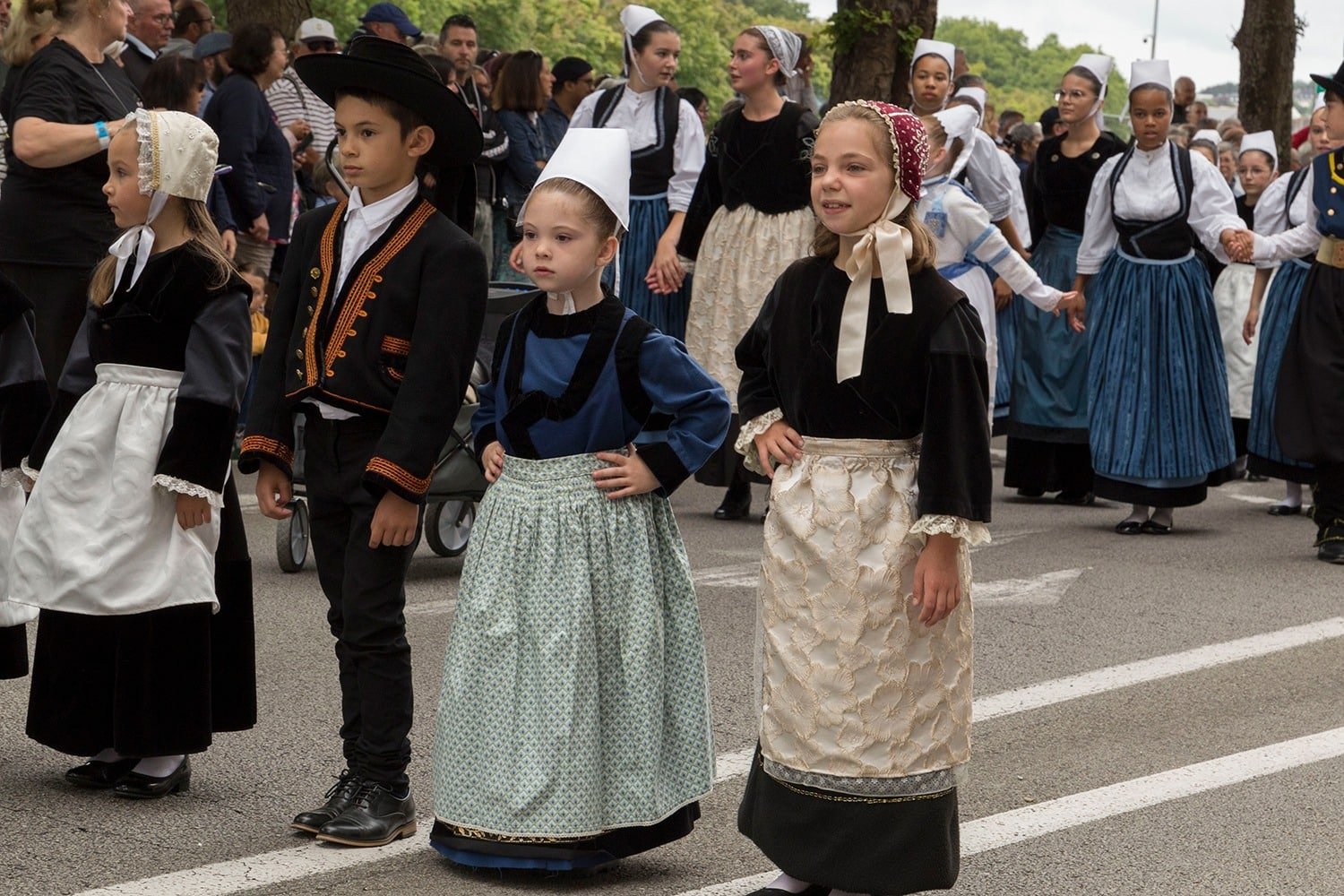
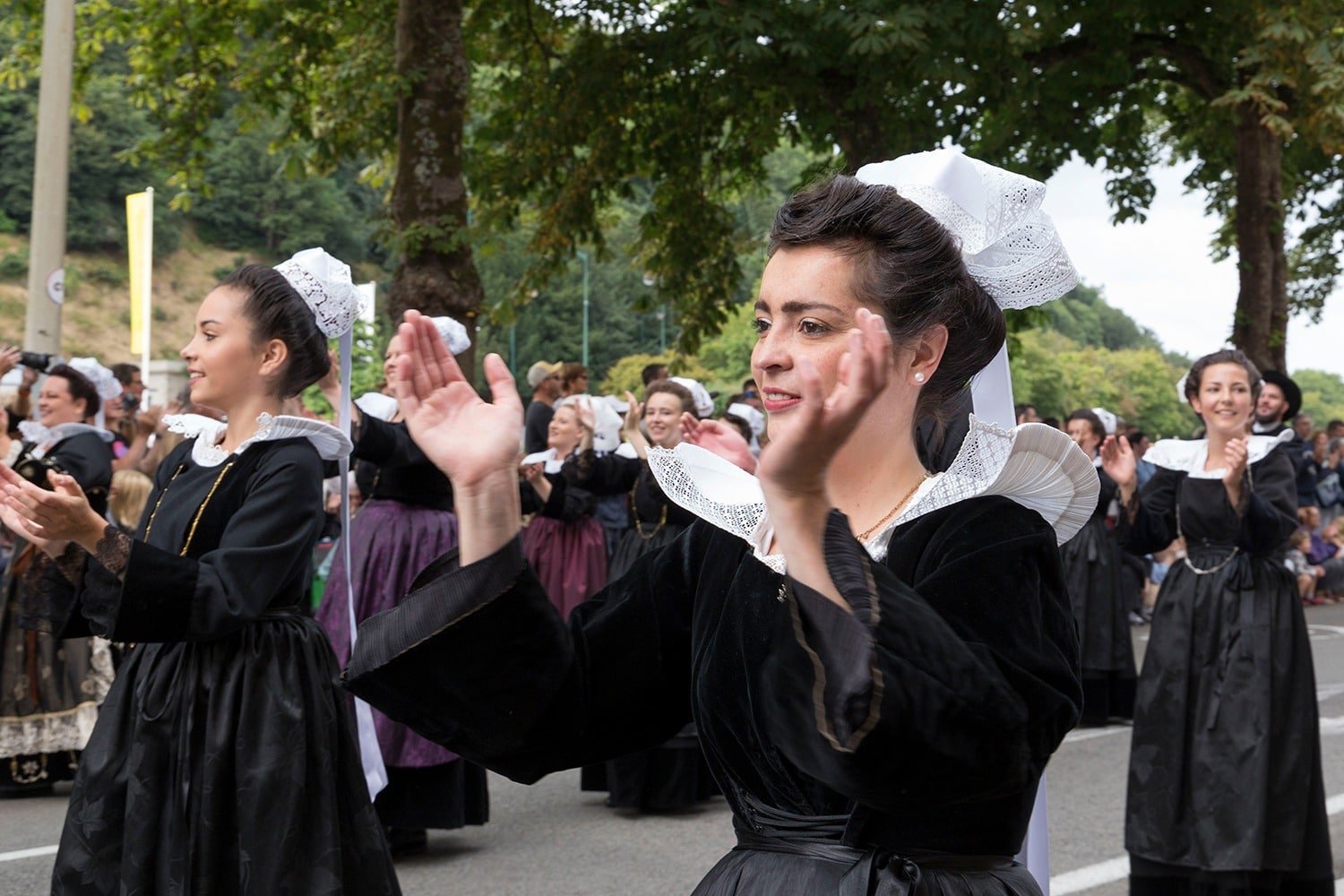
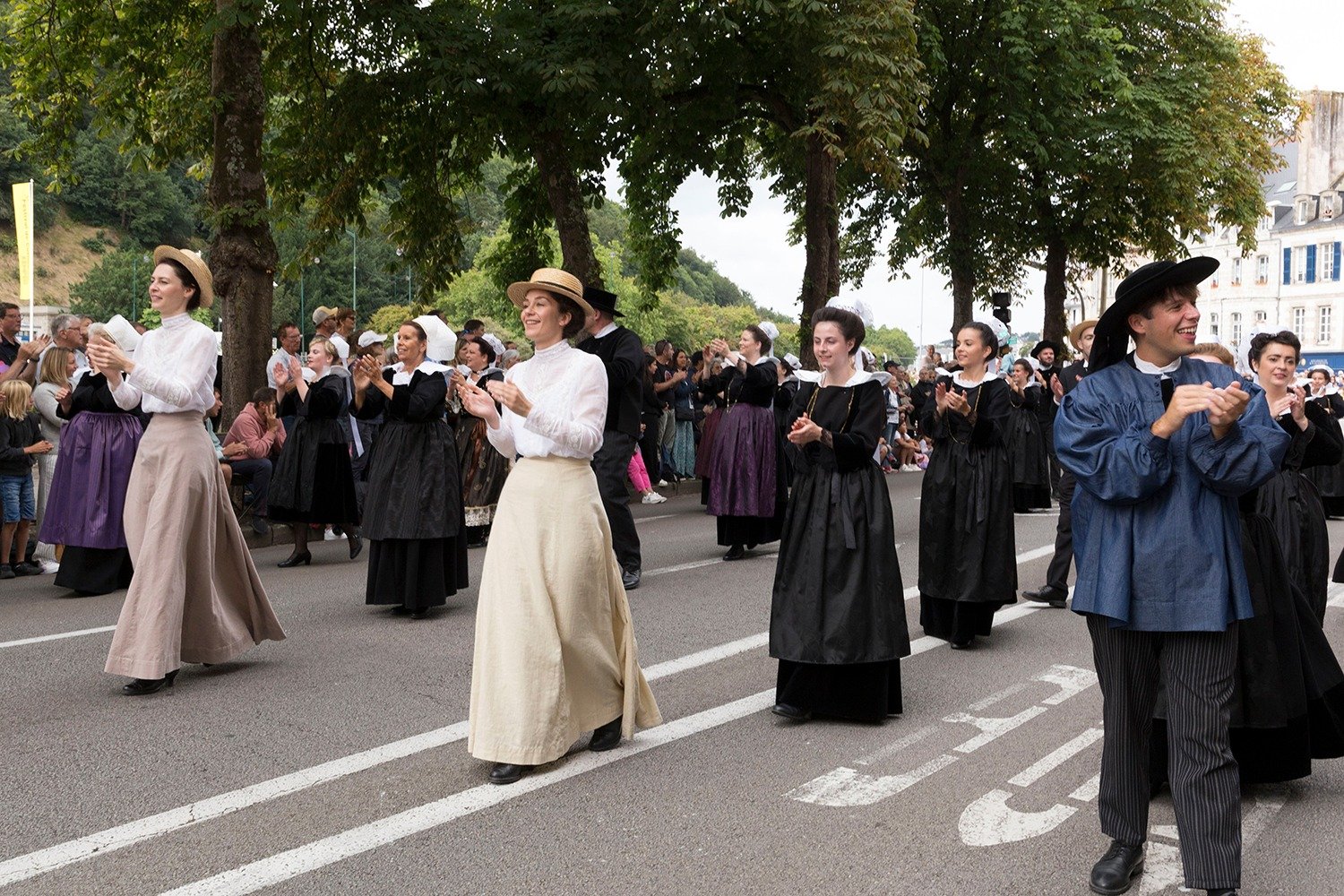
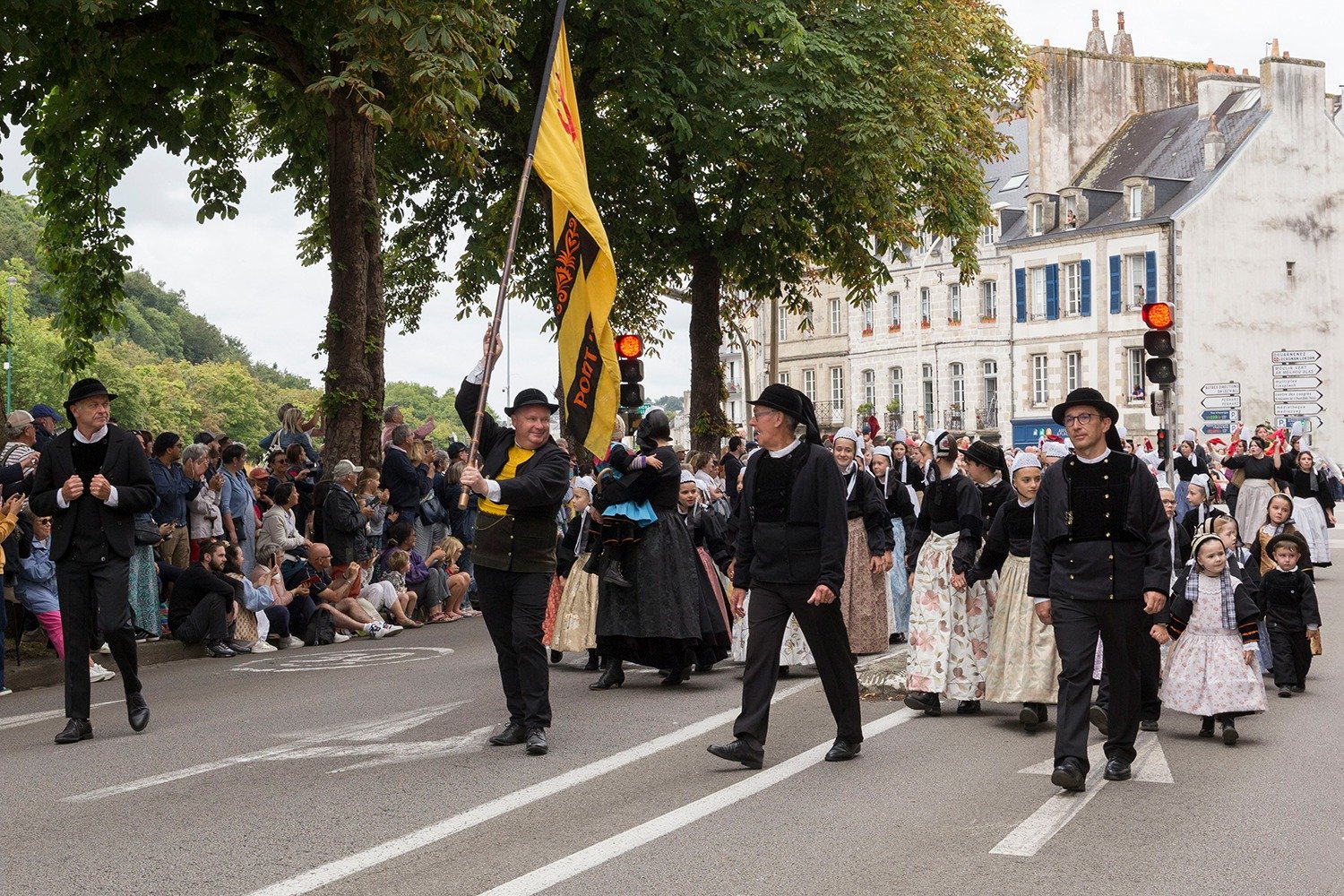
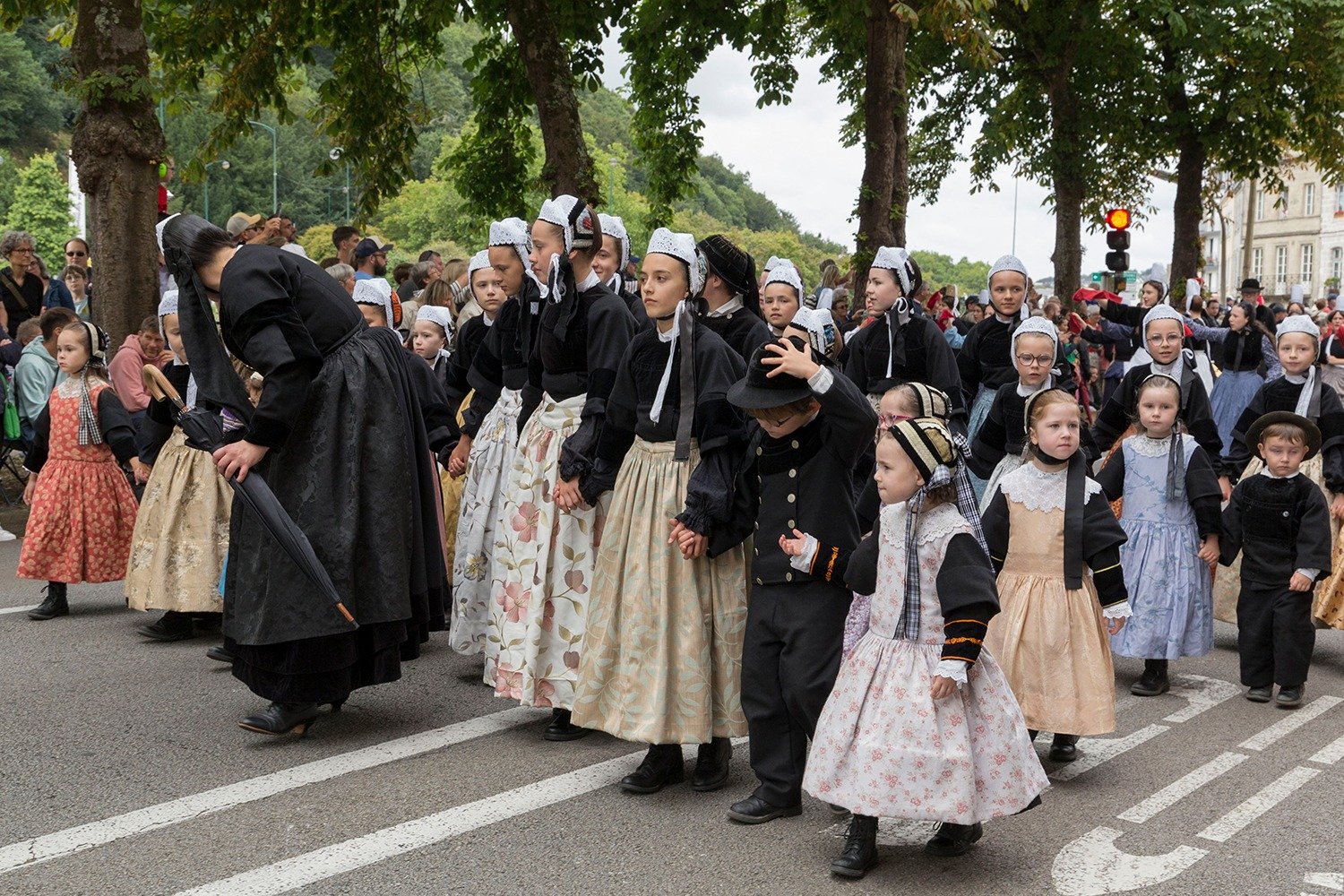
- Parades: The children’s parade (Saturday) engages young participants in colorful costumes, while the Great Sunday Parade features hundreds of performers, floats, and live music winding through Quimper’s historic streets, drawing massive crowds.
- Unique Attractions for Visitors:
- Cornouaille Gourmand Village: A dedicated space showcasing Brittany’s culinary artisans, offering tastings, cooking demonstrations, and sustainable food innovations like organic seafood, farm-to-table produce, and artisanal preserves.
- Cultural Workshops: Hands-on sessions to learn Breton dances (e.g., an dro), music (bagpipe or bombard basics), or Breton language phrases. Conferences cover topics like Arthurian legends, maritime history, and Breton folklore.
- Triomphe des Sonneurs: A grand closing event where dozens of musicians perform in unison, waving Brittany’s Gwenn Ha Du flag, creating a powerful, emotional finale.
- Exhibitions and Projections: Events like “Ciels de légendes” project mythical Breton scenes (e.g., Merlin, Morgane) on historic facades like Laiterie Gilbert or Saint-Corentin Cathedral, blending art, technology, and history.
- Craft Markets: Local artisans sell handmade goods, including pottery, lace, and Breton embroidery, reflecting regional craftsmanship.
Date & Duration
- Dates: Thursday, July 23 to Sunday, July 26, 2026
Visiting this event? Don’t miss out on these amazing activities and local experiences while you’re here.
Venue / Location
- City: Quimper, Finistère, Brittany, France
- Main Venues: Events span Quimper’s historic city center, including Place St-Corentin (main stage for performances), Moulin au Duc, Place Terre au Duc, Chapeau Rouge Convention Center, and Cornouaille Theatre.
- Notable Areas: The festival utilizes Quimper’s medieval old town, with cobblestone streets hosting parade routes (blue for children’s parade, red for Great Sunday Parade). Landmarks like the Odet River banks, Saint-Corentin Cathedral, and historic facades used for projections create an immersive setting. Outdoor stages, pop-up venues, and street performances enhance the festive atmosphere.
- Google Maps Address: 5B Rue de Kerfeunteun, 29000 Quimper, France
Ticket Information
- How Tickets Are Sold:
- Online via https://festival-cornouaille.bzh with secure payment options (credit card, PayPal, etc.).
- On-site at Chapeau Rouge Convention Center (1 Rue du Paradis, 29000 Quimper), open Monday–Saturday, 10:00 a.m.–8:00 p.m., and Sunday, 10:00 a.m.–5:00 p.m.
- Accepts Cezam checks, cash, and card payments; group discounts and multi-day festival passes may be available for purchase.
- Admission Type: Combination of free and paid events. Parades, fest-noz, street performances, and many outdoor activities are free; theater concerts, competitions, and select workshops require tickets.
- Ticket Pricing (USD):
- Minimum: $11 (approx. €10) for general admission to individual concerts or workshops.
- Maximum: $55 (approx. €50) for premium concert tickets (e.g., Cécile Corbel, Miossec) or multi-event festival passes covering major performances.
- Special Seating or VIP Options:
- Reserved seating for major concerts at Cornouaille Theatre, offering front-row, balcony, or premium views for enhanced comfort.
- VIP packages include priority access to concerts, exclusive meet-and-greets with artists, access to private festival lounges, and commemorative merchandise (pricing TBD, typically $100–$150, check website for 2026 details).
- Accessibility options for disabled attendees, including reserved seating areas, assisted entry, and sign language interpreters for select events (contact festival office to arrange).
Contact Information
- Email: contact@festival-cornouaille.bzh (general inquiries, ticketing, program details, accessibility requests)
- Phone: +33 2 98 55 53 53 (English, French, and limited Breton support, available 9:00 a.m.–5:00 p.m. weekdays)
- Website: https://festival-cornouaille.bzh (detailed program, ticket purchasing, updates, and downloadable PDF schedule)
- Social Media:
- Instagram: @festivalcornouaille
- Facebook: @festivalcornouaille
- Twitter/X: @festivalcornouaille
- Key Staff: Past presidents include Jean-Michel Le Viol (1993–2023), Jean Coroller (1974–1993), and Fañch Bégot (27 years); current leadership details available via office contact. Notable contributors include Louis Le Bourhis (founder) and Per-Jakez Hélias (co-founder).
- Press/Volunteers: Press inquiries to contact@festival-cornouaille.bzh; volunteer applications via website or email (2026 details TBD, roles include logistics, ticketing, guiding, and cultural interpretation).
- Note: Response time ~24–48 hours. Multilingual support ensures accessibility for international visitors, with staff trained to assist in English and French.
Cultural Experience
- Traditions:
- The Queen of Cornouaille election, a century-old ritual, showcases young women advocating for Breton culture, with presentations on heritage preservation, followed by a ceremonial crowning attended by thousands.
- Fest-noz balls foster community spirit, where locals and visitors of all ages dance together to traditional music, creating a lively, inclusive atmosphere.
- The Gradlon Circle, a cultural initiative, encourages youth involvement and creative contributions to Brittany’s heritage, supporting projects like new music or dance compositions.
- Music:
- Traditional bagad performances with bagpipes, bombards, and drums, led by groups like Bagad Kemper, known for intricate harmonies and regional melodies.
- Modern Breton artists like DISKAR blend acoustic chant, guimbarde (jaw harp), and stomp, while international Celtic-inspired acts add global flair.
- Street performances by buskers and small ensembles enhance the festival’s immersive soundscape.
- Costumes:
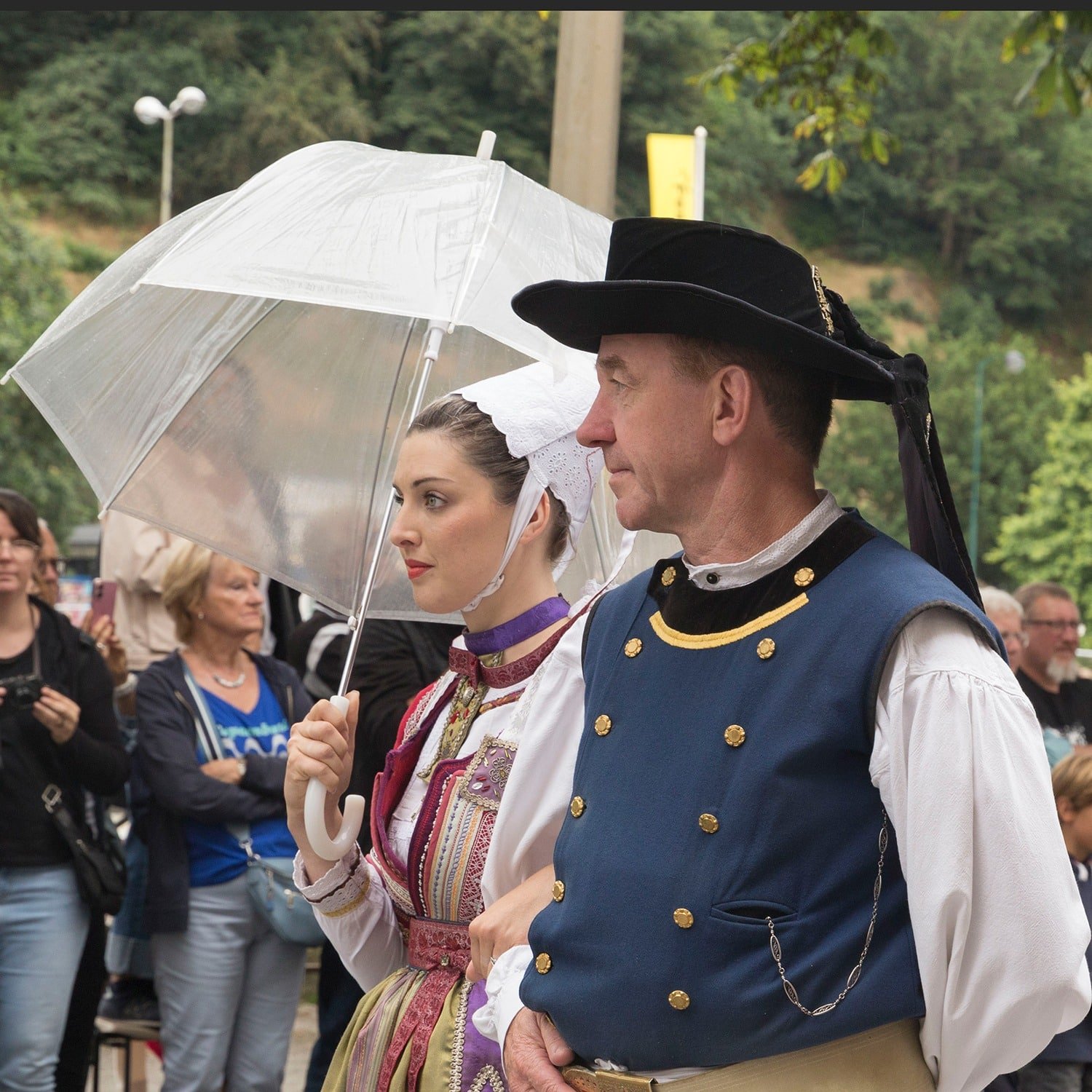
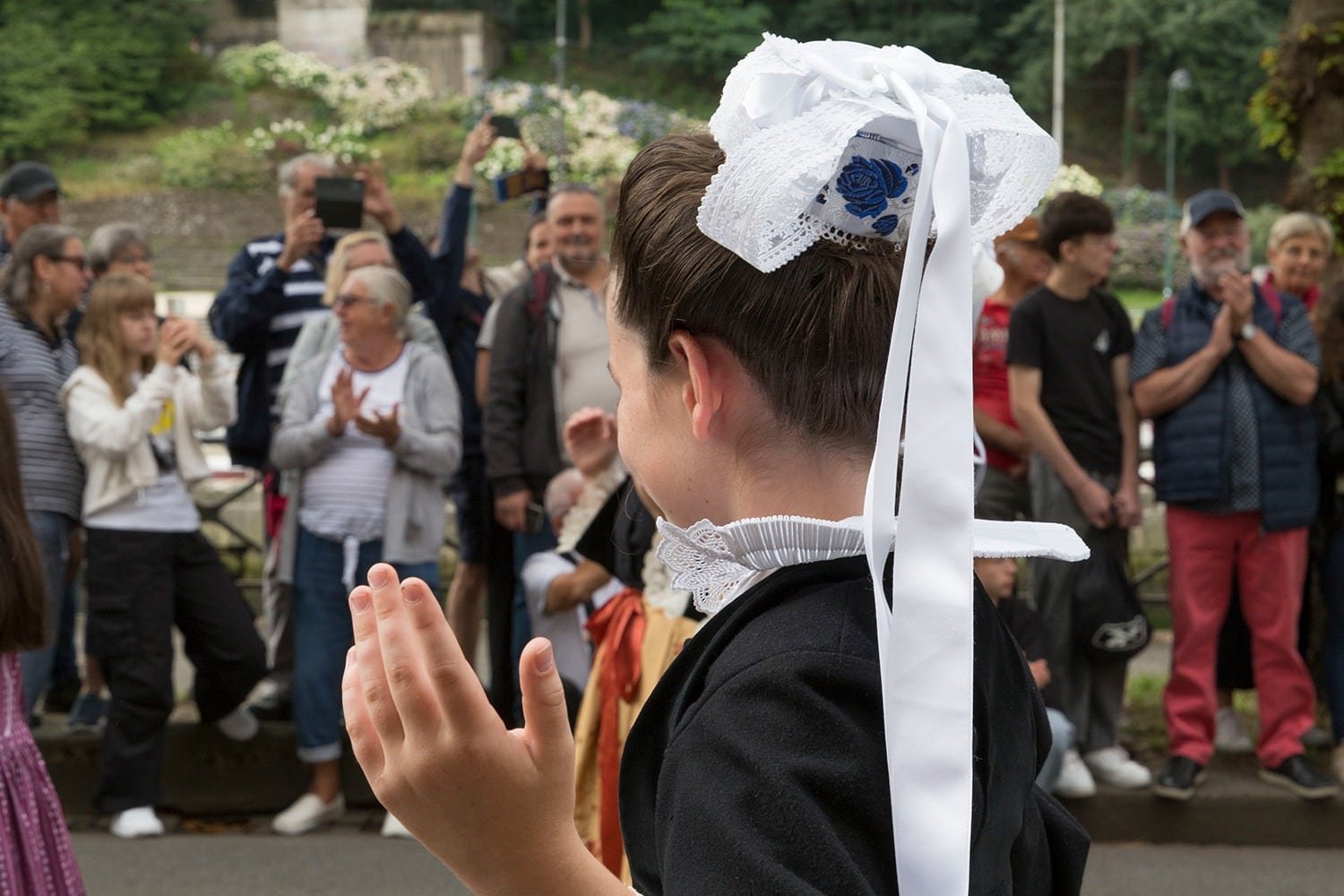
- Participants wear traditional Breton attire, including intricate lace coiffes (headdresses), embroidered vests, and regional variations like Bigouden’s tall headdresses or Glazik’s colorful skirts, prominently displayed in parades and dance performances.
- Costume exhibitions at venues like Place St-Corentin showcase the history, craftsmanship, and regional diversity of Breton dress, with interactive displays for visitors.
- Local Customs:
- Promotion of the Breton language through bilingual signage (French/Breton), workshops teaching phrases like “Demat” (hello) or “Kenavo” (goodbye), and performances incorporating spoken Breton.
- Conferences on Breton folklore, covering Arthurian legends (e.g., Merlin, Morgane), maritime traditions, and the history of the Gwenn Ha Du flag, often led by local historians or cultural scholars.
- Storytelling sessions where elders share oral histories, myths, and tales with younger generations, preserving Brittany’s narrative heritage.
Food & Drinks
- Must-Try Specialties:
- Kouign-amann: A rich, buttery, caramelized layered pastry, a Breton classic available at Cornouaille Gourmand stalls and local bakeries.
- Crêpes and Galettes: Sweet crêpes with fillings like Nutella, caramel, or fresh fruit; savory buckwheat galettes with smoked salmon, ham, cheese, or wild mushrooms.
- Seafood: Fresh Brittany oysters, mussels in white wine or cider sauce, langoustines, and crab, sourced from local fisheries and served at food stalls or nearby restaurants.
- Breton Cider (Sidre) and Chouchen: Sparkling apple cider in traditional ceramic cups and honey-based mead, offering refreshing or sweet beverage options.
- Artisanal Cheeses and Breads: Local farm cheeses (e.g., creamy Camembert-style, tangy goat cheese) paired with crusty Breton breads, featured in tastings and cooking demos at the Cornouaille Gourmand village.
- Paté Hénaff and Andouille: Iconic Breton pork paté and smoked sausage, showcasing regional charcuterie traditions, often served with mustard or pickles.
- Local Desserts: Far Breton (custard flan with prunes) and palets bretons (buttery shortbread cookies), perfect for snacking during festival events.
Getting There
- By Air: Quimper-Cornouaille Airport (UIP, 15-minute drive) serves regional flights; Brest Bretagne Airport (1-hour drive) offers more connections. International travelers typically fly into Paris Charles de Gaulle or Paris Orly, then connect via train or domestic flight to Quimper (Air France or regional carriers).
- By Train: Quimper train station, a 15-minute walk from the festival, is served by TGV (high-speed trains from Paris, ~4 hours), TER (regional trains), and coaches. Check schedules at https://ter.sncf.com/bretagne or https://www.sncf-connect.com.
- By Bus: QUB bus network operates daily, with free weekend services during the festival (Lines A & B until midnight Thursday–Saturday; dedicated shuttles N1–N5 from park-and-ride lots to city center on Sunday). Adjusted routes on July 25–26, 2026, due to potential overlap with events like the Women’s Tour de France (check https://qub.fr for updates).
- By Car: Park-and-ride facilities at city entrances (Kerlan Vihan, CTM at Hippodrome, E.Leclerc at Gourvily, Creac’h Gwen) minimize congestion. Limited city-center parking; expect restrictions during parades or overlapping events. Traffic updates at https://www.quimper.bzh.
- By Ferry: Brittany Ferries operates to nearby ports (Roscoff, ~1.5-hour drive; St. Malo, ~2.5-hour drive) from the UK or Ireland, with onward train or bus connections to Quimper.
- Accessibility: Pedestrian-friendly festival area with cobblestone paths; HandiQUB services for disabled attendees (wheelchair-accessible shuttles, contact QUB.fr). Bike rentals available in Quimper for eco-friendly transport.
Accommodation Options
- Hotels:
- Hôtel Oceania Quimper: 4-star, central location near Odet River, ~$110–$220/night, with modern amenities, festival packages, and river views.
- Best Western Plus Hôtel Kregenn: Comfortable, 10-minute walk to venues, ~$90–$170/night, family-friendly with breakfast included.
- Hôtel Escale Oceania Quimper: Budget-friendly 3-star option, ~$70–$130/night, close to train station and festival sites.
- Guesthouses/B&Bs:
- Manoir de Kerhuel: Historic manor, 15-minute drive, ~$80–$140/night, offering cultural immersion in a rural setting with gardens.
- La Maison de l’Odet: Cozy B&B near the river, ~$70–$110/night, with personalized Breton hospitality and homemade breakfasts.
- Chambres d’Hôtes Ty Dreux: Quaint guesthouse in Quimper’s outskirts, ~$65–$100/night, with family-run charm.
- Camping:
- Camping de l’Orangerie de Lanniron: Scenic campsite with facilities, 10-minute drive, ~$25–$60/night, popular for festival-goers with shuttle access.
- Camping Les Saules: Budget-friendly, festival-friendly, ~$20–$50/night, with pitches and cabins near Quimper.
- Alternative Options: Vacation rentals (Airbnb, Vrbo) offer apartments or cottages in Quimper, ~$50–$200/night, ideal for groups. Hostels like Auberge de Jeunesse Quimper provide dorms for budget travelers, ~$25–$40/night.
- Booking Tips: Reserve 6–12 months in advance due to high demand during the festival. Check https://www.quimper-tourisme.bzh for listings, festival packages, or group rates. Some accommodations offer shuttle services or discounted rates for festival attendees.
Maps
Contact
Video
FAQ's
What are the dates, duration, and schedule of the Festival de Cornouaille 2026?
The festival is scheduled for July 21–July 26, 2026 (to be confirmed, based on typical mid-to-late July dates), lasting 6 days. Events run daily from 10:00 a.m. to midnight, including parades, concerts, fest-noz, workshops, and culinary tastings across Quimper’s historic center, catering to all ages and interests.
How much are tickets, where can I buy them, and what events are free?
Tickets range from $11 (approx. €10) for general admission to individual concerts or workshops to $55 (approx. €50) for premium concert tickets (e.g., Cécile Corbel, Miossec) or multi-event festival passes. Purchase online at https://festival-cornouaille.bzh or on-site at Chapeau Rouge Convention Center (1 Rue du Paradis, 29000 Quimper), open Monday–Saturday, 10:00 a.m.–8:00 p.m., and Sunday, 10:00 a.m.–5:00 p.m. Free events include parades, most fest-noz, street performances, and select exhibitions.
Is the festival family-friendly, and what activities are available for children?
Yes, the festival is multigenerational, welcoming families with a dedicated children’s parade (Saturday), kid-friendly workshops (e.g., basic Breton dance or music), storytelling sessions, and costume displays. Venues are stroller-accessible, and children under 12 often enter free for ticketed events (confirm via website). Family zones at Place St-Corentin offer games and crafts.
How can I get to the festival, and what transport options are available?
Reach Quimper via Quimper-Cornouaille Airport (15-minute drive), Brest Bretagne Airport (1-hour drive), or Paris connections (Charles de Gaulle/Orly, then train/flight). Quimper train station (15-minute walk) is served by TGV, TER, and coaches. QUB buses and free weekend shuttles (N1–N5) connect park-and-ride lots (Kerlan Vihan, CTM, E.Leclerc, Creac’h Gwen) to the city center. By car, use park-and-ride to avoid congestion, especially during parades or overlapping events like the Women’s Tour de France (July 25–26, 2026). Ferries to Roscoff or St. Malo connect via train or bus. HandiQUB services ensure accessibility.
What is the festival’s location, and what makes it unique?
Located at 5B Rue de Kerfeunteun, 29000 Quimper, France, the festival spans Quimper’s medieval old town, with venues like Place St-Corentin, Cornouaille Theatre, and Saint-Corentin Cathedral. Its unique blend of century-old traditions (Queen election, fest-noz, parades), modern performances (concerts, projections), and eco-conscious initiatives (sustainable food, accessible programming) set against historic architecture creates an unforgettable cultural experience, recognized by UNESCO for its heritage preservation.