
Guča Trumpet Festival 2027, Serbia
Dragačevo History & Cultural Roots
The Dragačevo Trumpet Festival traces its profound origins back to the middle of the twentieth century, specifically launching in 1961 as a localized regional showcase for traditional Serbian brass instrumentation. Conceived by visionary cultural preservationists and local journalists, the gathering aimed to rescue authentic rural folk melodies from fading into total obscurity amid rapid modernization. Over subsequent decades, this modest village assembly expanded organically, drawing international acclaim and transforming into one of the planet’s largest and most chaotic celebrations of indigenous brass artistry. The historical roots of the event remain deeply intertwined with the agrarian lifestyle, military heritage, and familial identity of western Serbia.
Throughout its storied existence, the festival has weathered intense political shifts, economic transformations, and global social changes while steadfastly maintaining its raw, unpolished cultural soul. Elders in the region passed down the intricate nuances of brass interpretation from generation to generation, ensuring that historical stylistic elements survived long after original military bands disbanded. The event serves as a living museum of Balkan history, where ancient pagan rituals, wartime marching tunes, and wedding folk dances merge into a continuous cultural tapestry. This fierce dedication to historical continuity ensures that every modern iteration honors the foundational vision established by the original founders in rural Dragačevo.
- Founding Year: Established officially in 1961 as a localized regional folk competition.
- Cultural Mission: Dedicated to preserving authentic rural Serbian wind instrument traditions and regional folklore.
- Evolution: Grew from a small village gathering into a massive international phenomenon.
- Agrarian Roots: Tied deeply to historical agricultural celebrations, family slavas, and community milestones.
- Military Legacy: Incorporates historical 19th-century military marching motifs into modern civilian band repertoires.
- Archival Efforts: Features dedicated historical exhibitions documenting legendary past masters of the instrument.
- Intergenerational Transfer: Older virtuosos actively mentor youth groups to ensure stylistic techniques survive intact.
- Folk Rituals: Integrates ancient regional ceremonies, including traditional kolo circle dances, into daily routines.
- Global Diaspora: Serves as an annual homecoming anchor for millions of people of Serbian descent worldwide.
- Municipal Oversight: Regulated carefully by local cultural boards to protect traditional artistic standards from commercial dilution.
Official Brass Competition & Senior Orchestras
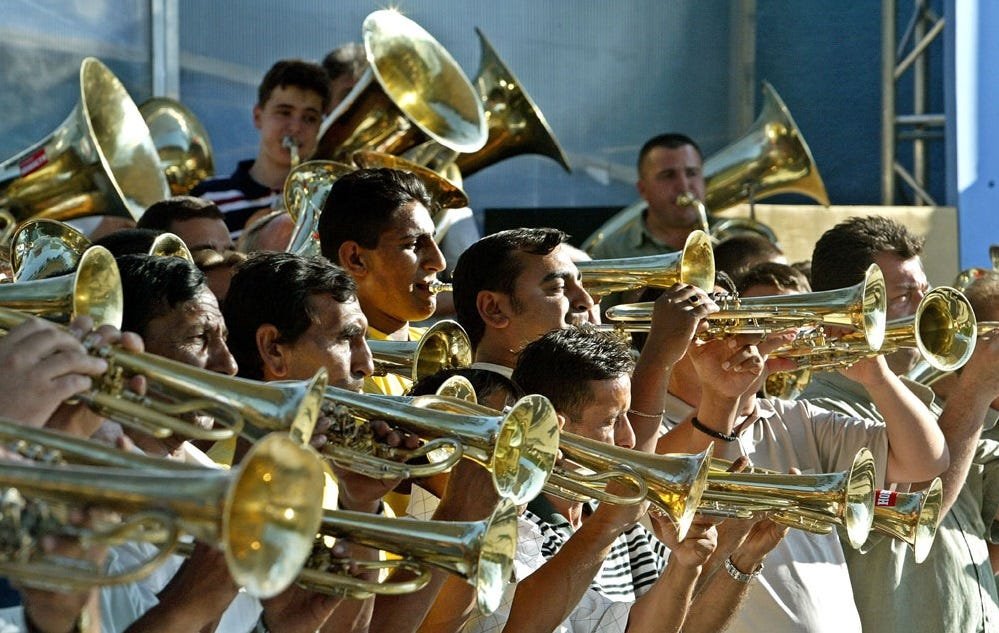
The pinnacle of the festival centers on the fierce, highly anticipated official competition where elite senior brass orchestras battle for supreme musical honors. Representing regions across the Balkans, these seasoned musicians undergo grueling preliminary elimination rounds months in advance just to secure a coveted spot on the main competitive stage. Orchestras perform a rigorous sequence of compulsory folk numbers alongside complex improvised pieces that test their speed, emotional depth, and technical endurance. The atmosphere inside the main arena during these performances is electric, with tens of thousands of passionate spectators hanging on every single note played.
Enjoy Your Event Stress-Free with Euro Travelo
Planning a trip to attend a festival, concert, or business event in Europe can be overwhelming—tickets, travel, accommodation, and local logistics all take time and effort. Euro Travelo makes it simple by providing everything you need through one trusted company. You save time, avoid stress, and enjoy a seamless experience from start to finish.
Prestigious accolades awarded by both expert juries and the general public include the coveted Golden Trumpet, best orchestra designation, and best traditional stylistic interpretation. Achieving a victory in Guča elevates a local brass band to legendary status across Eastern Europe, instantly securing international tour dates and recording contracts. Musicians spend their entire lives perfecting the distinct rapid-fire trills, soaring high notes, and thunderous bass horn rhythms that define the unique Dragačevo sound. This competitive drive maintains an exceptionally high artistic standard, preventing the traditional music from becoming stagnant or purely commercialized.
The physical stamina required to perform at this elite competitive level is staggering, with sets often demanding continuous, high-tempo playing under intense summer heat and roaring spotlights. Orchestras showcase deep emotional versatility, transitioning seamlessly from melancholic, tear-jerking slow lamentations to chaotic, breakneck dance numbers that send crowds into raptures. The interaction between the brass players and the surrounding audience creates a dynamic feedback loop of raw energy that cannot be replicated in a standard indoor concert hall. Ultimately, the senior competition represents the beating heart of the festival’s artistic credibility and musical excellence.
- Preliminary Heats: Orchestras must survive rigorous regional qualifying rounds months before reaching the main stage.
- Jury Panel: A specialized committee of musicologists evaluates technical precision, tonal quality, and authenticity.
- Audience Voting: Spectators cast votes to determine the recipient of the highly prestigious Golden Trumpet award.
- Compulsory Numbers: Every competing band must perform traditional regional folk tunes prescribed by the organizing committee.
- Master Title: Performers who achieve three major victories earn the lifelong honorary title of master of the trumpet.
- Orchestra Size: Standard ensembles consist typically of ten to twelve members featuring horns, tubas, and percussion.
- Stage Production: High-powered sound systems and giant screens broadcast every intricate finger movement to massive crowds.
- Repertoire Range: Sets combine military marches, wedding kolo rhythms, and complex improvisational jazz-fusion elements.
- International Entrants: While dominated by Serbian bands, select foreign ensembles occasionally qualify through special invitation.
- Emotional Intensity: Performances routinely evoke tears, joyous cheering, and wild communal dancing among spectators.
- Historical Prestige: Winning the competition guarantees instant regional fame and extensive international media coverage.
- Post-Victory Celebrations: Triumphant bands lead massive, spontaneous street parades immediately following the final awards announcement.
Event Schedule
- Event Date: August 2027 (Dates TBD)
- Event Duration: Several days and consecutive nights of continuous Balkan brass music celebrations
Visiting this event? Don’t miss out on these amazing activities and local experiences while you’re here.
Serbian Gastronomy, Tapas & Drink Culture
- Spit-Roast Pork: Whole pigs roasted slowly over open wood fires stand as the undisputed culinary centerpiece of the festival.
- Local Rakija: Traditional homemade plum brandy, known locally as šljivovica, flows freely to welcome guests and fuel celebrations.
- Grilled Meats: Massive portions of succulent cevapi, pljeskavica patties, and spicy sausages sizzle continuously on outdoor charcoal grills.
- Proja Cornbread: Warm, dense traditional cornbread served fresh alongside aged kajmak cream cheese and salty white cheeses.
- Sarma Rolls: Slow-cooked sour cabbage leaves stuffed generously with minced meat and rice, simmered in rich clay pots.
- Draft Beer Culture: Cold local lagers are dispensed by the liter from massive temporary taps surrounding every major marquee.
- Hearty Soups: Steaming bowls of rich meat broths and bean stews provide vital nourishment for late-night partygoers.
- Communal Feasting: Long wooden outdoor tables encourage large groups of strangers to share massive platters of food together.
- Salad Staples: Crisp shopska salads featuring diced tomatoes, cucumbers, and onions smothered in grated white cheese.
- Baking Traditions: Sweet and savory pastries, including flaky burek, are baked fresh daily by local village women.
Culinary indulgence plays an absolutely essential role in the festival experience, anchoring revelers with heavy, deeply satisfying traditional Serbian comfort food. The unmistakable aroma of roasting meat hangs thick over the entire town, emanating from hundreds of open-air spits where whole pigs turn slowly over fragrant beechwood embers. Master roasters monitor the cooking process with meticulous precision, ensuring crispy golden crackling and melt-in-the-mouth tenderness that feeds hungry crowds around the clock. Paired with crusty artisan bread and raw onions, this feast provides the heavy caloric foundation required for days of non-stop celebration.
Beverage culture is dominated by the legendary Serbian rakija, a potent fruit brandy—most commonly distilled from plums—that serves as the ultimate social lubricant and greeting ritual. Upon arrival at homestays or taverns, guests are routinely offered a complimentary shot of homemade plum schnapps to ward off fatigue and embrace local warmth. Alongside this fiery spirit, ice-cold draft beers flow endlessly from sprawling outdoor taps, quenching the intense summer thirst generated by hours of dancing in the dusty heat. This hearty approach to eating and drinking turns every meal into an extended, joyful celebration of abundance.
Late-night food stalls operate through the dark hours, serving steaming portions of grilled meats and rich stews to midnight revelers seeking recovery fuel before dawn breaks. The shared dining experience across long, communal wooden tables breaks down social barriers instantly, encouraging strangers to clink glasses and exchange stories across cultural divides. Every culinary offering reflects the fertile agricultural bounty of the surrounding Dragačevo hills, emphasizing rich flavors, organic ingredients, and unpretentious preparation methods. Ultimately, the gastronomy of the festival is a warm, embracing expression of authentic Serbian hospitality in its purest form.
Ticket Prices
- How Tickets Are Sold: General festival access is open to the public online and at physical municipal gates upon arrival, while concert hall passes can be purchased via authorized regional ticket distributors.
- Admission Type: Free Admission for general pedestrian access to the town streets, open-air public spaces, and general street parades.
- Ticket Pricing: Free Admission for walking grounds, with specialized grandstand seating tickets and indoor venue passes ranging from $15.00 to $65.00 depending on the specific headliner performance.
- Special Seating Options: Reserved grandstand seating options near the main competition stages can be secured in advance to guarantee unobstructed sightlines during peak evening concerts.
- VIP Options: Exclusive VIP hospitality passes ranging from $110.00 to $330.00 provide access to restricted lounge zones, premium catering, and meet-and-greet opportunities with master orchestra leaders.
Getting to the Venue
- City and Country: Guča, Serbia
- Venue Name: Dragačevo Fairgrounds
- Google Maps Address: Guča, Serbia
Worried about accommodation? Hotels near this event sell out quickly, and prices tend to rise fast. Check out these accommodation options:
Dragačevo Street Marches & Impromptu Jam Sessions
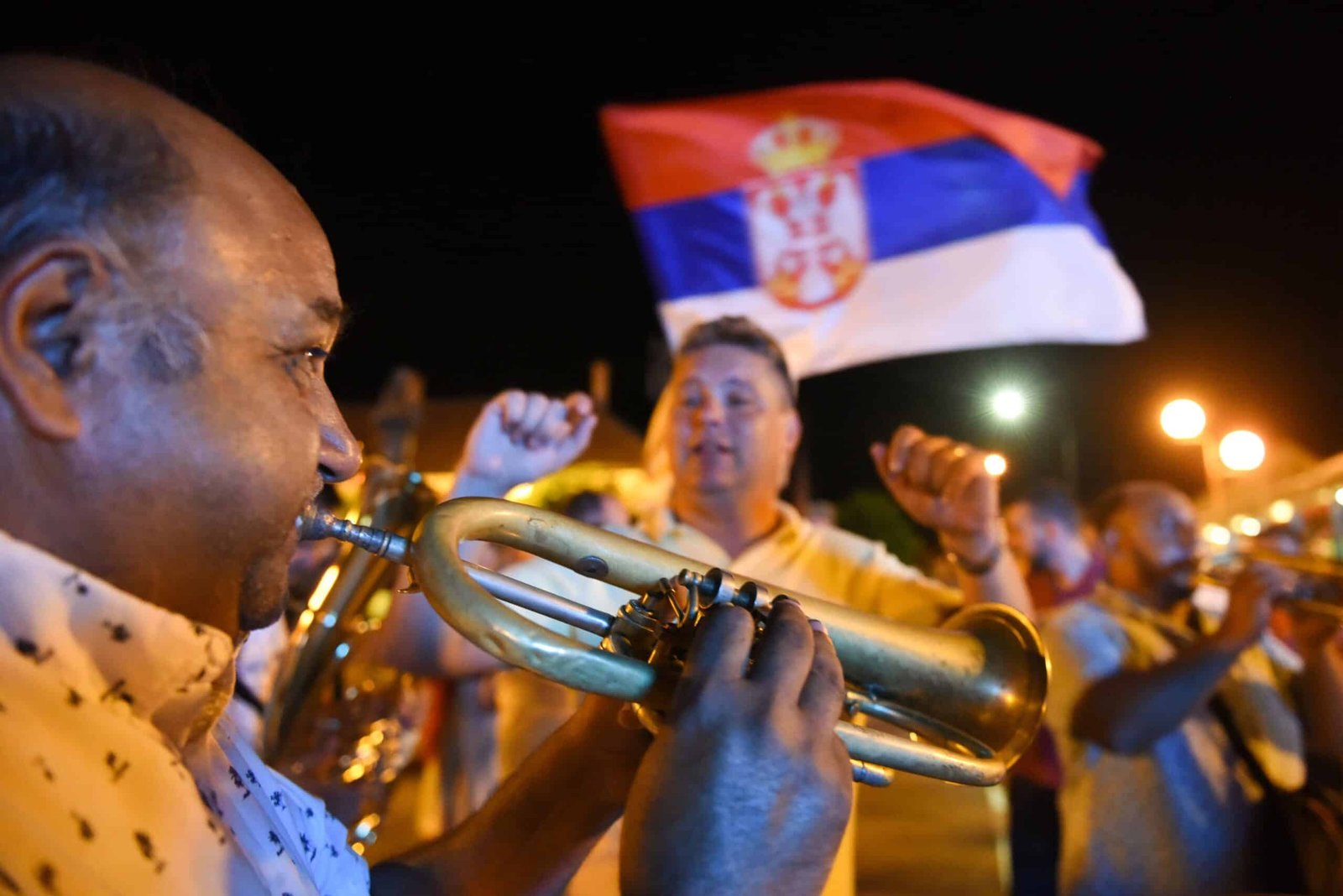
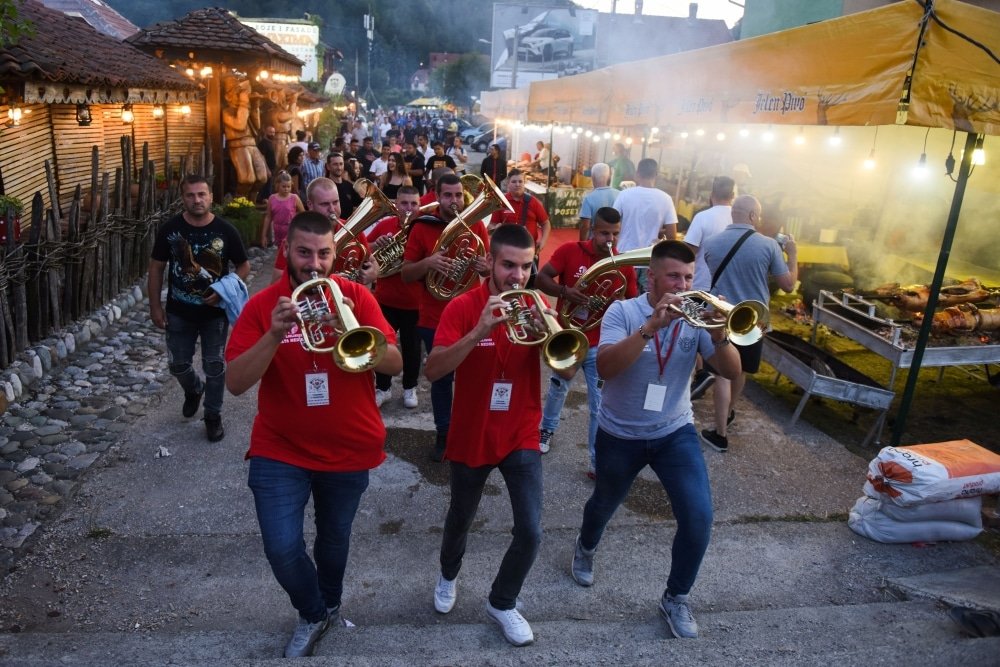
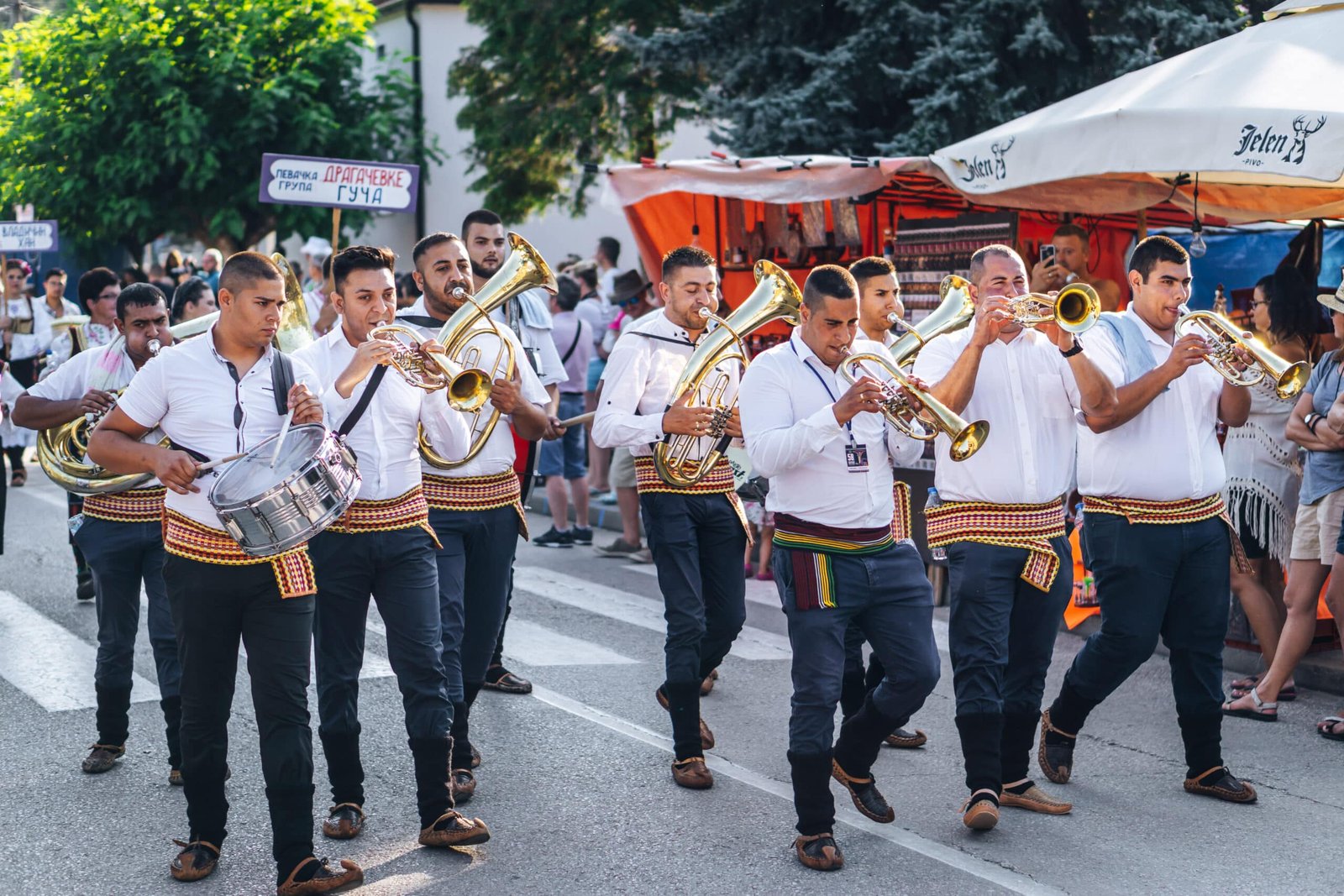
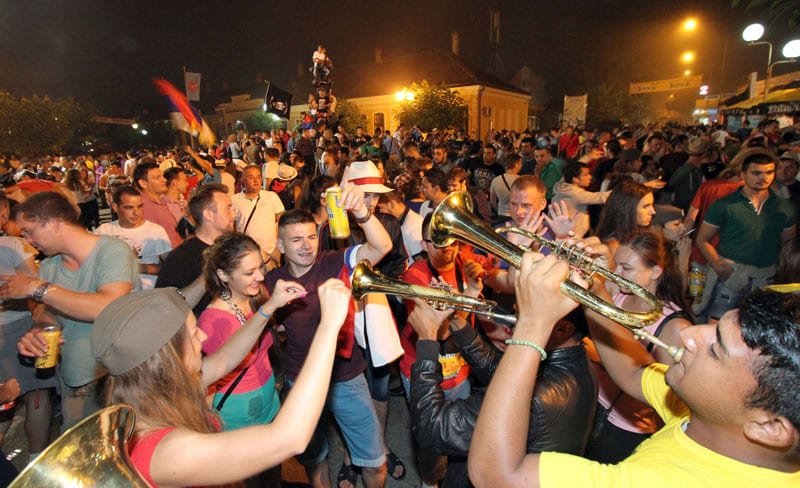
The streets of Guča transform into a chaotic, mesmerizing theater of sound as spontaneous brass marches erupt dynamically across every corner of the town. Unlike the structured performances confined to official stages, these mobile street processions feature bands weaving directly through dense, moving walls of festival-goers. Trumpeters, saxophonists, and drummers march shoulder-to-shoulder with ecstatic travelers, creating an immersive, boundary-free environment where performer and spectator merge entirely. This unpredictable street-level energy defines the true bohemian spirit that has captivated international wanderers for generations.
Impromptu jam sessions spontaneously ignite outside crowded local taverns, campsite clearings, and street corners as rival musicians challenge one another in friendly musical duels. These unscripted encounters can last for hours, drawing massive circles of cheering onlookers who shower the performers with tips and enthusiastic applause. There are no strict setlists or timetables during these street sessions; instead, bands play entirely by intuition, reading the mood of the crowd and accelerating tempos until the atmosphere reaches absolute fever pitch. This organic street culture ensures that magic moments happen where least expected, rewarding those who wander off the beaten path.
- Mobile Processions: Bands march directly through dense pedestrian crowds without barricades or fixed stages.
- Spontaneous Duels: Rival musicians engage in friendly, high-stakes acoustic battles on crowded street corners.
- Tavern Sessions: Intimate acoustic jams erupt organically inside local drinking dens and packed roadside patios.
- Audience Proximity: Spectators dance inches away from performing horn players in a completely immersive environment.
- No Setlists: Street performances rely entirely on improvisation and immediate crowd feedback.
- Tip Culture: Grateful listeners actively toss cash bills to musicians to encourage faster tempos and extended solos.
- Acoustic Overlap: Multiple bands playing simultaneously create a surreal, overlapping wall of brass sound.
- Street Closures: Entire village thoroughfares become pedestrian-only zones dedicated exclusively to moving musical parades.
- Day-and-Night Action: Impromptu marches continue relentlessly around the clock with zero downtime between events.
- Infectious Energy: Movement is fluid as crowds drift effortlessly behind marching bands down narrow alleys.
- Cultural Melting Point: International travelers and rural locals lock arms and dance together in the middle of thoroughfares.
- Unfiltered Chaos: The lack of corporate formatting creates an authentic, wildly unpredictable bohemian atmosphere.
Event Information
- Email: info@guca.rs
- Phone Number: +381 32 854 110
- Website: https://www.guca.rs
Youth Bands & Traditional Folk Ensembles
- Junior Showcase: Dedicated daytime competitions highlight exceptional musical talent among children and teenage brass ensembles.
- Mentorship Programs: Veteran masters personally coach younger musicians to preserve authentic regional phrasing and stylistic nuances.
- Folk Dance Integration: Traditional youth dance troupes accompany junior bands in colorful regional costumes during performances.
- Educational Workshops: Masterclasses provide aspiring young players with intensive technical training on complex wind instruments.
- Heritage Transmission: Programs ensure that ancient folk tunes are safely handed down to future generations without distortion.
- Encouragement Awards: Special trophies and instruments are awarded to standout young performers to foster long-term dedication.
- Ensemble Diversity: Groups range from small family-based school bands to large municipal youth cultural associations.
- Rehearsal Dedication: Young participants practice rigorously throughout the year in preparation for their appearance at the festival.
- Cultural Identity: Performing reinforces a deep sense of pride in local heritage among participating children and teenagers.
Youth participation forms the vital lifeblood of the festival, ensuring that the ancient traditions of Balkan brass music continue uninterrupted into future generations. Dedicated daytime programs provide a premier platform for junior bands and youth folk ensembles to demonstrate their remarkable technical skills before appreciative audiences. These younger performers exhibit an astonishing level of proficiency, often matching the speed and complexity of their adult role models with youthful exuberance. By engaging children in the active performance of regional music, the community secures the long-term survival of its unique cultural identity.
Specialized youth categories within the official competition framework encourage healthy artistic development while offering aspiring musicians a clear pathway to professional success. Veteran bandleaders act as mentors, traveling to remote villages to teach children how to breathe, finger-valve, and project sound with the distinct Dragačevo tone. Alongside the musical performances, youth folk dance troupes execute complex choreography that visually interprets the shifting moods of the brass arrangements. This holistic immersion in traditional arts shapes culturally grounded individuals who view regional folklore as a dynamic, living art form rather than a relic of the past.
The presence of enthusiastic youth bands injects an infectious, lighthearted energy into the early hours of the festival schedule before the heavier senior competitions commence. Families line the plazas to cheer for their local children’s groups, creating a warm, supportive atmosphere that celebrates community growth and educational achievement. As these young musicians take the stage, they carry forward a legacy that spans over six decades of uninterrupted cultural celebration. The future of Balkan brass music remains exceptionally bright, secured entirely by the passion and dedication of these emerging young performers.
National Costume Competitions & Toastmaster Contests
The cultural depth of the festival extends far beyond musical performance, incorporating traditional visual arts, oratorical contests, and heritage fashion evaluations. A highly anticipated national costume competition brings together regional participants showcasing impeccably stitched historical garments, hand-knitted woolen socks, and intricate embroidered vests. Judges examine the authenticity of fabrics, historical accuracy of patterns, and regional variations in headwear worn by both men and women. This vibrant showcase highlights the stunning diversity of traditional textile craftsmanship preserved across various rural districts of the Balkan peninsula.
Complementing the visual fashion displays, traditional toastmaster contests celebrate the fading art of eloquent public speaking, storytelling, and ceremonial wit. Participants known as zdravičari take center stage to deliver poetic, long-form blessings, historical toasts, and philosophical anecdotes using archaic regional dialects. These charismatic orators command absolute silence from large crowds through powerful delivery, sharp humor, and deep emotional resonance. Winning the toastmaster competition requires mastery of historical folklore and linguistic finesse, cementing the orator’s status as a cultural custodian of spoken heritage.
- Textile Evaluation: Judges inspect historical accuracy, hand-stitching quality, and regional patterns in traditional dress.
- Embroidered Vests: Participants display ornate, hand-embroidered waistcoats reflecting specific ancestral home districts.
- Handmade Footwear: Traditional leather opanci shoes with curved toes form an essential component of all competing outfits.
- Oratorical Contests: Master toastmasters compete in delivering eloquent, poetic traditional blessings and historical speeches.
- Archaic Dialects: Speakers preserve rare regional vocabulary, proverbs, and linguistic cadence from centuries past.
- Charismatic Delivery: Orators command absolute silence from massive crowds through dramatic timing and deep emotional resonance.
- Handicraft Exhibits: Local artisans demonstrate traditional woodcarving, pottery, and weaving techniques on-site.
- Headwear Varieties: Competitors showcase diverse regional hats, caps, and decorative headscarves unique to specific Serbian valleys.
- Cultural Preservation: Contests actively document and protect vanishing oral histories and folk art skills.
- Audience Engagement: Spectators vote informally for their favorite orators based on humor, passion, and delivery style.
- Artisan Markets: Stalls offer authentic handmade crafts, wool garments, and souvenirs directly from local makers.
- Ceremonial Wits: Toastmasters blend sharp rustic humor with profound philosophical reflections on life and community.
Camping Grounds & Village Homestay Accommodations
- Official Campsites: Sprawling designated tent fields equipped with basic sanitation facilities accommodate thousands of adventurous outdoor travelers.
- Village Homestays: Local residents rent out spare bedrooms, converted barns, and private gardens to visitors seeking authentic immersion.
- Early Booking Necessity: High global demand requires travelers to secure accommodations many months prior to the festival launch.
- Alternative Towns: Travelers unable to find local lodging frequently stay in nearby regional cities like Čačak or Arilje.
- Campervan Parking: Dedicated open-air plots accommodate mobile homes, campervans, and converted transport vehicles arriving from across Europe.
- Host Hospitality: Homestay owners routinely treat guests like family, offering homemade breakfast and morning rakija shots.
- Rustic Amenities: Accommodations range from basic rural rooms to modern private apartments featuring updated sanitation facilities.
- Atmospheric Camping: Tent sites feature late-night acoustic guitar jams, campfires, and an intensely energetic social community.
- Shuttle Links: Regional transport providers operate regular transit connections between nearby towns and the central festival zone.
- Property Registration: All formal private rentals comply with local municipal tourism registration and safety standards.
Securing a place to sleep during the bustling festival week requires careful advance planning due to the massive influx of international travelers overwhelming local infrastructure. Because Guča is a small rural town with limited permanent hotel capacity, the majority of visitors choose between sprawling official campsites and intimate village homestays. Official camping grounds sit within walking distance of the central action, offering a vibrant, festival-centric environment where travelers pitch tents beneath fruit trees and share late-night songs around campfires. This rugged outdoor setup appeals strongly to backpackers and festival veterans seeking an immersive, unvarnished communal experience.
For travelers preferring a roof over their heads, staying in a local village homestay provides an unmatched window into authentic Serbian domestic life. Residents open their homes, spare rooms, and converted attic spaces to international guests, treating them with legendary hospitality that often includes homemade breakfasts and evening chats. Because demand vastly outstrips supply within the immediate town boundaries, savvy visitors frequently secure lodgings in neighboring regional hubs like Čačak or Arilje, commuting daily to the fairgrounds. Planning and booking these sleeping arrangements months ahead is essential to avoid spending the night under the open stars.
Transit Routes from Belgrade & Regional Logistics
- Primary Airport Hub: Nikola Tesla Airport in Belgrade serves as the main international entry gateway for global travelers.
- Direct Bus Shuttles: Special festival-scheduled coach services operate direct transfers between Belgrade and Guča during event week.
- Car Rental Transit: Modern highways and scenic mountain roads connect Belgrade to western Serbia via a manageable multi-hour drive.
- Private Transfers: Customized door-to-door shuttle services managed by local tour operators offer seamless group transportation.
- Railway Alternatives: Regional trains connect Belgrade to nearby cities like Čačak, bridging the final leg via local bus connections.
- Mountain Navigation: Winding two-lane roads require cautious driving and patience during peak traffic congestion periods.
- Parking Logistics: Free general parking zones are established on the outskirts of town to manage incoming visitor vehicles.
- Signage Support: Temporary multilingual traffic signs guide international motorists safely toward designated festival sectors.
- Traffic Management: Local traffic police implement one-way systems and strategic road closures to prevent massive gridlock.
- Departure Planning: Staggered exit scheduling is strongly recommended to avoid heavy post-festival highway congestion on Monday morning.
- Luggage Advice: Travelers are advised to pack light or use durable backpacks suitable for gravel paths and grass campsites.
- Connectivity Support: Mobile data coverage blankets the main valley, though local SIM cards help ensure reliable communication on the go.
Navigating the transit journey from the capital city of Belgrade down into the winding hills of western Serbia requires clear logistical preparation. Most international visitors fly into Belgrade Nikola Tesla Airport before utilizing specialized festival coach services, rental cars, or private shuttle operators to make the southward trek. The drive takes travelers through stunning rolling countryside, gradually transitioning from major European highways onto narrower, scenic mountain thoroughfares leading directly into the Dragačevo valley. Coordinating these transport links well in advance ensures a smooth arrival without unexpected delays.
Tickets Sell Out
in Minutes
Maps
Contact
Video
FAQ's
What is the best way to travel from Belgrade to the festival grounds?
Travelers can easily book direct festival coach shuttles, rent a car for a scenic drive through the mountains, or arrange private door-to-door transfer services directly from the capital airport. The journey takes visitors through stunning regional landscapes, culminating in arrival right at the doorstep of the Dragačevo valley. Planning transport logistics well ahead of time ensures a smooth transition from the international airport to the rural celebration.
Are camping facilities available for visitors who prefer the outdoors?
Sprawling official campsites are established within easy walking distance of the central arena, offering basic water, sanitation, and an intensely energetic social atmosphere. Pitching a tent beneath the local fruit trees allows adventurous travelers to fully immerse themselves in the bohemian, campfire-centered community. Securing a spot early in the week guarantees prime placement close to the main musical action.
Can international visitors easily find English speakers in the town?
Local residents, young volunteers, and hospitality workers generally possess working knowledge of English to assist international travelers with directions and inquiries. Information kiosks staffed by multilingual tourism personnel operate continuously throughout the main festival zones to provide guidance. Hospitality and warmth transcend any language barrier, making every foreign guest feel instantly welcome.
What should travelers pack for a comfortable stay in Guča?
Packing sturdy, dust-resistant footwear is vital since the massive crowds kick up significant albero and soil dust across the unpaved streets. Bringing earplugs ensures restful sleep when camping near all-night acoustic jam sessions or buzzing tavern strips. Layered clothing suitable for warm summer afternoons and cooler mountain nights rounds out an ideal packing list.
How do local homestays accommodate guests during the busy week?
Homeowners rent out spare private rooms, converted attic spaces, and backyard cottages to provide travelers with an authentic taste of traditional village domestic life. Hosts frequently greet arriving visitors with homemade regional brandy and traditional morning breakfast spreads to ensure absolute comfort. Booking these intimate lodgings many months in advance is essential due to extremely high global demand.
Are there activities suitable for families traveling with children?
Daytime schedules feature dedicated youth brass competitions, children's folk dance performances, and whimsical traditional puppet shows designed for younger audiences. The family-friendly daytime atmosphere transitions into a much louder, adult-oriented party environment only after the evening concerts commence. Parents can easily balance cultural exploration with relaxed daytime fun before the late-night crowds peak.