
Seville Fair (Feria de Abril) 2027, Seville, Spain
Noche del Pescaito & The Gran Alumbrao Illumination
- Opening Night: Festivities officially commence on Monday evening with the traditional fish dinner tradition.
- Culinary Staple: Marquees serve massive platters of fresh fried fish, known locally as pescaito frito, to welcoming members.
- Midnight Ceremony: The official lighting switch is flipped precisely at midnight to illuminate the entire fairground complex.
- Portada Illumination: Hundreds of thousands of light bulbs on the monumental entrance gate blaze into brilliant colorful life.
- Avenue Glow: Overhead incandescent strings and decorative paper lanterns ignite simultaneously across all fifteen festival streets.
- Crowd Gathering: Millions of excited residents and international travelers pack the central avenues to witness the grand illumination.
- Choreographed Cheers: A collective roar of celebration erupts from the dense crowds the exact second the lights activate.
- Midnight Toasting: Revellers raise glasses of chilled sherry and Rebujito to toast the official start of the festival week.
- Social Significance: Marks the emotional transition from quiet anticipation to uninhibited celebration and continuous community socialising.
- Media Coverage: Television crews and global journalists broadcast the midnight illumination ceremony live across international networks.
- Fireworks Finale: Spectacular pyrotechnic displays light up the night sky above the fairgrounds following the initial switch activation.
- All-Night Endurance: The illumination triggers an uninterrupted stretch of music, dancing, and dining lasting six full days.
The grand inauguration of the Seville Fair unfolds on Monday night with two interconnected rituals that set the tone for the entire week of celebrations: Noche del Pescaito and the Gran Alumbrao. As evening descends on the city, families and social groups gather inside their respective casetas to partake in the traditional fish dinner. Piles of golden, freshly battered fried fish—ranging from delicate whitebait to tender squid rings—are paired with chilled local wine to fuel the gathered guests. This cozy, seated meal serves as a quiet moment of fellowship among friends before the explosive energy of the official festival opening takes hold of the grounds.
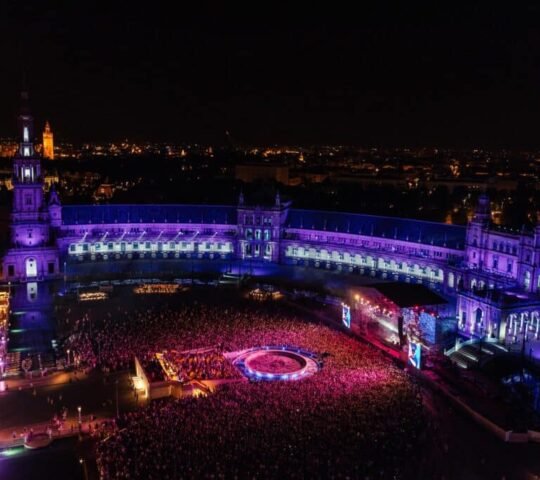
As the clock ticks closer to midnight, tension and excitement build across the packed avenues as millions of spectators migrate toward the central entrance gates. All eyes lock onto the towering architectural Portada, waiting in breathless anticipation for the municipal authorities to trigger the master electrical switch. Exactly at midnight, the Gran Alumbrao takes place as hundreds of thousands of light bulbs ignite simultaneously across the monumental gate and fifteen festival streets. A massive collective cheer erupts from the ecstatic crowd as the dark fairgrounds instantly transform into a glowing wonderland of incandescent light and color.
This breathtaking illumination ceremony triggers an immediate explosion of sound, music, and social revelry that signals the official beginning of six continuous days and nights of celebration. Corks pop from wine bottles, guitars strike up their first chords, and dancers flood the wooden floors of the surrounding marquees with boundless enthusiasm. Fireworks streak across the night sky, providing a dazzling pyrotechnic punctuation mark to the midnight transition. Noche del Pescaito and the Gran Alumbrao stand as an unforgettable masterclass in theatrical timing, capturing the infectious passion and communal spirit that make the Seville Fair an unmatched cultural phenomenon.
Enjoy Your Event Stress-Free with Euro Travelo
Planning a trip to attend a festival, concert, or business event in Europe can be overwhelming—tickets, travel, accommodation, and local logistics all take time and effort. Euro Travelo makes it simple by providing everything you need through one trusted company. You save time, avoid stress, and enjoy a seamless experience from start to finish.
Paseo de Caballos & Equestrian Traditions
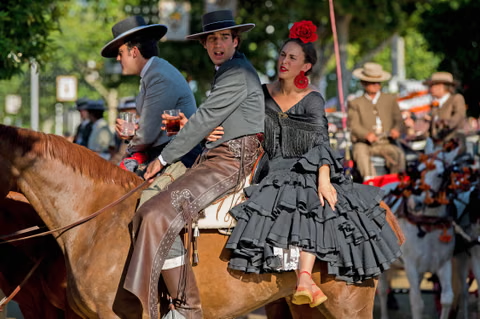
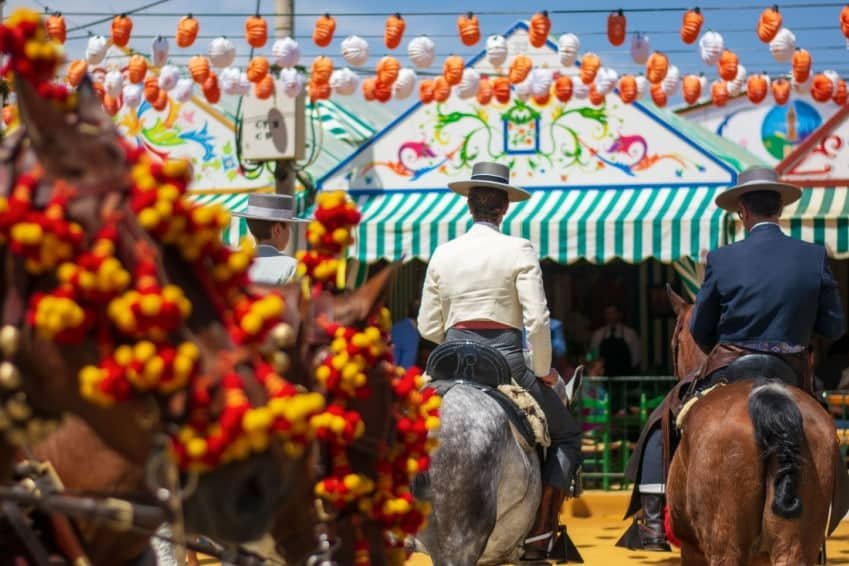
The daily equestrian parade, known as the Paseo de Caballos, represents one of the most visually stunning and prestigious components of the Seville Fair. Each afternoon from midday until early evening, the sandy avenues of the fairgrounds transform into a majestic showcase of fine Andalusian horses, immaculate horsemanship, and traditional horse-drawn carriages. Owners, breeders, and expert riders don traditional Andalusian riding attire, guiding their impeccably groomed animals through the bustling crowds with exceptional grace and precision. This daily procession honors the historical roots of the festival as an agricultural livestock market, keeping centuries-old equestrian traditions alive in a vibrant modern setting.
Carriage craftsmanship reaches its zenith during the Paseo, with vintage landaus, mail coaches, and spider phaetons rolling smoothly along the specially treated albero sand tracks. These historic vehicles are often adorned with fresh flowers, embroidered leather harnesses, and polished brass fixtures, carrying prominent local families, politicians, and celebrities dressed in formal regional garb. Drivers display remarkable skill as they navigate the dense pedestrian thoroughfares and equine traffic jams, maintaining strict etiquette and adherence to traditional carriage-handling rules. The rhythmic sound of iron-shod hooves against the arena sand creates an immersive auditory backdrop that defines the afternoon hours of the celebration.
Horsemanship during the festival is characterized by the distinct style of Andalusian dressage, emphasizing balance, agility, and a harmonious connection between rider and mount. Participants spend months preparing their horses for the event, ensuring that coats gleam, mannes are braided with intricate ribbons, and tack is polished to perfection. Spectators line the designated carriage routes hours in advance, holding cameras and admiring the seamless coordination of horse and rider as they glide past the crowded marquees. This celebration of equine excellence reinforces Seville’s deep-rooted cultural fascination with horses, providing an unforgettable spectacle that bridges the gap between historical utility and modern artistic display.
Ticket Prices
- How Tickets Are Sold: Ground access to the sprawling fairgrounds is entirely open to the public without requiring a pass, though entry to individual private marquees requires personal invitations from members.
- Admission Type: Free public street access allowing visitors to walk the avenues, enjoy exterior sights, and access specific municipal or district-hosted public marquees.
- Ticket Pricing: Free Admission for walking the public fairgrounds and streets, while private hospitality tent entry fees or private party bookings arranged via third-party groups range from $50.00 to over $300.00 depending on dining inclusions.
- Special Seating Options: Reserved tables inside select public hospitality marquees can be pre-booked through authorized tourism packages or cultural hospitality providers to guarantee seating during peak dining hours.
- VIP Options: Exclusive VIP packages managed by high-end travel agencies range from $250.00 to $650.00, offering private guided access, premium wine tastings, and reserved seating within select corporate marquees.
Event Information
- Email: info@visitasevilla.es
- Phone Number: +34 954 47 12 32
- Website: https://www.spain.info/en/calendar/april-fair/
History, Origins & Cultural Heritage of La Feria
The Seville Fair stands as one of Spain’s most iconic and deeply cherished cultural traditions, originating in the mid-nineteenth century as an annual livestock and agricultural trade market. Established by a municipal decree in 1847, the gathering initially served as a commercial venue where local farmers and livestock owners could buy and sell cattle, horses, and agricultural goods. Over the subsequent decades, the commercial focus steadily evolved into a massive social celebration as merchants, buyers, and local families began incorporating festive food, music, and social dancing into the annual trade meetup. This unique fusion of agricultural commerce and Andalusian festivity transformed the gathering into a vibrant social cornerstone that captures the historical spirit of the region.
The Real de la Feria & Casetas Architecture
- Marquee Layout: Over one thousand brightly colored tents span across fifteen distinct numbered streets within the fairgrounds.
- Structural Framework: Metal and canvas frames are meticulously erected and decorated months prior to the opening ceremony.
- Color Schemes: Traditional canvas walls feature striking alternating bands of deep green and crisp white or vibrant red and white.
- Interior Division: Each tent is partitioned into a welcoming reception area, a professional bar, and a private dining space.
- Naming Conventions: Elaborate painted signs above every entrance display the official name or founding year of the hosting group.
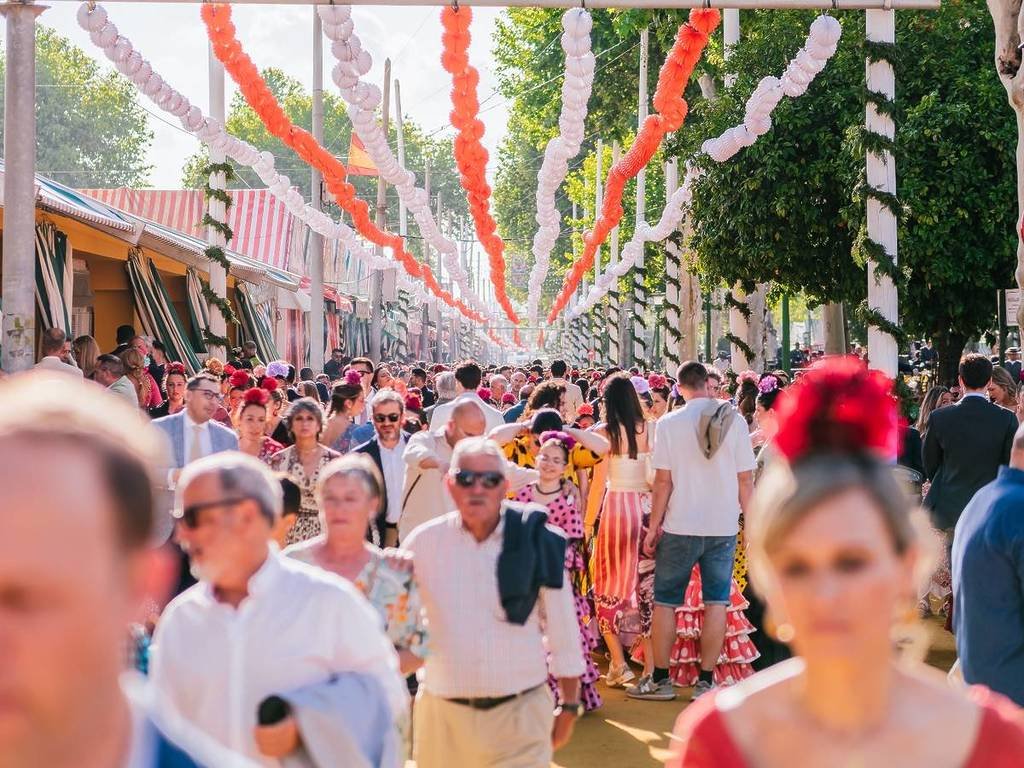
- Lighting Displays: Thousands of colored paper lanterns and overhead incandescent bulbs illuminate the avenues every evening.
- Municipal Marquees: Large public tents managed by the city council offer open access, traditional food, and musical entertainment.
- Private Membership: The vast majority of structures function as private social clubs owned by families, political parties, or trade unions.
- Flooring Materials: Interiors are typically laid with smooth wooden floorboards designed to facilitate hours of traditional social dancing.
- Architectural Façades: Elaborate wooden facades showcase classic Andalusian architectural motifs, wrought-iron grillwork, and floral ornamentation.
- Portada Gateway: A monumental, architecturally illuminated entrance gate towers over the main fairground access point, changing its design annually.
- Spatial Organization: The sprawling layout ensures clear pedestrian pathways flanked by continuous rows of decorative hospitality structures.
The physical layout of the festival grounds, known locally as the Real de la Feria, represents a masterpiece of temporary urban planning and traditional Andalusian architectural design. Spanning a massive expanse in the Los Remedios district, the site is systematically organized into parallel avenues named after legendary local bullfighters and cultural figures. Lining these meticulously mapped streets are the famous casetas, which are custom-built canvas marquees that serve as the private and public social hubs of the entire celebration. The uniform grid system ensures that millions of visitors can navigate the sprawling temporary city, which comes to life each spring with an explosion of color, sound, and architectural splendor.
At the heart of the architectural experience are the casetas themselves, showcasing a distinct aesthetic defined by striped canvas walls and elaborate wrought-iron entry arches. While many structures are modest in size, accommodating a single extended family, others span massive multi-room footprints capable of hosting hundreds of guests simultaneously. The interior architecture is carefully curated to mimic traditional Andalusian courtyard homes, complete with rustic wooden furnishings, hanging flower pots, and vintage posters celebrating historic bullfights and agricultural milestones. This meticulous attention to structural detail creates an intimate, domestic atmosphere despite the massive scale of the surrounding festival grounds.
The visual climax of the fairgrounds architecture is the Portada, a towering monumental gate that serves as the official entrance and architectural anchor of the event each year. Designed by local artists and architects, this glowing landmark is reconstructed from scratch annually, featuring thematic tributes to Seville’s historic monuments, architectural landmarks, or significant cultural anniversaries. Illuminated by hundreds of thousands of low-energy light bulbs, the Portada commands the skyline and signals the official commencement of festivities when the mayor flips the ceremonial switch during the traditional midnight illumination ceremony. Surrounding this grand gateway, the endless sea of striped marquees and glowing lanterns completes a visual landscape that is entirely unique to the city of Seville.
Getting to the Venue
- City and Country: Seville, Spain
- Venue Name: Real de la Feria de Sevilla
- Google Maps Address: Av. Flota de Indias, 1, 41011 Sevilla, Spain
Worried about accommodation? Hotels near this event sell out quickly, and prices tend to rise fast. Check out these accommodation options:
Sevillanas Music, Flamenco & Social Dancing
- Musical Genre: Traditional Sevillanas folk songs performed live with acoustic guitars, vocalists, and rhythmic handclapping.
- Dance Structure: Each traditional dance consists of four distinct, progressive movements ending in a characteristic frozen pose.
- Instrumental Setup: Spanish guitars, cajón drums, and tambourines provide the driving acoustic rhythm inside every marquee.
- Improvisational Flamenco: Spontaneous late-night flamenco jamming sessions erupt organically in corners of private tents.
- Public Participation: Dancers of all skill levels form circles on wooden floors to practice intricate footwork and partner turns.
- Lyrical Themes: Song lyrics celebrate romance, rural life, local history, and the distinct culture of Seville.
- Acoustic Ambiance: Amplified sound systems blend with live acoustic performances to fill the festival streets with continuous music.
- Educational Tradition: Children learn basic dance steps from an early age, ensuring the cultural tradition passes seamlessly between generations.
- Rhythmic Clapping: Spectators actively participate by maintaining complex syncopated handclapping rhythms known as palmas.
- Choreographic Formations: Couples face one another, utilizing expressive arm movements, graceful spins, and synchronized footwork.
- Late-Night Energy: Musical performances escalate in intensity after midnight, continuing uninterrupted until dawn breaks over the fairgrounds.
- Cultural Fusion: Professional artists and enthusiastic amateurs share the same dance floors, dissolving formal boundaries through shared rhythm.
Acoustic vitality pulses through every corner of the Seville Fair, driven by the ubiquitous presence of Sevillanas music and traditional social dancing. Sevillanas is a cheerful, upbeat folk music genre native to the region, characterized by rapid guitar strumming, passionate vocal delivery, and infectious rhythmic handclapping. Unlike complex theatrical flamenco, Sevillanas is structured specifically for social interaction, featuring four distinct parts that dancers execute with a partner. Inside every marquee, wooden floors bounce under the weight of enthusiastic dancers who effortlessly transition from casual conversation to graceful, synchronized choreography at a moment’s notice.
The dance itself is a masterclass in elegance, coordination, and non-verbal communication between partners, requiring fluid arm movements, proud posture, and precise footwork. Dancers circle one another through distinct narrative phases, utilizing castanets in some variations to add a sharp, percussive layer to the acoustic guitar melodies. Because the steps are widely taught across Andalusia, virtually every local resident from toddlers to grandparents can join the dance floor with complete confidence. This universal participation eliminates social barriers, creating an inclusive environment where visitors and lifelong residents dance side by side under the warm glow of paper lanterns.
As evening transitions into the deep hours of the night, the musical landscape expands beyond structured Sevillanas to include spontaneous, soul-stirring flamenco performances. In the back rooms of private marquees, guitarists strike up intricate gypsy rhythms while vocalists deliver haunting coplas that silence entire rooms of revelers. These unscripted jam sessions capture the raw emotional power of traditional Andalusian art, where performers feed off the intense energy of the surrounding crowd. This seamless blending of structured social folk dancing and improvisational artistic expression ensures that music remains the beating heart of the festival from noon until dawn.
Event Schedule
- Event Date: April 2027 (Exact Dates TBD)
- Event Duration: Six full days and consecutive nights of continuous cultural celebrations
Visiting this event? Don’t miss out on these amazing activities and local experiences while you’re here.
Traditional Attire: Traje de Flamenca & Short Suits
- Female Attire: Elaborate, form-fitting flamenco dresses featuring cascading ruffled skirts and vibrant floral prints.
- Accessory Florals: Large decorative fabric flowers are pinned securely into the hair of female participants.
- Shawl Tradition: Embroidered silk Manila shawls with long knotted fringe are draped gracefully over shoulders.
- Footwear Choice: Comfortable, sturdy character shoes or heeled boots designed to withstand hours of continuous dancing.
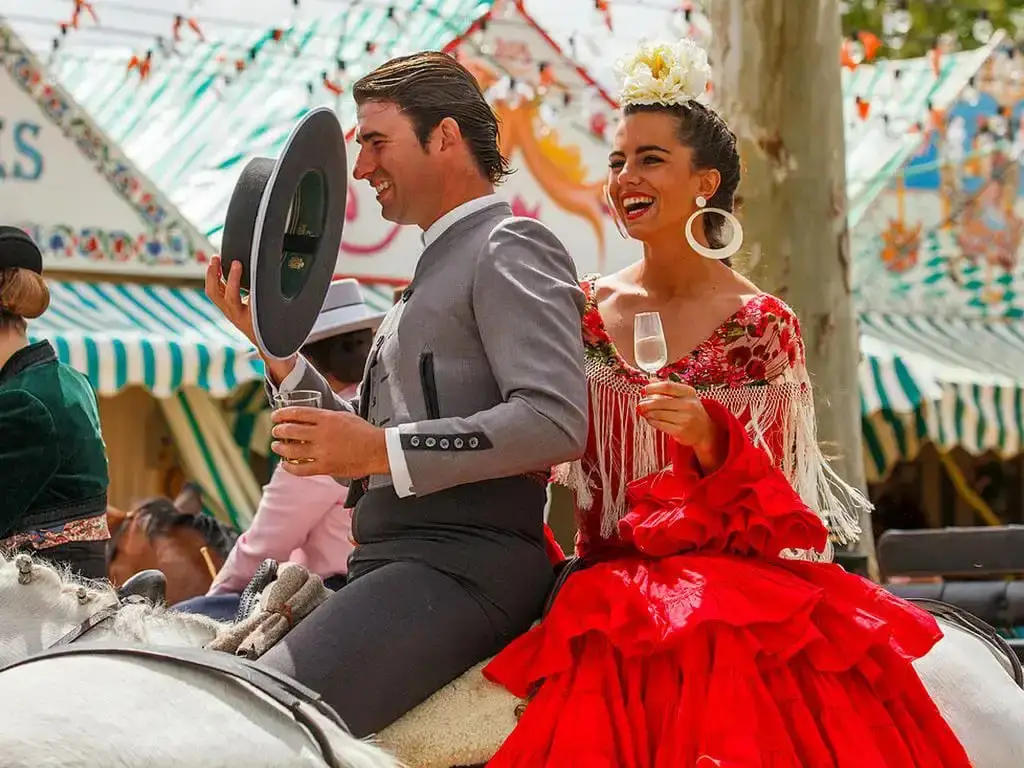
- Male Attire: Traditional Andalusian short suits consisting of fitted jackets, high-waisted trousers, and wide-brimmed hats.
- Boot Selection: Highly polished leather riding boots worn high up the calf by male equestrians and pedestrians.
- Fashion Evolution: High-end designer runway shows dictate shifting annual trends in dress colors, sleeve lengths, and ruffle patterns.
- Jewelry Accents: Large hoop earrings, coral necklaces, and decorative combs complete the traditional female ensemble.
- Waist Sash: Men wear wide fabric cummerbunds or leather belts matching the refined color palette of their suits.
- Seasonal Uniformity: The vast majority of attendees adhere strictly to these historical dress codes, creating a stunning visual spectacle.
Visual elegance reaches staggering heights at the Seville Fair due to the strict adherence to traditional regional dress codes worn by the majority of attendees. Women and girls don the iconic Traje de Flamenca, which is the only traditional regional costume in Spain that evolves continuously with modern fashion trends. These striking, form-fitting dresses are adorned with layers of ruffled flounces, polka dots, and vibrant seasonal colors, accentuating the grace of every movement. Paired with embroidered silk Manila shawls and large decorative hair flowers, the female attire transforms the fairgrounds into a living runway of classical Andalusian fashion and timeless style.
Gastronomy, Tapas & Rebujito Culture
Culinary excellence forms an essential pillar of the Seville Fair experience, offering visitors an endless array of traditional Andalusian tapas, seafood specialties, and regional delicacies. Inside the bustling casetas, professional kitchens and family cooks work tirelessly to serve comforting plates of jamón ibérico, garlic-infused prawns, crispy fried fish, and hearty meat stews. Sharing food across communal tables is considered an act of deep hospitality, where hosts ensure that plates are constantly replenished and glasses remain full. This vibrant culinary culture turns every meal into an extended social event characterized by laughter, conversation, and culinary mastery.
Calle del Infierno Amusement Park & Family Attractions
- Amusement Zone: A massive carnival area situated adjacent to the main fairgrounds offering high-octane entertainment.
- Ride Variety: Thrill-seeking roller coasters, centrifugal drop towers, and classic spinning carousels cater to all ages.
- Family Activities: Traditional game booths, duck ponds, and skill-testing target galleries provide wholesome family entertainment.
- Acoustic Environment: Loud carnival music, flashing neon lights, and cheerful vendor calls create an energetic sensory overload.
- Children’s Day: Special discounted ride pricing is designated for younger attendees during specific festival hours.
- Circus Tents: Touring traditional circus acts set up big tops offering daily acrobatic and comedic performances.
- Food Stalls: Concession stands serve sweet treats, cotton candy, candied apples, and traditional fried snacks.
- Spatial Scale: Covering a massive acreage, the amusement zone provides a stark, modern contrast to the traditional canvas marquees.
- Safety Protocols: Municipal inspectors conduct rigorous daily checks on all mechanical rides to ensure absolute visitor security.
- Nighttime Spectacle: Thousands of flashing lights illuminate the night sky, drawing crowds seeking post-midnight thrills.
When visitors seek a break from the traditional folk dancing and equine displays within the main marquees, the sprawling Calle del Infierno provides an explosive dose of modern carnival excitement. Affectionately translated as Hell Street due to its high-energy soundtrack and blazing neon lights, this massive amusement park occupies a dedicated sector directly adjacent to the Real de la Feria. Boasting towering roller coasters, gravity-defying pendulum rides, bumper cars, and traditional funhouses, the zone delivers high-octane thrills for teenagers, families, and adventurous adults alike. The roaring crowds and flashing lights create a vibrant nocturnal playground that operates at full throttle until the early morning hours.
Tickets Sell Out
in Minutes
Maps
Contact
Video
FAQ's
What are the official dates for the Seville Fair?
The festival traditionally opens its grand celebration on the second Monday following Easter Sunday, continuing through an intense week of continuous cultural events until concluding the following Sunday night. Visitors should verify exact annual scheduling well in advance since shifting religious calendars can alter the precise April timeline. Planning ahead ensures travelers secure adequate lodging before the city's hospitality capacity fills to absolute maximum limits.
Are the individual casetas open to the general public?
Most marquees operating along the fairground avenues function as private social clubs requiring personal invitations from registered members for entry. However, municipal authorities mandate that several large public district tents remain fully accessible to all international travelers seeking traditional food and music. Exploring public spaces provides an authentic introduction to local hospitality without requiring exclusive private connections.
What is the best way to travel to the fairgrounds?
Navigating toward the site via municipal metro lines, dedicated shuttle buses, or walking along the scenic riverbanks helps visitors avoid heavy vehicular congestion. Utilizing public transportation is strongly recommended because parking spaces near the venue are severely restricted and reserved exclusively for authorized permit holders. Walking from the historic city center offers a pleasant, vibrant prelude during the cooler evening hours.
What should visitors wear to fit in with local customs?
Dressing in smart, elegant resort wear or traditional Andalusian regional attire ensures seamless blending with the immaculately styled local crowds. Women frequently sport ruffled flamenco dresses, while men opt for tailored suits or smart jackets paired with comfortable footwear. Choosing sturdy, closed-toe shoes is essential because the fine sandy pathways can easily damage delicate heels and expose feet.
How can visitors experience traditional Sevillanas dancing?
Travelers can easily observe or participate in traditional social dances by stepping inside public marquees or watching open-air performances along the main avenues. The dance steps are structured into four approachable movements that locals are usually delighted to teach enthusiastic newcomers. Wooden flooring inside the tents is intentionally installed to support continuous social dancing throughout the day and night.
What safety precautions should travelers keep in mind?
Maintaining high awareness of personal belongings is crucial while navigating dense crowds near the main entrance gates and amusement zones. Visitors must also exercise extreme caution around the daily equestrian parades, keeping a safe distance from working carriage horses. Staying hydrated under the bright Andalusian sun and noting designated first-aid post locations guarantees a safe and comfortable cultural experience.