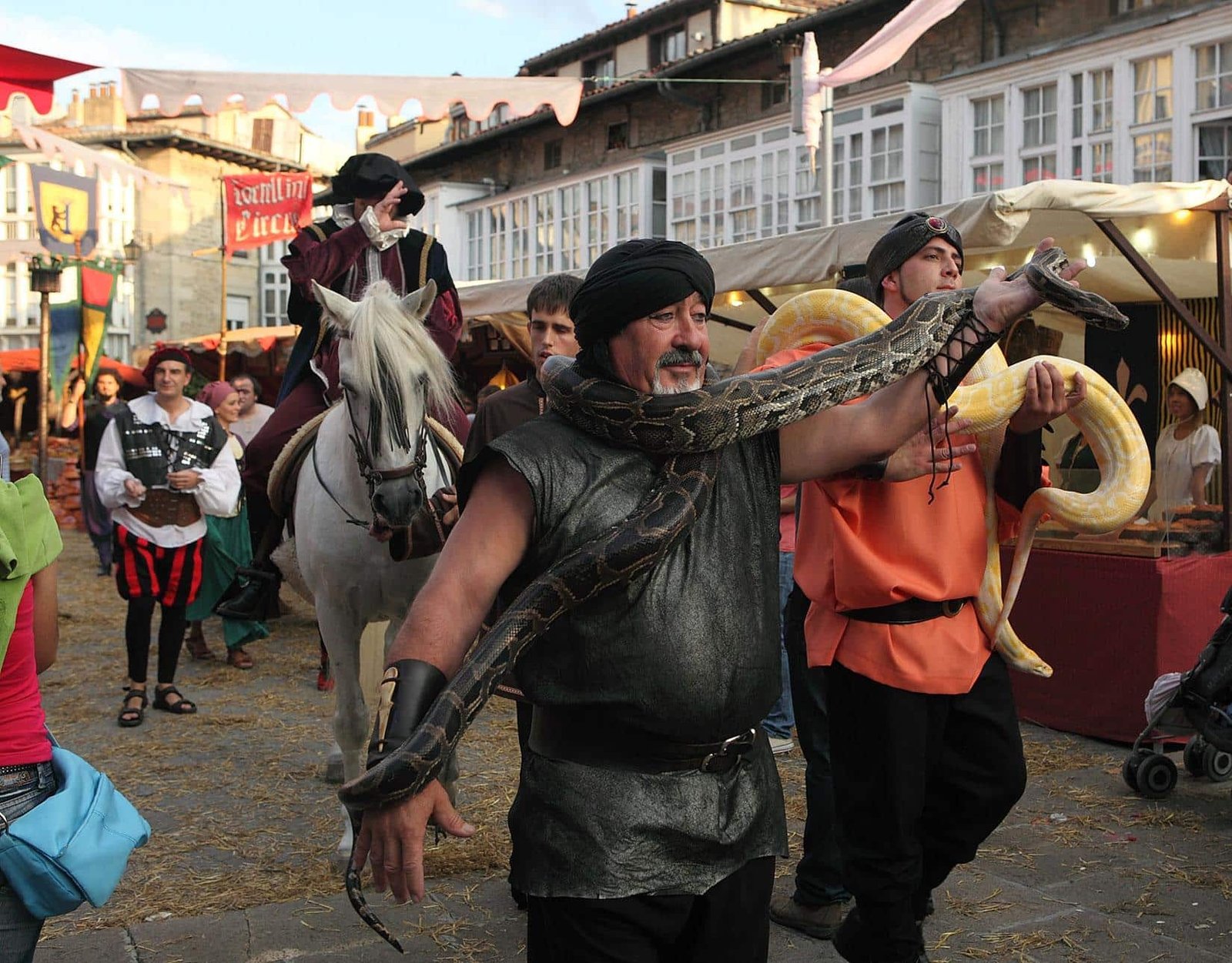
Vitoria-Gasteiz Medieval Market 2026 – Vitoria-Gasteiz, Spain
Overview
The Vitoria-Gasteiz Medieval Market is one of Spain’s largest and most authentic historical reenactments, drawing over 200,000 visitors to the heart of the Basque Country. For one weekend each year, the city’s beautifully preserved Medieval Almond (the historic quarter) is transported back to a time when Vitoria-Gasteiz was a vital crossroads between the kingdoms of the North and South. The market is unique for its “three cultures” theme, meticulously recreating the coexistence of the Christian, Jewish, and Muslim communities that shaped the city’s medieval identity.
During the festival, the cobblestone streets are filled with the scent of woodsmoke, spices, and roasting meats, while more than 300 stalls offer handmade crafts and traditional Basque delicacies. The atmosphere is thick with history, as blacksmiths, carpenters, and glassblowers perform live demonstrations of vanishing trades. From high-energy tournaments to quiet corner puppetry, the market is a multi-sensory journey through the Middle Ages, set against the backdrop of ancient stone walls and gothic cathedrals.
Event Highlights
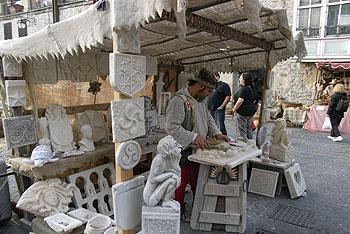
- Live Craft Demonstrations: Watch master artisans practice ancient skills including blacksmithing, stone carving, barrel-making, and traditional basket weaving.
- The Three Cultures Route: Explore dedicated zones reflecting Christian, Arabic, and Jewish history, each featuring specific music, gastronomy, and cultural performances.
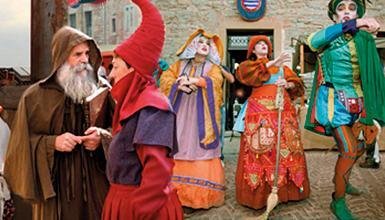
- Epic Street Theater: The city becomes a stage for jugglers, minstrels, fire-breathers, and falconry displays, culminating in grand evening parades.
- Knightly Tournaments: Experience the thrill of live combat and medieval games held in the squares, featuring knights in period-accurate armor.
Why Attend
This event is an essential destination for history enthusiasts and families who want to experience the Middle Ages without the “theme park” feel. Vitoria-Gasteiz is famously proud of its heritage, and the level of detail—from the burlap-covered storefronts to the period-appropriate costumes worn by nearly every merchant—is world-class. It is a photographer’s paradise, offering endless opportunities to capture the grit and grandeur of medieval life in a real 12th-century setting.
Enjoy Your Event Stress-Free with Euro Travelo
Planning a trip to attend a festival, concert, or business event in Europe can be overwhelming—tickets, travel, accommodation, and local logistics all take time and effort. Euro Travelo makes it simple by providing everything you need through one trusted company. You save time, avoid stress, and enjoy a seamless experience from start to finish.
Beyond the historical allure, the market is a culinary feast. It is the perfect place to sample authentic Basque pintxos, artisanal cheeses, and honey-cakes, all while enjoying the city’s legendary hospitality. Attending in 2026 allows you to experience the Basque Country at its most festive and communal, making it a perfect cultural centerpiece for an autumn trip to Northern Spain.
Date & Duration
- Event Dates: September (TBD)
- Duration: 3 days (Typically Friday morning through Sunday evening).
Visiting this event? Don’t miss out on these amazing activities and local experiences while you’re here.
Ticket Information
- How Tickets Are Sold: No tickets are required; the market is an open-access public event held throughout the streets of the Old Quarter.
- Admission Type: Free Admission.
- Ticket Pricing: $0 (Entry to all squares, street shows, and the market itself is free of charge).
- Special Seating or VIP Options: Most shows are standing-room only in public squares; however, many local taverns with balconies offer excellent views of the parades.
Venue / Location
- City and Country: Vitoria-Gasteiz, Spain.
- Venue: The Medieval Almond (Historic Old Town), including Plaza del Machete and Plaza de la Burullería.
- Google Maps Address: Plaza del Machete, s/n, 01001 Vitoria-Gasteiz, Álava, Spain.
Worried about accommodation? Hotels near this event sell out quickly, and prices tend to rise fast. Check out these accommodation options:
Booking with Euro Travelo
Looking to attend this event hassle-free? Euro Travelo can help you secure tickets, arrange travel, and manage your trip from start to finish. Whether it’s a business conference, trade show, or cultural festival, our team makes it easy for international visitors to join events across Europe. Contact Euro Travelo today to book your tickets and travel arrangements.
Contact Information
- Email: turismo@vitoria-gasteiz.org
- Phone: +34 945 161 598
- Website: https://www.vitoria-gasteiz.org/
- Social Media: @vitoriagasteizturismo on Instagram and Facebook.
Getting There
- Nearest Airports: Vitoria Airport (VIT) is 8 km away; Bilbao Airport (BIO) is the major international gateway, located 60 km away (~50 minutes by bus/car).
- Public Transport: Direct buses (ALSA) run every hour from Bilbao and San Sebastián; the city’s Tram system connects the suburbs to the central “Angulema” stop near the Old Town.
- Taxi/Rideshare: Taxis from the airport are roughly $20–$30; within the city, a ride to the Medieval Quarter is approximately $10–$15.
- Parking: Avoid driving into the historic center; use the Artium Museum underground parking or the free Mendizorrotza lot and take the tram (~$15/day for secure lots).
- Other Access: Vitoria-Gasteiz is one of Europe’s “Greenest Cities”; the Medieval Quarter is strictly pedestrianized, making it perfect for walking and cycling.
Accommodation Options
- Luxury Hotels: Gran Hotel Lakua (5-star, modern luxury with spa ~$140–$220/night); NH Canciller Ayala Vitoria (4-star, overlooking Florida Park ~$130–$190/night).
- Mid-Range Options: Hotel Silken Ciudad de Vitoria (4-star, classic style ~$110–$160/night); Hotel AC General Álava (~$100–$150/night).
- Budget Stays: Hostel Vitoria (central and modern ~$35–$70/night); Aparthotel Diván (~$85–$120/night).
Reviews
- The sheer scale of the market is incredible; you can walk for hours and still find new hidden stalls in the narrow alleyways.
- Watching the fire show in the Plaza de la Burullería at night felt like being in a different century.
- The food is the real star—don’t miss the giant pans of chorizo and the traditional medieval-style bread.
Tickets Sell Out
in Minutes
Maps
Contact
Video
FAQ's
Is the market accessible for people with mobility issues?
The Medieval Quarter of Vitoria-Gasteiz is located on a hill, and many of the streets are steep and paved with historic cobblestones. While the city has installed several mechanical ramps and elevators to help visitors reach the higher sections of the "Almond," the heavy crowds during the festival can make navigation challenging for wheelchairs. It is recommended to use the elevators located at Calle Correría for the easiest access to the upper squares.
What is the best time of day to visit to avoid the largest crowds?
The market is busiest on Saturday evening and Sunday afternoon. If you prefer a quieter experience, Friday morning or early Saturday morning (around 11:00 AM) is the best time to explore the craft stalls and speak with the artisans. The atmospheric night shows usually begin after 9:00 PM and are very popular, so arrive at the designated squares at least 20 minutes early to find a good viewing spot.
Can I pay with a credit card at the market stalls?
While more and more vendors are adopting mobile payment systems, many of the smaller artisanal stalls and traditional food stands still operate on a "cash only" basis to maintain the medieval theme. There are several ATMs located just outside the historic perimeter on Calle Postas and Plaza de la Virgen Blanca. It is highly recommended to carry Euros in small denominations for food and souvenirs.
Are there activities specifically for children?
Yes, the festival features a dedicated "Children's Corner" (usually in the Jardín de Falerina or Plaza de Santa María) with wooden games, puppet theaters, and storytelling sessions. Children can also participate in workshops to learn basic medieval crafts or watch the falconry displays, which are always a highlight for younger visitors. Most of these activities are interactive and designed to be educational as well as entertaining.
Is it safe to eat at the outdoor food stalls?
The food stalls at the Medieval Market are subject to strict health and safety inspections by the local Basque authorities. The festival is famous for its high-quality gastronomy, ranging from slow-roasted meats to traditional pastries. Most stalls prepare food fresh on-site in large open kitchens, allowing you to see exactly how your meal is being made. Vegetarian and gluten-free options are increasingly common, but it is always best to ask the vendors directly about ingredients.