
Festival de Marseille – France 2026
Listing has verified and belong the business owner or manager.
Background & History
- Origins and Founding: Founded in 1996 by the association MP2013 (Marseille Provence 2013, European Capital of Culture), the Festival de Marseille emerged as a platform for contemporary dance and performance art, reflecting Marseille’s multicultural identity as a Mediterranean port city.
- Cultural Significance: The festival celebrates the body’s role in society, blending dance, theater, music, cinema, and talks to explore contemporary issues like migration, identity, and community. It positions Marseille as a global crossroads, connecting local artists with international talents from the Mediterranean, Africa, and beyond.
- Growth Over the Years: From its inception with 20 events, it has expanded to over 50 performances across 30+ venues, attracting 20,000+ attendees annually. The 30th edition (June 13–July 6, 2025) featured artists like Marlene Monteiro Freitas and Christian Rizzo; the 31st in 2026 will continue this trajectory with enhanced inclusivity.
- Unique Contribution: Emphasizes emerging artists from Marseille, the Mediterranean basin, and Comoros, fostering transcontinental collaborations. It initiates community-involved projects, such as workshops in neighborhoods, promoting artistic propagation and social cohesion.
- Educational Impact: Year-round programs engage over 1,000 children and youth through school workshops, mixing disabled and able-bodied participants. Training for staff in sign language, mental health first aid, and abuse prevention ensures accessibility.
- Global Recognition: Supported by the City of Marseille and regional partners, it has become a key European festival for contemporary arts, drawing international acclaim for its eco-responsible practices and solidarity initiatives.
Event Highlights
- Main Activities or Performances:
- Over 50 events including dance (e.g., contemporary pieces by local choreographers), theater, concerts (world music, experimental), cinema screenings (documentaries on migration), and talks on body politics and societal change.
- Key venues host premieres and collaborations, such as Théâtre du Chêne Noir for immersive performances and La Friche Belle de Mai for multimedia shows.
- Community-engaged projects: Neighborhood workshops and participatory creations involving inhabitants in artistic processes.
- Special Traditions or Features:
- Solidarity tickets: €1 for underprivileged audiences, €10 for all shows, ensuring broad access.
- Eco-initiatives: Solar-powered equipment, bike transport for gear, green supplier selection to minimize environmental impact.
- Inclusive programming: All bodies visible on stages, with mediation in neighborhoods and solutions for disabled/vulnerable attendees.
- Unique Attractions for Visitors:
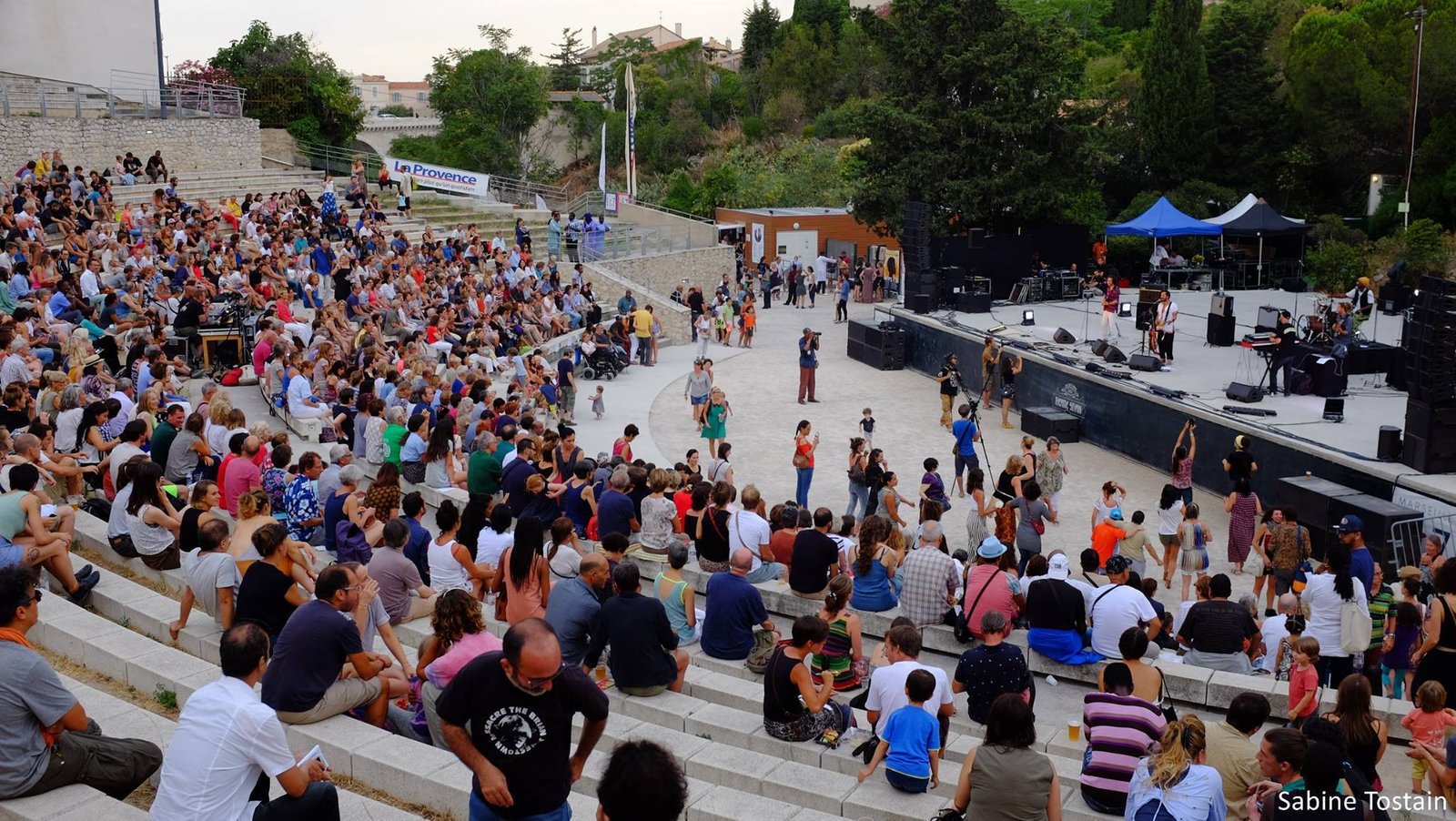
- Citywide immersion: Events spread from mid-June to mid-July across Marseille’s diverse districts, turning the city into a living stage.
- Youth-focused: Programs targeting young audiences with free or low-cost entry, fostering new generations of art lovers.
- International exchanges: Transcontinental productions addressing global changes, blending local Marseille energy with worldwide perspectives.
Date & Duration
Dates: 15 June 2026 – 15 July 2026 — a month-long arts and culture festival throughout Marseille.
Visiting this event? Don’t miss out on these amazing activities and local experiences while you’re here.
Powered by GetYourGuide
Venue / Location
- City: Marseille, Bouches-du-Rhône, France.
- Main Venue: Théâtre du Chêne Noir (historic theater for main performances), with events across 30+ sites.
- Notable Areas:
- La Friche Belle de Mai: Industrial creative hub for dance and multimedia (41 Rue Jobin, 13003 Marseille).
- Théâtre du Chêne Noir: Central stage for premieres (24 Boulevard Louis Salvator, 13006 Marseille).
- Silo: Waterfront venue for concerts and cinema (Corniche Président John Fitzgerald Kennedy, 13007 Marseille).
- Neighborhood spaces: Pop-up events in diverse districts like Noailles and Belsunce for community engagement.
- Outdoor sites: Public squares and parks for free talks and performances.
- Google Maps Address: Théâtre du Chêne Noir, 24 Boulevard Louis Salvator, 13006 Marseille, France (https://maps.app.goo.gl/4Z3bX9kJ5Y6zZ8vK7).
- Accessibility: Wheelchair-accessible venues; dedicated solutions for disabled (e.g., sign language interpretation, easy-access seating); contact info@festivaldemarseille.com for arrangements.
Ticket Information
- How Tickets Are Sold:
- Online via festivaldemarseille.com (secure platform, French/English).
- On-site at Théâtre du Chêne Noir box office and partner venues during the festival (10 AM–8 PM).
- Solidarity tickets (€1–€10) available from May 2026; group rates for schools/youth via info@festivaldemarseille.com.
- Free events for workshops and neighborhood mediations; full passes for multi-event access.
- Admission Type: Paid for main performances; free/low-cost for talks, workshops, and youth programs.
- Ticket Pricing (USD):
- Minimum Pricing: $1 USD (solidarity tickets for underprivileged).
- Maximum Pricing: $12 USD (standard full-price tickets, based on €10-11; exact 2026 TBD).
- Special Seating or VIP Options:
- €10 admission for all shows (youth/senior discounts); free for disabled companions.
- Accessible seating and interpretation services; no VIP, but priority for solidarity ticket holders.
Contact Information
- Email:
- info@festivaldemarseille.com (general inquiries, ticketing, accessibility).
- programmation@festivaldemarseille.com (artist submissions, collaborations).
- Phone: +33 4 91 99 02 50 (French/English support, Mon-Fri 10 AM–6 PM).
- Physical Address: 17 Rue de la République, 13001 Marseille, France.
- Website: https://festivaldemarseille.com/en (English version for program, tickets).
- Social Media:
- @festivaldemarseille (Instagram, Facebook, Twitter) for updates, artist spotlights, and live streams.
- Key Staff:
- Festival Director: Not specified; contact info@festivaldemarseille.com.
- Programming Team: Focuses on Mediterranean/Comoros artists and inclusivity.
- Press/Volunteers:
- Press: Email info@festivaldemarseille.com for accreditation.
- Volunteers: Roles in mediation and setup; apply via website (details by April 2026).
- Note: Response time 24–48 hours; multilingual support.
Cultural Experience
- Traditions:
- Citywide diffusion: Events interact with Marseille’s plural neighborhoods, reflecting its multicultural vibrancy.
- Body-focused themes: Performances explore community roles, migration, and change, with transcontinental collaborations.
- Solidarity focus: €1 tickets and neighborhood outreach promote accessibility and togetherness.
- Music and Arts:
- Eclectic program: Dance (contemporary, hip-hop), concerts (world, experimental), cinema (documentaries), talks on societal issues.
- Emerging artists from Marseille/Mediterranean/Comoros alongside established figures like Christian Rizzo.
- Costumes:
- Performers in avant-garde attire reflecting themes (e.g., fluid, multicultural garments); audiences casual with festival merch.
- Local Customs:
- Marseille’s festive energy: Street interactions, Provençal hospitality, and integration with local markets/food scenes.
Food & Drinks
- Must-Try Specialties:
- Bouillabaisse (fish stew), pan bagnat (tuna sandwich), pastis (anise aperitif) at nearby stalls.
- Mediterranean fusion: Falafel, couscous, tapenade at festival-adjacent cafés.
- Vegetarian/Vegan: Ratatouille, socca (chickpea pancake), grilled veggies.
- Festival Dining:
- On-site bars with local wines/beers; food trucks in neighborhoods (€5–€10 USD).
Getting There
- Nearest Airports:
- Marseille Provence (MRS), 25 km (30 min taxi/train).
- Public Transport:
- Metro: Lines M1/M2 to Vieux-Port for central venues.
- Bus: Lines 49/82 to La Friche; RTM day pass €5 USD.
- Parking:
- Paid lots near venues (€2–€4 USD/hour); eco-bike transport encouraged.
- Other Options:
- Taxis/Bolt €10–€20 USD; bike rentals (Le Vélo) €2 USD/hour.
Accommodation Options
- Hôtel du Palais et des Arts**: Central, near venues, €100–€200 USD/night.
- Ibis Budget Marseille Centre: Budget, €50–€100 USD/night.
- Hostel Vertigo Vieux Port: Youth hostel, €20–€60 USD/night.
- Airbnb: Apartments in Vieux-Port, €60–€150 USD/night.
- Booking Tips: Book early for June/July; partner hotels via festival site.
Maps
Contact
Video
FAQ's
What are the dates for Festival de Marseille 2026?
Mid-June to mid-July 2026 (exact TBD, ~June 12–July 5); 24 days of events citywide.
How much are tickets, and where can I buy them?
€1–€12 USD; buy online at festivaldemarseille.com or Théâtre du Chêne Noir; solidarity €1 tickets from May.
What is the address of the main venue?
Théâtre du Chêne Noir, 24 Boulevard Louis Salvator, 13006 Marseille (https://maps.app.goo.gl/4Z3bX9kJ5Y6zZ8vK7).
What accessibility options are available?
Sign language, easy-access seating, neighborhood mediation; free for disabled companions; contact info@festivaldemarseille.com.
How can I get involved or contact organizers?
Volunteers via website (April 2026); press/programming to info@festivaldemarseille.com (+33 4 91 99 02 50). Response 24–48 hours.