Twelve hours. That’s all the time I planned to spend in Dubai. The city was supposed to be nothing more than a dot between flights, a necessary inconvenience on my way to somewhere else.
But somewhere between stepping off the plane and stepping back on, that dot expanded into something I didn’t expect.
Enjoy Your Event Stress-Free with Euro Travelo
Planning a trip to attend a festival, concert, or business event in Europe can be overwhelming—tickets, travel, accommodation, and local logistics all take time and effort. Euro Travelo makes it simple by providing everything you need through one trusted company. You save time, avoid stress, and enjoy a seamless experience from start to finish.
Layovers could be golden tickets to exploring one of the world’s most dynamic cities without the commitment of a full vacation.
What started as killing time turned into a revelation, and by the time I boarded my connecting flight, I was already planning my return.
The Accidental Discovery Between Flights
Airport layovers are usually synonymous with boredom. Endless terminals, overpriced coffee, and that limbo feeling of being neither here nor there.
Emirates Airlines actively promotes stopover tourism through their Dubai Stopover program, and stopover tourists contributed approximately $2.3 billion to the local economy in 2023.
The infrastructure isn’t just accommodating; it’s designed to pull you out of the terminal and into the city itself.
Dubai welcomed 1,995,000 international stopover visitors in the month of January 2026.
That number tells a story about how many travelers are doing exactly what I did: taking a gamble on a city they never intended to visit. The moment I cleared immigration, the city’s energy was palpable. Clean metro lines connected directly to the airport. Digital boards displayed real-time updates in multiple languages. Everything felt efficient, almost suspiciously so for a place I’d only budgeted half a day to explore.
The desert heat hit me the second I stepped outside, but it wasn’t oppressive. It was warm, dry, and strangely inviting. Within thirty minutes of landing, I was standing at the base of the Burj Khalifa, staring up at a structure that seemed to puncture the sky itself. Travel health experts note that stepping outside your routine can significantly reduce stress, and I felt that shift immediately. The usual travel anxiety melted away, replaced by genuine curiosity.
When a Stopover Becomes a Highlight
Dubai isn’t just tolerating stopover tourists; they’re rolling out the red carpet.
Most cities treat layover visitors as transient inconveniences. Dubai treats them like the main event. That difference is everywhere. Free visa arrangements for qualifying nationalities. Hotel deals specifically structured for short stays. Tours designed to maximize limited time windows.
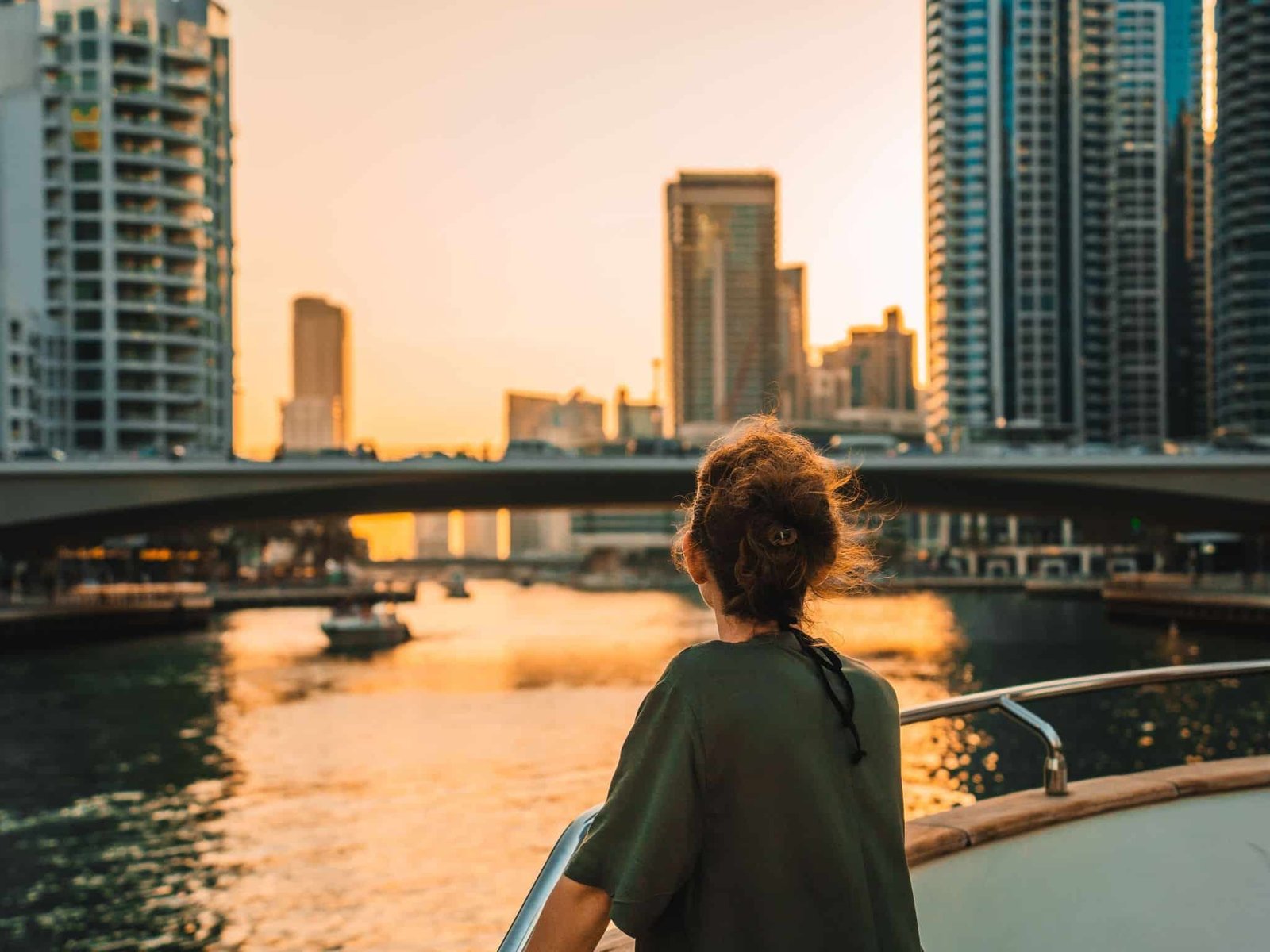
I hadn’t planned to stay anywhere beyond the airport. But after an hour in the city, I realized I’d be doing myself a disservice to rush back. I booked a hotel room near Dubai Marina through a last-minute deal and decided to stretch my layover into an overnight stay.
Dubai welcomed 19.59 million international overnight visitors in 2025, marking a 5% increase.
I had become part of that statistic without meaning to.
That evening, I found myself at the Gold Souk in Deira, wandering through narrow lanes lined with shop windows glowing with impossibly ornate jewelry.
The market is packed full of over 380 local jewelry traders, some of whom have been selling there for 40 years.
The vendors were friendly, not pushy, and genuinely seemed to enjoy sharing the stories behind their work. One shopkeeper spent twenty minutes explaining the cultural significance of different gold designs, never once pressuring me to buy anything.
The real estate landscape was another surprise. Walking through Business Bay and along Sheikh Zayed Road, I passed buildings that looked like something out of a science fiction film. I stumbled across a range of Dubai properties, from ultra-modern high-rises to waterfront developments on the Palm Jumeirah.
As one of the leading real estate developers in Dubai, Binghatti has built a reputation for innovative design and timely delivery, combining modern architecture, smart layouts, and flexible ownership options.
The sheer variety and ambition of the developments hinted at a city constantly reinventing itself.
What struck me most wasn’t just the scale of the architecture but how intentional everything felt. This wasn’t haphazard growth. Every district seemed to have a purpose, a personality. Marina felt youthful and cosmopolitan. Downtown was sleek and business-forward. The older neighborhoods near the Creek carried a quieter, more traditional rhythm. It was like watching multiple cities coexist inside one sprawling urban experiment.
The Cultural Layers Beneath the Gloss
Thanks to its architecture, Dubai has become one of the most recognizable cities in the world, with modern skyscrapers, iconic structures, and futuristic forms making every visit a journey into the world of innovation.
But beyond the showpiece towers, I found layers of culture I hadn’t anticipated. The Al Fahidi Historical District felt like stepping through a portal into a different era. Traditional wind-tower houses, narrow alleyways, and small museums told the story of a city built on trade, pearls, and persistence long before oil changed everything.
I visited the Jumeirah Mosque on a guided tour designed specifically for non-Muslim visitors.
The Jumeirah Mosque is a stunning example of traditional Islamic architecture, characterized by intricate designs, expansive domes, graceful arches, and geometric patterns symbolizing harmony and beauty.
The guide was patient, welcoming, and eager to answer questions. It was one of the most informative cultural experiences I’ve had anywhere, and it shifted my understanding of the city from purely commercial to something more nuanced.
International health guidelines recommend researching local customs before visiting any new destination, and I wished I’d done more homework before arriving. Still, Dubai’s openness to visitors made the learning curve gentle. People were approachable. English was widely spoken. The city felt designed to accommodate difference rather than resist it.
Evenings were particularly striking. The call to prayer echoed across neighborhoods as the sun set, a reminder of the city’s deep Islamic roots. Yet at the same time, rooftop bars hummed with international crowds, and restaurants served cuisine from every corner of the planet. Research shows cultural tourism can generate meaningful exchanges between locals and tourists through direct interaction. I felt that exchange in small moments: a conversation with a taxi driver from Pakistan, a cafe owner from Lebanon, a tour guide originally from India. Dubai wasn’t just Emirati. It was a crossroads.
Why I’m Already Planning My Return
By the time I returned to the airport, I wasn’t the same traveler who had landed twelve hours earlier. My perspective had shifted.
Travel can be great for your health, as vacations can help you relax and reduce stress.
But more than relaxation, this layover had sparked genuine fascination. I wanted to see more. The desert beyond the city. The heritage villages I’d read about but didn’t have time to visit. The Marina at night. The museums I’d skipped.
I found myself scrolling through European travel planning resources on the flight home, thinking about how layovers in other cities might offer similar surprises. Dubai had taught me that stopovers didn’t have to be dead time. They could be the best part of a trip.
Now, I’m actively seeking flights that route through Dubai. Not because it’s convenient, but because I want those twelve-hour windows to stretch into twenty-four, then forty-eight. What started as an accident has become intentional.
That’s the strange alchemy of this city. It pulls you in without asking permission, and by the time you realize what’s happened, you’re already looking for reasons to come back.